weisourcing.com / products / TransformerStrip / Silicon Steel & Copper for Transformers

Silicon Steel & Copper Foil for Transformers from China โ€” A Specialist Materials Buyer's Guide

A practical sourcing guide for transformer-grade electrical materials from China โ€” written for transformer manufacturers, motor and generator builders, electrical equipment OEMs, and specialty electrical-materials distributors. Real product images from transformerstrip.com covering cold-rolled grain-oriented (CRGO) silicon steel in coils, sheets, and slit strips; non-grain-oriented (CRNGO / CRNO) silicon steel for motor laminations; copper foil and strip for winding applications; aluminum strip for cost-sensitive distribution transformers; amorphous metal cores for premium high-efficiency transformers. Grade selection (CRGO Premium HiB through Standard, CRNGO semi-processed through fully-processed), copper-vs-aluminum economics, packaging and container utilization, magnetic property verification through Epstein testing, commodity price-exposure management, and the procurement workflow that establishes electrical-materials supply relationships profitably.

Manufacturer: TransformerStrip (transformerstrip.com)
Category: Welding, PPE & Industrial Safety
Reading time: 14 min

Electrical transformers โ€” distribution transformers, power transformers, instrument transformers, current transformers, and the small transformers in every power supply, EV charger, and renewable-energy inverter โ€” depend on two specialty materials: grain-oriented silicon steel for the magnetic core, and high-conductivity copper or aluminum for the windings. China produces the majority of the global supply of both materials. For transformer manufacturers, motor and generator builders, electrical equipment OEMs, and specialty electrical-materials distributors, sourcing core steel and conductor materials directly from a Chinese specialist supplier delivers significant cost savings vs distribution through Tier-1 channels at comparable performance for typical applications.

This guide covers the TransformerStrip product family โ€” cold-rolled grain-oriented (CRGO) silicon steel in coils, sheets, and slit-to-width strips; non-grain-oriented (CRNGO / CRNO) silicon steel for motor laminations; copper foil and copper strip for winding applications; aluminum strip for cost-sensitive winding applications; and amorphous metal cores for premium high-efficiency transformers. Real product images linking back to the supplier's catalog at transformerstrip.com.

Product range โ€” actual catalogue images

The product images below are hosted on the manufacturer's official website (transformerstrip.com) and link directly to the manufacturer's catalogue. Click any image to view the full specification page in a new tab.
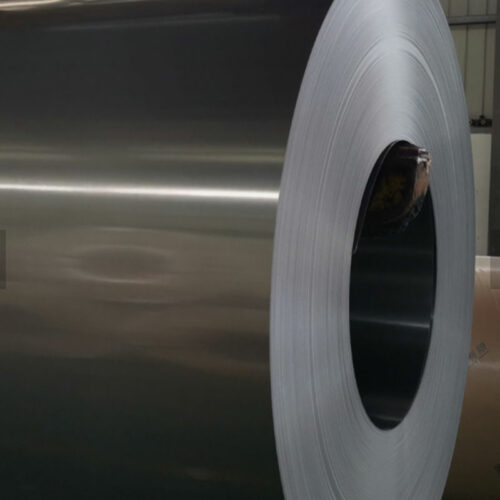
Cold-rolled grain-oriented (CRGO) silicon steel coil โ€” premium electrical steel for transformer cores.

Cold-rolled grain-oriented (CRGO) silicon steel coil โ€” premium electrical steel for transformer cores.

View on supplier site โ†’
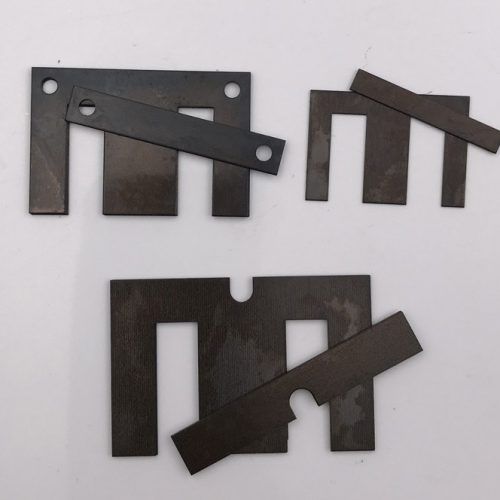
Silicon steel sheet bundle โ€” slit and stacked for direct supply to transformer manufacturers.

Silicon steel sheet bundle โ€” slit and stacked for direct supply to transformer manufacturers.

View on supplier site โ†’
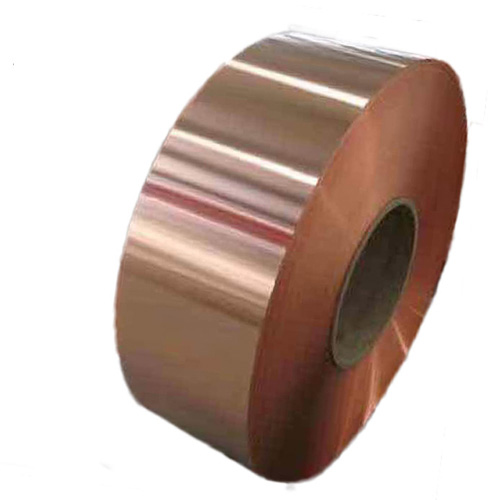
High-purity copper foil roll โ€” for transformer winding, busbars, and electrical applications.

High-purity copper foil roll โ€” for transformer winding, busbars, and electrical applications.

View on supplier site โ†’

Electrical steel grades and applications

Grade familyTypical specificationsMagnetic loss (W/kg at 1.7T)Best applicationsFOB China typical price (per ton)
CRGO Premium (HiB / domain-refined)0.23-0.27mm; B800 โ‰ฅ 1.92T0.85-0.95Premium power transformers, energy-efficient distributionUSD 2,800-3,800
CRGO High-grade0.27-0.30mm; B800 โ‰ฅ 1.88T0.95-1.10Standard distribution transformers, premium-tier OEMsUSD 2,400-3,200
CRGO Standard0.30-0.35mm; B800 โ‰ฅ 1.83T1.10-1.30Standard distribution, general industrial transformersUSD 1,950-2,650
CRGO Economy0.35mm; B800 โ‰ฅ 1.78T1.30-1.50Cost-sensitive distribution, dry-type transformersUSD 1,650-2,200
CRNGO / CRNO Semi-processed0.35-0.50mm; isotropic loss2.5-3.5 (at 1.5T)Motor stators, small generators, ballastsUSD 950-1,400
CRNGO Fully-processed (low-loss)0.35mm; oriented-isotropic mix1.8-2.5 (at 1.5T)Premium motors, electric vehicle traction motors, premium generatorsUSD 1,400-2,200
Amorphous metal (Metglas type)~25 microns thickness0.20-0.35Premium energy-efficient distribution transformersUSD 4,800-7,500
Nanocrystalline (Vitroperm type)~20 microns thickness0.15-0.30Common-mode chokes, current transformers, EMI filteringUSD 8,500-15,000

Copper and aluminum conductor products

Conductor typeTypical specificationsConductivityBest applications
Copper foil (rolled)0.05-0.5mm thick; widths 50-1500mmโ‰ฅ101% IACS (high-purity)Foil-wound transformer windings, large generators
Copper strip (annealed)0.5-3mm thick; widths 10-300mmโ‰ฅ100% IACSWound transformer windings, busbar applications
Copper strip (bare or paper-wrapped)1-10mm thick; widths 5-100mmโ‰ฅ100% IACSPower transformer windings (oil-immersed), large machine windings
Copper enameled wire (round)0.05-3mm diameter; PEW/PEI/PAI insulationโ‰ฅ100% IACSRound-wire winding for transformers and motors
Copper enameled wire (rectangular)1-10mm ร— 1-5mm; PEW/PEI insulationโ‰ฅ100% IACSHigher-fill-factor windings for compact transformers
Aluminum strip (annealed, bare)0.5-3mm thick; widths 10-300mm~62% IACS (1350 alloy)Cost-sensitive distribution transformers, dry-type transformers
Aluminum foil (rolled)0.05-0.5mm thick; widths 50-1500mm~62% IACSFoil-wound dry-type distribution transformers (cost-driven)
Aluminum enameled wire (round)0.5-3mm diameter; PEW insulation~62% IACSCost-sensitive motor/transformer windings
Continuously transposed conductor (CTC)Multiple insulated copper strips bundledโ‰ฅ100% IACS effectiveLarge power transformer windings (lower eddy losses)

Material selection โ€” copper vs aluminum economics

CriterionCopperAluminumImplication
Resistivity1.68 ยตฮฉยทcm2.65 ยตฮฉยทcm (1350 alloy)Aluminum needs ~63% more cross-section for same resistance
Density8.96 g/cmยณ2.70 g/cmยณAluminum about 30% of copper density
Specific cost (per ton)USD 8,000-9,500USD 2,300-2,800Aluminum about 30% of copper price by weight
Cost per equivalent resistance (per kg basis ร— cross-section needed)Baseline 100%Approximately 50-60% of copperAluminum cost-saving for transformer windings is ~40-50%
Mechanical strengthHigherLower (needs careful joint design)Aluminum joints require special technique; bolted connections need anti-oxidation paste
Connection issuesEasy soldering / brazingRequires specific welding or compression jointsAluminum windings limit to specialized end-applications
Volume penaltySmaller transformer volume15-25% larger transformer for same ratingAluminum acceptable when space is not critical

When aluminum makes economic sense

Aluminum-wound dry-type distribution transformers are the dominant choice for cost-sensitive distribution transformer applications (rural distribution, prefabricated substations, lower-tier markets). Copper-wound oil-immersed distribution transformers remain dominant for premium / urban / industrial applications. The volume and weight penalty of aluminum (15-25% larger transformer for same rating) is acceptable in many distribution applications where space is not critical. The specific economics of aluminum-vs-copper depend on current commodity pricing โ€” copper-vs-aluminum price ratio fluctuates significantly. For OEM transformer manufacturers, dual-material capability (both copper-wound and aluminum-wound product lines) provides market flexibility.

Standard sizes and packaging

ProductStandard sizesPackaging unitContainer utilization
CRGO coil (mother coil)500-1200mm width ร— 0.23-0.35mm thick ร— 4-15 ton coil weightSteel-banded coil with edge protection~22-26 ton in 20' container
CRGO slit coil (transformer width)30-300mm width ร— 0.23-0.35mm ร— 1-5 ton coil weightSteel-banded coils stacked on pallets~22-26 ton in 20' container
CRGO sheets (cut to length)Custom sheet sizes; thickness 0.23-0.35mmBundled and strapped on pallets~22-26 ton in 20' container
CRNGO coil500-1200mm width ร— 0.35-0.50mm thickSteel-banded coil with edge protection~22-26 ton in 20' container
Copper foil (large rolls)50-1500mm width ร— 0.05-0.5mm thick ร— 50-500 kg rollCardboard core wrapped in plastic film~18-22 ton in 20' container
Copper strip (small rolls)10-300mm width ร— 0.5-3mm thick ร— 25-150 kg rollWooden spool or cardboard core~18-22 ton in 20' container
Aluminum strip / foilSizes similar to copper, lower densityCardboard core / wooden spool~6-8 ton in 20' container (volume-limited)

Pricing brackets โ€” wholesale

Order tierTotal quantityDiscount vs spotContainer utilizationLead time
Sample / small OEM500 kg - 5 tonsSpot price + small premiumLCL15-25 days
Mid OEM transformer manufacturer15-50 tons / quarterSpot - 1-3%Partial 20' container25-40 days
Large OEM transformer manufacturer50-300 tons / quarterSpot - 3-7%Full 20' or 40' container35-60 days
National distributor / utility OEM500+ tons / quarterSpot - 5-10%; index pricing arrangementsMultiple containers45-90 days

Note: Electrical steel and copper pricing tracks underlying commodity (steel + electrical-grade premium for CRGO; LME copper for copper products) plus processing premium. Long-term contracts typically use index-based pricing where the material cost adjusts monthly with commodity index movement plus a fixed processing premium. For high-volume buyers, hedging the underlying commodity exposure may be appropriate.

Quality certification and testing

StandardApplies toTest requirements
GB/T 2521 / IEC 404-8CRGO grain-oriented electrical steelMagnetic loss test, dimensional accuracy, surface insulation
GB/T 2521.2 / IEC 404-8-4CRNGO non-grain-oriented electrical steelMagnetic loss test (isotropic), dimensional accuracy
ASTM A876 / A977Electrical steel for power transformersMagnetic property testing, dimensional
JIS C 2552 / C 2553Japanese electrical steel standardsMagnetic property testing
ASTM B187 / B49Copper foil and strip for electrical applicationsConductivity (% IACS), tensile strength, ductility, surface finish
ASTM B209 / B233Aluminum sheet and stripConductivity, mechanical properties
IEC 60317Enameled magnet wireInsulation thickness, breakdown voltage, thermal class
NEMA MW1000Magnet wire standards (US)Insulation properties, thermal endurance

Order workflow โ€” electrical-materials procurement

  1. Application analysis โ€” define exact specification per application (CRGO grade, thickness, width; or copper purity, thickness, width); establish quantity per quarter or annual demand
  2. Specification clarification โ€” for CRGO: grade (Premium / High-grade / Standard), thickness, width tolerance, edge condition (mill-edge / slit-edge), surface insulation type. For copper: purity (oxygen-free vs ETP), thickness, width, temper (annealed / hard), surface finish
  3. Sample order โ€” typically 50-500 kg per candidate spec; verify magnetic properties (CRGO: Epstein test for loss and B800), dimensional accuracy (thickness ยฑ0.005mm typical, width ยฑ0.05mm), surface quality (insulation continuity for CRGO; oxidation absence for copper)
  4. Production trial โ€” process sample into actual transformer or motor; verify performance vs spec; document any deviation from expected behavior
  5. First commercial order โ€” typically 15-50 tons depending on application; specify exact tonnage, packaging, and delivery schedule
  6. Quality acceptance โ€” every coil should ship with mill test certificate (chemistry, dimensional, magnetic for steel; conductivity for copper); incoming inspection on 5-10% of coils for verification
  7. Series replenishment โ€” typically monthly or quarterly orders aligned with production schedule; index-based pricing for long-term arrangements; safety stock typically 6-12 weeks of consumption

TransformerStrip on weisourcing.com

View the full supplier profile, certifications, contact details, and complete product catalogue.

Frequently asked questions

What's the difference between CRGO and CRNGO electrical steel, and when do I use each?
Different magnetic property orientations and applications. CRGO (COLD-ROLLED GRAIN-ORIENTED) silicon steel โ€” produced with crystallographic grain texture optimized in one direction (the rolling direction). Properties: very low magnetic loss in the rolling direction (0.85-1.50 W/kg at 1.7T depending on grade); higher loss perpendicular to rolling. Best for: TRANSFORMER CORES where the magnetic flux path follows the rolling direction (laminated cores designed with proper joint design). Premium CRGO can achieve very low loss (Premium HiB grades 0.85-0.95 W/kg) suitable for energy-efficient distribution transformers and large power transformers. CRNGO (COLD-ROLLED NON-GRAIN-ORIENTED) silicon steel โ€” produced without crystallographic orientation; isotropic magnetic properties. Properties: magnetic loss similar in all directions (typically 1.8-3.5 W/kg at 1.5T); higher than CRGO best directions but consistent. Best for: ROTATING MACHINES (motors, generators) where the magnetic flux rotates with the rotor; flux direction varies in stator laminations. SELECTION RULE: laminated transformer cores โ†’ CRGO; motor and generator stators โ†’ CRNGO; small transformers and ballasts โ†’ CRNGO is acceptable substitute for CRGO at lower cost. Don't use CRGO in motors โ€” the directional advantage is lost when flux rotates.
How does CRGO grade nomenclature work โ€” what do "27Q120," "30Q130," "23P095" mean?
Multiple competing nomenclature systems for CRGO. JIS NOMENCLATURE (Japan, widely used): "27Q120" means 0.27mm thickness, "Q" = grain-oriented, "120" = guaranteed maximum loss in 0.01 W/kg units (1.20 W/kg). "23P095" means 0.23mm thickness, "P" = premium HiB grade, "095" = maximum loss 0.95 W/kg. CHINESE NOMENCLATURE (GB standards): "30Q130" means 0.30mm thickness, "Q" = grain-oriented, "130" = max loss 1.30 W/kg at 1.7T. EUROPEAN NOMENCLATURE (IEC): "M0H 120-30" or "M120-30S" โ€” "M" indicates magnetic steel, "120" = max loss ร— 100 in W/kg, "30" = thickness ร— 100 in mm. AMERICAN NOMENCLATURE: AISI grades "M3," "M4," "M5," "M6" โ€” lower number is higher grade (lower loss). PRACTICAL APPROACH: when sourcing internationally, work with cross-reference tables to map between nomenclature systems. Verify actual loss specification in W/kg at standard test conditions (typically 1.7T at 50Hz for CRGO) rather than rely on grade designation alone โ€” different markets use different test conditions. Reputable suppliers like TransformerStrip provide cross-reference documentation between JIS, GB, IEC, and AISI grades for their products.
Are Chinese-sourced CRGO and copper materials acceptable for utility-grade transformer manufacturing?
Yes, with appropriate quality verification. The major Chinese producers of CRGO (Baosteel, Wisco, Tisco, AnSteel, Shougang) supply both domestic Chinese transformer industry and international export markets including major utility transformer OEMs. CRGO QUALITY VERIFICATION: (1) Mill test certificate per GB/T 2521 or IEC 404-8 with magnetic loss data per coil; (2) Epstein-test results for representative samples (250mm strip Epstein frame at 50Hz, 1.7T); (3) Surface insulation breakdown voltage testing (โ‰ฅ10V/lamination typical); (4) Dimensional verification (thickness, width tolerances). For utility-grade applications, request loss-guarantee testing on actual coils delivered, not just generic data sheet. COPPER QUALITY VERIFICATION: (1) Conductivity testing per ASTM B193 (โ‰ฅ100% IACS for ETP copper, โ‰ฅ101% IACS for high-purity); (2) Tensile testing for required temper; (3) Surface finish inspection (no oxide layer that would impair varnish bonding); (4) Mill test certificate per ASTM B187 / B49. PROCUREMENT WORKFLOW: (1) Initial sample order with full testing protocol; (2) Pilot production batch with detailed QC; (3) Series production with random sampling at 5-10% of coils; (4) Quarterly review with supplier on QC trends. Reputable Chinese electrical-materials suppliers maintain documentation packages comparable to Tier-1 European/Japanese producers. Cost savings vs Tier-1 typically 15-25% for CRGO, 5-15% for copper, justifying the verification investment.
What's the typical price exposure to commodity volatility for transformer manufacturers?
Significant commodity exposure that requires active management. PRIMARY EXPOSURES: (1) STEEL + ELECTRICAL-GRADE PREMIUM โ€” CRGO pricing tracks underlying steel (hot-rolled coil) plus electrical-grade processing premium; volatile both individually. (2) COPPER (LME) โ€” copper foil/strip pricing tracks LME copper price closely (typically LME + 4-15% processing premium). LME copper has shown 30-80% price swings over multi-year cycles. (3) ALUMINUM (LME) โ€” similar volatility, lower base price. PRICING STRUCTURES: (1) SPOT PRICING โ€” current market price at order time; appropriate for small orders or short-cycle production. (2) INDEX PRICING โ€” material cost adjusted monthly with commodity index plus fixed processing premium; appropriate for long-term contracts. (3) FIXED PRICING โ€” supplier locks price for delivery period (typically 90-180 days max); supplier hedges underlying commodity. (4) PASS-THROUGH โ€” buyer commits to commodity exposure; supplier processes for fixed margin. RISK MANAGEMENT: (1) For high-volume transformer OEMs, direct LME copper hedging may be appropriate; (2) For mid-volume OEMs, index-pricing contracts pass volatility through to end customers via product price escalator clauses; (3) For small OEMs / distributors, spot purchasing with inventory smoothing (buying 6-12 months consumption when commodity is low) is the practical approach. Specify pricing structure clearly in supply agreements โ€” ambiguity creates disputes when commodity moves significantly. Reputable suppliers like TransformerStrip offer multiple pricing structures depending on relationship and volume.
What's the difference between mother coils, slit coils, and sheets, and which should I order?
Different processing levels with different applications. MOTHER COILS (UNSLIT, FULL-WIDTH) โ€” original mill output; typical 500-1200mm width, 4-15 ton coil weight. Properties: lowest cost per ton (no slitting overhead); requires buyer to slit to required widths for transformer use. Best for: large transformer OEMs with in-house slitting capability; distributors who slit-and-resell. SLIT COILS (TRIMMED TO TRANSFORMER WIDTH) โ€” slit from mother coil to widths required by transformer designs (typical 30-300mm). Properties: ready for direct use in transformer winding/lamination machines; higher cost (slitting premium ~3-8%). Best for: transformer OEMs without slitting capability; small-batch production; precision applications requiring tight width tolerance. SHEETS (CUT-TO-LENGTH) โ€” cut from coils into discrete lengths matching specific transformer designs. Properties: ready for lamination stacking; even higher cost (slitting + cutting premium); minimal waste in production. Best for: small transformer manufacturers with limited press capacity; specialty designs with custom geometry. SOURCING STRATEGY: most efficient is direct supply from mill in slit coils matching your transformer width specifications. For diverse product line with multiple widths, consider working with supplier who can slit-to-width on demand. Reputable suppliers like TransformerStrip provide slitting services and can supply mother coils, slit coils, or finished sheets per buyer requirement.
How do I verify magnetic properties of received CRGO?
Three-tier verification approach. TIER 1 โ€” MILL TEST CERTIFICATE: every coil ships with certificate showing chemistry, dimensional, and magnetic data. Verify: (1) thickness within tolerance; (2) magnetic loss (W/kg at 1.7T) within specified maximum; (3) magnetic flux density (B800 in Tesla) at minimum specified value. Cheap suppliers may provide generic certificates not specific to delivered coil. TIER 2 โ€” INCOMING INSPECTION (sample-based): on 5-10% of coils, perform Epstein test on supplier-prepared 250mm Epstein samples or buyer-prepared samples. Test conditions: 50Hz (or 60Hz for US market), 1.7T, room temperature. Compare against mill certificate; significant discrepancy (>5%) indicates either certificate error or material substitution. TIER 3 โ€” INDEPENDENT LAB VERIFICATION: for high-stakes orders or quality concerns, send samples to independent test lab (typically magnetic-properties test labs in Beijing, Wuhan, Tokyo, or various European test labs). Test cost typically USD 200-500 per sample; provides independent verification. INSTRUMENTATION FOR IN-HOUSE TESTING: Epstein test apparatus (USD 5,000-20,000 depending on automation) is standard for transformer manufacturers; smaller manufacturers may use single-strip tester (SST). For continuous production QC, online thickness gauge and magnetic property tester at slitting line provide real-time verification. Critical: don't accept "magnetic property guaranteed" without specific data per coil โ€” this language often hides poor quality control.
โš  Important Disclaimer

Source: Product images on this page are hosted on the manufacturer's official website (transformerstrip.com) and link directly back to that website. All product information was summarised from the supplier's public catalogue.

Brand mentions and trademark compliance: References to Tier-1 electrical-steel manufacturer brands (Nippon Steel, JFE Steel, ArcelorMittal, ThyssenKrupp, Posco, Baosteel, Wisco, Shougang) and copper-conductor brands (Wieland, Aurubis, Mitsubishi Materials, KME) are made for the sole purpose of describing functional benchmarks and supply-chain context. TransformerStrip is not authorized by, affiliated with, or endorsed by any of these brand owners. Products are aftermarket-fit cross-reference materials manufactured under TransformerStrip's own brand or buyer-private-label only.

Commodity pricing volatility: Electrical-grade silicon steel and copper conductor pricing track underlying commodities (HRC steel + electrical-grade premium for CRGO; LME copper for copper products) which exhibit significant price volatility. Long-term contracts should specify pricing structure (spot, index-based, fixed, or pass-through) explicitly to avoid disputes. For high-volume buyers, commodity hedging strategies may be appropriate.

Pricing & specifications: All price ranges, magnetic property figures, and tier definitions reflect general market observation and may not apply to specific orders. Real-world transformer performance depends on core design, winding technique, and assembly quality in addition to material specifications. Confirm current pricing, MOQ, lead time, and configuration directly with the supplier.

No middleman role: Weisourcing provides supplier discovery and editorial content. All transactions occur directly between buyer and supplier through the contact channels published on the supplier's official website.