weisourcing.com / products / BORAY / Solar Inverters, VFDs & Soft Starters

Solar Hybrid Inverters, VFDs & Soft Starters from China — A Power Electronics Buyer's Guide

A practical sourcing guide for power-electronics products from China — written for solar installers, industrial maintenance contractors, electrical distributors, and OEM equipment integrators. Real product images from borayinverter.com covering the BR100 VFD series, hybrid solar inverter line, ST300 online soft starter range, and broader power-conditioning products. Power range mapping (0.4-1200kW), application-specific specifications, certifications by destination market (UL/IEEE/AS-NZS/VDE/G98-G99), quality tier definitions, and the procurement workflow that establishes a power-electronics distributor profitably.

Manufacturer: BORAY (borayinverter.com)
Category: Solar / Renewable Energy
Reading time: 13 min

Variable frequency drives (VFDs), solar hybrid inverters, and soft starters share a common engineering DNA — power semiconductors (IGBTs, MOSFETs), control electronics (DSP / MCU), and an enclosure designed to manage heat. The same Chinese factories that produce VFDs for industrial pump and fan applications increasingly produce hybrid inverters for residential and commercial solar, and soft starters for high-current motor starting. For solar installers, industrial maintenance contractors, electrical distributors, and OEM equipment integrators, sourcing power-electronics products from a single specialist Chinese supplier delivers significant cost savings vs Tier-1 brands (Schneider Altivar, ABB ACS, Yaskawa, Mitsubishi FR-D700, Delta MS300) at comparable performance for typical mid-range applications.

This guide covers the BORAY catalog — VFDs from 0.4kW to 630kW, hybrid solar inverters from 3kW to 50kW, online soft starters from 11kW to 1200kW, plus a smaller line of online UPS, voltage stabilizers, and power conditioning products. Real product images linking back to the supplier's catalog at borayinverter.com.

Product range — actual catalogue images

The product images below are hosted on the manufacturer's official website (borayinverter.com) and link directly to the manufacturer's catalogue. Click any image to view the full specification page in a new tab.
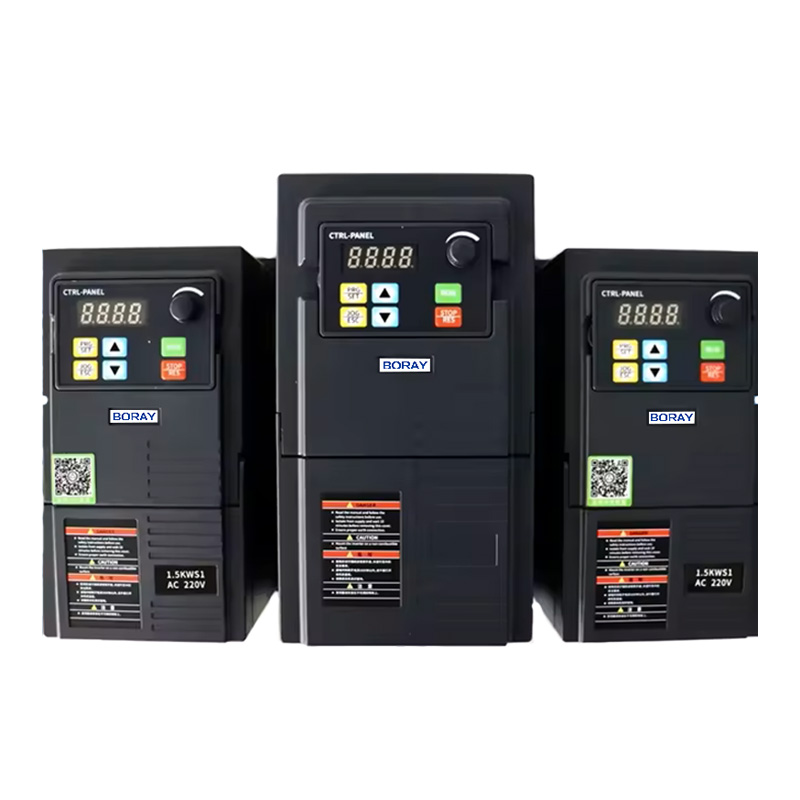
BR100 series compact VFDs — 1.5KW S1 AC 220V variants for small motor and pump applications.

BR100 series compact VFDs — 1.5KW S1 AC 220V variants for small motor and pump applications.

View on supplier site →
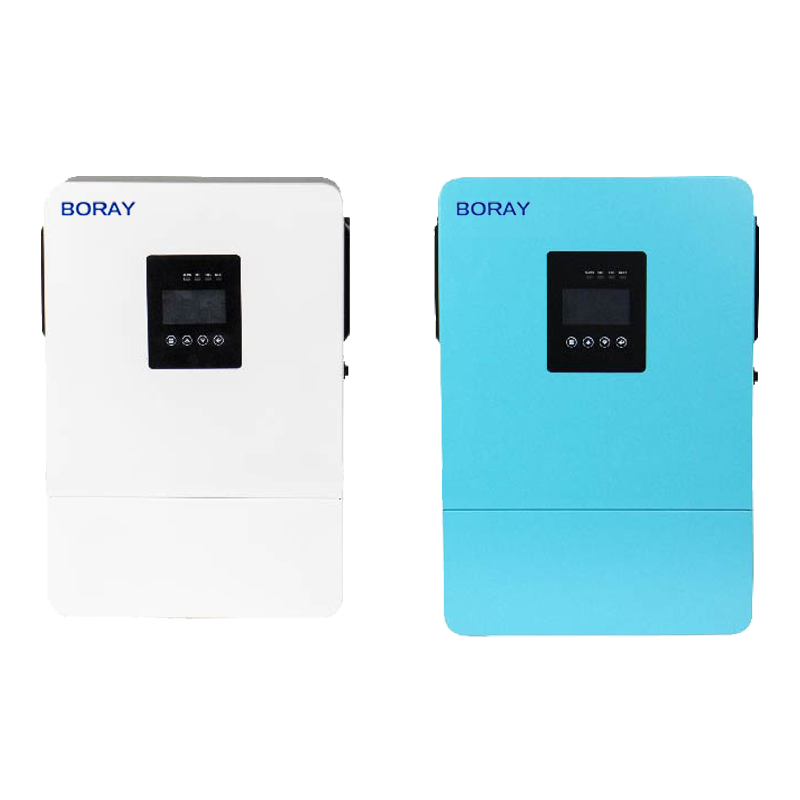
BORAY hybrid solar inverter — single-phase residential variant, white and teal color options.

BORAY hybrid solar inverter — single-phase residential variant, white and teal color options.

View on supplier site →
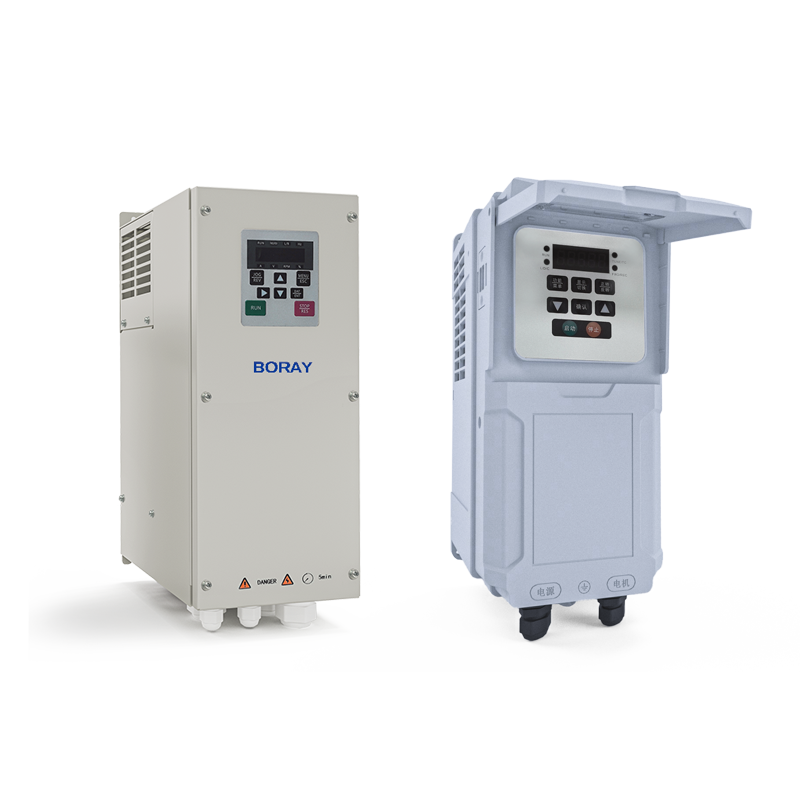
Larger industrial VFD + outdoor IP-rated enclosure variant — for outdoor pump or fan applications.

Larger industrial VFD + outdoor IP-rated enclosure variant — for outdoor pump or fan applications.

View on supplier site →
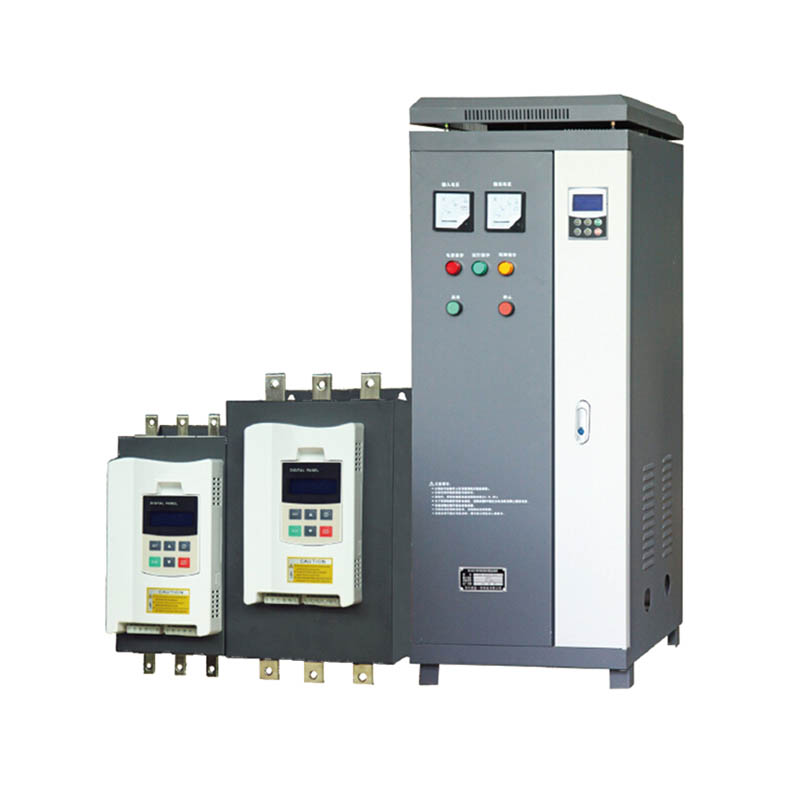
ST300 Online Soft Starter range — compact wall-mount through to large cabinet for high-power motor starting.

ST300 Online Soft Starter range — compact wall-mount through to large cabinet for high-power motor starting.

View on supplier site →

Product family overview

Product familyPower rangeTypical applicationFOB China typical price
Compact VFD (single-phase input)0.4-2.2 kWSmall pumps, fans, conveyors, machine toolsUSD 38-95 per unit
Compact VFD (3-phase input)0.75-7.5 kWIndustrial fans, pumps, mixers, small machineryUSD 75-220 per unit
Mid VFD (3-phase 380V)11-75 kWMid-size pumps, HVAC fans, machineryUSD 280-980 per unit
Large VFD (3-phase 380V)90-400 kWLarge industrial motors, water utilities, mining equipmentUSD 1,150-4,800 per unit
High-power VFD450-630 kWLarge utility pumps, mining hoists, heavy industryUSD 5,500-12,800 per unit
Solar hybrid inverter (single-phase)3-12 kWResidential solar + battery + grid hybridUSD 380-980 per unit
Solar hybrid inverter (3-phase)10-50 kWCommercial solar, microgrid, off-grid hybridUSD 1,400-4,200 per unit
Online soft starter (compact)11-75 kWReduced-voltage motor starting for pumps, fans, compressorsUSD 220-680 per unit
Online soft starter (cabinet)110-1200 kWLarge motor starting (mining, water utility, marine)USD 1,200-4,800 per unit
Online UPS1-200 kVAIT equipment, hospital, data center power conditioningUSD 380-3,800 per unit
Voltage stabilizer (servo)5-500 kVAVoltage stabilization in unstable-grid marketsUSD 280-2,800 per unit

Solar hybrid inverter — what to specify

SpecificationResidential 3-12 kWCommercial 10-50 kW
Input PV voltage range120-500 VDC200-800 VDC
MPPT count1-2 (single-phase)2-4 (3-phase)
Battery voltage48V (most common); 24V budget; 96V some hybrid96V or 192V battery banks; LiFePO4 standard
Output (grid-tied + off-grid hybrid)Single-phase 220V/240V at 50 or 60 Hz3-phase 380V/400V at 50 Hz; 3-phase 480V at 60 Hz
European efficiency rating96-98%97-98%
Peak efficiency97-98.5%97.5-98.6%
Surge / transient protectionType II SPD on PV + ACType I+II SPD; typically external
CommunicationWiFi + RS485 + dry contactsEthernet + RS485 + Modbus + optional 4G
Compliance certificationsCE / IEC 62109; for EU: AS/NZS 4777, G98, VDE-AR-N 4105CE / IEC 62109; for grid: G99, IEEE 1547, UL 1741 (US-export)
Warranty5 years standard; 10-year extended option5 years standard; 10-year extended

VFD specifications by application

ApplicationVFD type requiredCritical specifications
Centrifugal pump / fan (variable load)V/F or vector control, light overload120% overload for 60s; PID built-in for pressure/flow control
Constant-pressure water supplyV/F with PIDMulti-pump rotation logic; dry-run protection; sleep mode for energy saving
ConveyorVector control with brake unitDynamic braking resistor compatible; positioning if needed
Machine tool spindleVector control with closed-loop encoder support0.1 Hz minimum frequency; encoder feedback option
HVAC fan / blowerV/F simple, energy-savingSoft-start ramp; energy-saving sleep mode at low load
Hoist / craneVector control with regenerative unitHigher overload (150% for 60s); regenerative braking; safety brake control
Mixer / extruderVector control, heavy-duty200% overload for short periods; high starting torque
Compressor (rotary screw)V/F or vector, special rotary-screw programPre-programmed compressor algorithm; oil-pressure interlock

Quality tier definitions

TierPower semiconductorsControl DSPService life vs Tier-1Price ratio vs Schneider/ABB
Premium aftermarket-fit (BORAY premium)Infineon / Mitsubishi IGBTs; OE-equivalent gate driverTI / ST DSP with industry-standard control algorithms85-100%20-32%
StandardStarPower / Yangtze IGBTs; standard gate driverGeneric DSP, basic control algorithms60-80%12-20%
BudgetGeneric IGBTs; basic gate driverBasic MCU control40-60%6-12%

Why power-electronics quality tier matters

VFD and inverter failure modes typically involve power semiconductor breakdown — IGBT failure, capacitor degradation, or DC bus failure. Premium tier uses OE-equivalent power semiconductors (Infineon, Mitsubishi, Fuji) with proper gate-driver design and adequate heatsinking margins. Budget tier uses generic IGBTs with marginal cooling, leading to thermal-cycling fatigue and shortened service life — typically 3-5 years vs 10-15 years for premium-tier.

For pump and fan applications running 8,000+ hours/year, a USD 80 budget VFD that fails at 4 years and costs USD 800 in unscheduled downtime delivers worse total cost than a USD 220 premium VFD that runs 12 years without intervention. For solar hybrid inverters where the inverter is expected to outlast 80% of the system, premium-tier electronics are particularly important.

Order workflow — power electronics distributor

  1. Application analysis — match power range, control type, and certifications to your local market needs (residential solar / commercial solar / industrial pumping / HVAC / mixed)
  2. Certification verification — for EU / UK / Australia solar markets: AS/NZS 4777 + G98/G99 + VDE-AR-N 4105; for US grid-tied: UL 1741 + IEEE 1547 + state utility requirements; for industrial VFDs: CE + EN 61800-3 EMC + UL 508C if exporting to US
  3. Sample order — 2-5 units of each top SKU by air freight; bench-test on actual load conditions; verify communication protocols + monitoring software
  4. Field installation trial — install on representative sites for 60-90 days; document fault codes, temperature behavior, communication reliability
  5. First container order — typically 200-800 units mixed across 15-30 SKUs based on local application demand
  6. Series replenishment — quarterly orders aligned with seasonal solar demand patterns + ongoing industrial replacement cycle

BORAY on weisourcing.com

View the full supplier profile, certifications, contact details, and complete product catalogue.

Frequently asked questions

How does Chinese aftermarket VFD performance compare to Schneider Altivar or ABB ACS?
Premium-tier Chinese VFDs from quality manufacturers like BORAY deliver 85-100% of Tier-1 (Schneider, ABB, Yaskawa, Mitsubishi) service life and performance at 20-32% of Tier-1 pricing. The performance parity is achievable because the underlying power-semiconductor and control-DSP technology has matured significantly — the same Infineon IGBTs and TI DSPs that Schneider uses are increasingly used by premium Chinese manufacturers. Differences remain at the highest performance tiers: Tier-1 Schneider Altivar / ABB ACS at >300kW have advantage in firmware sophistication, fault diagnostics depth, and field-service network. For mainstream applications below 200kW (most pump, fan, HVAC, conveyor work), premium aftermarket-fit Chinese VFDs are functionally indistinguishable from Tier-1 at fraction of cost. Budget-tier Chinese VFDs are a different category — lower-grade IGBTs and basic control firmware lead to shorter service life and limited fault tolerance. Specify premium tier exclusively for industrial applications.
What's the right way to size a hybrid solar inverter for a residential installation?
Three sizing rules for hybrid solar: (1) PV CAPACITY — inverter rating should match peak PV array output, typically 1.0-1.2x of PV nameplate (e.g., 6kW PV → 5kW or 6kW inverter). Oversize PV by 10-20% takes advantage of inverter clipping during peak hours without losing meaningful annual energy. (2) BATTERY CAPACITY — for grid-tied hybrid, battery sized for 4-8 hours of typical evening load (5-15 kWh for typical home). For off-grid, battery sized for 1-3 days of autonomy. LiFePO4 is dominant chemistry for new installations. (3) AC LOAD — inverter must handle peak AC load (largest motor surge typically dominates — pool pump, AC compressor, well pump). For homes with significant motor loads, oversize inverter 25-40% beyond nameplate AC rating to handle starting surges. Common mistake: undersizing for the surge load while sizing correctly for sustained load — inverter trips on motor starts. Specify inverter with adequate surge capability for the largest motor in the home.
Are aftermarket-fit power-electronics products acceptable for residential grid-tied solar installations?
Premium-tier aftermarket-fit products meeting required grid-code certifications are fully acceptable for residential grid-tied solar installations in most markets. Required certifications by market: EU/UK — VDE-AR-N 4105, G98 (UK), AS/NZS 4777.2 (Australia/NZ), CE marking; USA — UL 1741 + IEEE 1547 + Rule 21 (California) or local utility approval; Canada — CSA C22.2 #107.1; Australia — AS/NZS 4777.2 + Clean Energy Council product approval. Verification: ask supplier for the actual test certificate from accredited test lab (TÜV, CSA, KIWA, etc.) — not just "compliant" claims. Counterfeit certificates are common in the lower-tier solar inverter market. For BORAY premium-tier, certifications are typically present and verifiable with the test lab. Budget-tier products often have certifications only for sample units while shipping general production that lacks certification — this is a fundamental compliance issue and creates installer liability if grid-side issues occur.
What's the typical service life and warranty pattern?
Premium-tier VFDs in industrial applications: 10-15 years service life typical, 3-year standard warranty, optional 5-year extended. Solar hybrid inverters: 12-15 years service life, 5-year standard warranty (industry-leading 10-year on premium tier with online registration). Online soft starters: 12-15 years service life (relatively low duty cycle), 2-3 year warranty. Field failure rates for premium tier: 1.5-3% in first 3 years; 5-10% by year 10. Common failure modes: (1) DC BUS CAPACITOR DEGRADATION — natural electrolytic-capacitor aging; cap replacement at year 8-12 extends service life. (2) IGBT FAILURE FROM THERMAL CYCLING — accelerated by cooling system blockage (dirty heatsinks, failed fans). Periodic cleaning extends life significantly. (3) FAN BEARING FAILURE — replace cooling fans at 5-7 year intervals; common consumable. Total cost of ownership over 10 years: typically 110-130% of initial purchase price including capacitor refresh + fan replacement. Compare to motor or pump TCO over same period — power electronics is cheaper category to maintain than mechanical equipment.
Can I cross-reference a BORAY VFD against my existing Schneider / ABB installation?
Yes — VFDs are largely standardized in terms of input/output interfaces, communication protocols (Modbus RTU, Modbus TCP, Profinet, EtherCAT), and parameter sets. Cross-reference path: (1) MATCH POWER RATING — BORAY power kW vs Schneider/ABB power kW (1:1 typically). (2) VERIFY VOLTAGE/PHASES — match the input/output voltage and phase count exactly. (3) MAP COMMUNICATION PROTOCOL — most BORAY VFDs support standard Modbus RTU; if your existing system uses Profinet or EtherCAT, verify BORAY model supports that protocol. (4) PROGRAMMING — parameter codes differ between brands but parameter functions are equivalent. Migration document typically lists Schneider parameter X = BORAY parameter Y. Migration support: BORAY (and most aftermarket-fit specialists) provide cross-reference documentation showing direct replacement for major Tier-1 models. For PLC-controlled systems, verify HMI / SCADA can communicate with the new VFD. Most retrofit conversions are straightforward 4-8 hour electrical work + 1-2 hours commissioning. Cost of conversion (parts + labor) typically pays back in 3-6 months from purchase price savings + improved energy efficiency.
What's the difference between online and offline soft starters?
Major architectural difference. ONLINE SOFT STARTERS — keep the SCRs (silicon-controlled rectifiers) in circuit during full-speed motor operation; SCRs continuously conduct at full conduction angle. Allows the soft starter to provide continuous protection (overload, undervoltage, phase loss, ground fault) during running operation. Higher heat generation during running (typical 1-3% efficiency loss); requires sufficient cooling. Best for: applications with frequent starts/stops; applications requiring continuous protection. OFFLINE SOFT STARTERS — SCRs only conduct during motor starting; once motor reaches full speed, an internal contactor bypasses the SCRs (called bypass contactor). At full speed, motor runs directly off line voltage without efficiency loss. Best for: applications with infrequent starts; cost-sensitive applications. BORAY ST300 series is online type — recommended for frequent-start pump applications, conveyor systems with stop/start cycles, and process applications. For occasional-start applications (water pumps that run continuously, fans that run continuously), offline (or basic across-the-line starting) is more economical. The economic difference: online soft starter at USD 220-680 vs offline at USD 150-450 for same kW range; energy efficiency penalty for online is 1-3%, which over 20-year service life is meaningful in high-utilization applications. Specify based on actual duty cycle.
⚠ Important Disclaimer

Source: Product images on this page are hosted on the manufacturer's official website (borayinverter.com) and link directly back to that website. All product information was summarised from the supplier's public catalogue.

Brand mentions and trademark compliance: References to Tier-1 power-electronics brands (Schneider Altivar, ABB ACS, Yaskawa, Mitsubishi FR-D700, Delta MS300, Siemens Sinamics) are made for the sole purpose of describing functional benchmarks and cross-reference fitment. BORAY is not authorized by, affiliated with, or endorsed by any of these brand owners. Products are aftermarket-fit cross-reference parts manufactured under BORAY's own brand or buyer-private-label only.

Grid-tied installation safety: Solar hybrid inverter installation in grid-tied configuration requires certified electrical installer per local regulations. Improper grid-tie installation can damage equipment, void warranty, and create electrical safety hazards. Verify all required local certifications (UL 1741 / IEEE 1547 / AS/NZS 4777 / VDE / G98/G99 / CSA C22.2) are current and applicable to specific destination market before commercial deployment.

Pricing & specifications: All price ranges, service-life figures, and tier definitions reflect general market observation and may not apply to specific orders. Real-world VFD/inverter service life depends significantly on operating environment (temperature, humidity, dust), duty cycle, and maintenance practice (capacitor refresh, fan replacement). Confirm current pricing, MOQ, and configuration directly with the supplier.

No middleman role: Weisourcing provides supplier discovery and editorial content. All transactions occur directly between buyer and supplier through the contact channels published on the supplier's official website.