weisourcing.com / products / LYNew Chem / Paint Additives, Molecular Sieves & TiO2

Paint Additives, Molecular Sieves & Titanium Dioxide Pigments from China — A Specialty Chemicals Buyer's Guide

A practical sourcing guide for specialty chemicals from China — written for paint and coating manufacturers, plastics compounders, refrigeration equipment builders, gas-processing operators, ink manufacturers, and chemical distributors. Real product images from lynewchem.com covering paint and coating additives (polymeric dispersants, surfactant wetting agents, polysiloxane and polyacrylate leveling agents, silicone defoamers, anti-settling, anti-skinning, UV absorbers / HALS, adhesion promoters), zeolite molecular sieves (3A for ethanol drying, 4A for insulating glass, 5A for paraffin separation, 13X for CO2 / oxygen / hydrogen separation), and titanium dioxide pigments (rutile R-902 universal grade, R-996 high-durability outdoor grade, anatase A-101 for interior). Selection rules by application, dosage guidance for paint formulators, regeneration cycle planning for sieve users, REACH / TSCA / FDA compliance, and the procurement workflow that establishes specialty chemical supply relationships profitably.

Manufacturer: LYNew Chem (lynewchem.com)
Category: Chemicals, Adhesives & Synthetic
Reading time: 14 min

Specialty chemicals — paint additives, molecular sieves, pigments, surfactants, and process aids — are essential ingredients in coatings manufacturing, refrigerant drying, gas separation, plastics, water treatment, and dozens of other industrial processes. China is the world's largest producer of titanium dioxide pigment, zeolite molecular sieves, and many specialty additives. For paint and coating manufacturers, plastics compounders, refrigeration equipment builders, gas-processing operators, and chemical distributors, sourcing specialty chemicals directly from a Chinese specialist supplier delivers significant cost savings vs trans-shipment through European/Japanese trading houses while maintaining quality and supply reliability.

This guide covers the LYNew Chem product family — paint and coating additives (dispersants, wetting agents, leveling agents, defoamers), zeolite molecular sieves (3A, 4A, 5A, 13X for desiccant and adsorption), titanium dioxide pigments (rutile and anatase grades for coatings, plastics, paper), and specialty industrial chemicals. Real product images linking back to the supplier's catalog at lynewchem.com.

Product range — actual catalogue images

The product images below are hosted on the manufacturer's official website (lynewchem.com) and link directly to the manufacturer's catalogue. Click any image to view the full specification page in a new tab.
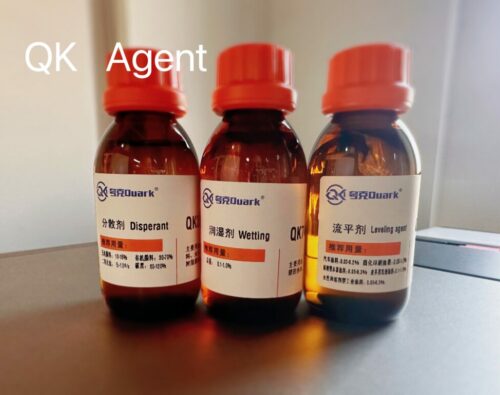
Paint additive product family — dispersant, wetting agent, leveling agent for industrial coatings.

Paint additive product family — dispersant, wetting agent, leveling agent for industrial coatings.

View on supplier site →
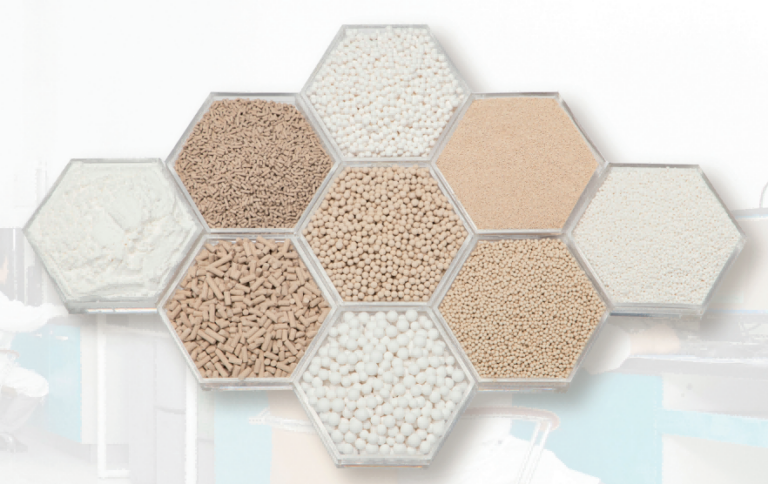
Molecular sieve product range — zeolite pellets, beads, and powder for desiccant and adsorption applications.

Molecular sieve product range — zeolite pellets, beads, and powder for desiccant and adsorption applications.

View on supplier site →

Titanium dioxide pigment series — high-tinting-strength TiO2 for industrial coatings and plastics.

Titanium dioxide pigment series — high-tinting-strength TiO2 for industrial coatings and plastics.

View on supplier site →

Product family overview

Product familyKey productsTypical applicationsFOB China typical price
Paint additives — dispersantsPolymeric pigment dispersants for solvent-based and waterborne coatingsIndustrial coatings, automotive paint, architectural paintUSD 4.50-15.00 per kg
Paint additives — wetting agentsSurfactants for substrate wetting and pigment surface tensionCoating formulation, ink, adhesivesUSD 5.50-18.00 per kg
Paint additives — leveling agentsPolysiloxane and polyacrylate leveling additivesIndustrial coatings, wood coatings, automotiveUSD 8.50-25.00 per kg
Paint additives — defoamersSilicone and mineral oil defoamersWaterborne coatings, ink, adhesivesUSD 6.50-22.00 per kg
Molecular sieve 3APore size 3Å; for water removal from organicsEthanol drying, refrigerant drying, alcohol dehydrationUSD 2.20-4.50 per kg
Molecular sieve 4APore size 4Å; general-purpose desiccantInsulating glass, double-glazing, packagingUSD 1.80-3.80 per kg
Molecular sieve 5APore size 5Å; n-paraffin separation, gas dryingPetrochemical separations, hydrogen purificationUSD 2.80-5.50 per kg
Molecular sieve 13XPore size 10Å; CO2/H2S removal, oxygen generationAir separation, natural gas treatment, oxygen concentratorsUSD 3.20-6.50 per kg
Titanium dioxide rutile (R-902 type)Universal grade for coatings, plasticsIndustrial paint, plastics masterbatch, paper coatingUSD 2,400-3,200 per ton
Titanium dioxide rutile (R-996 type)High-durability outdoor gradeExterior paint, automotive, weather-resistant plasticsUSD 2,800-3,800 per ton
Titanium dioxide anatase (A-101 type)Indoor / matte paint gradeInterior paint, ceramics, food packagingUSD 1,800-2,400 per ton
Specialty pigmentsIron oxide, organic pigmentsColor matching for coatings and plasticsUSD 1,200-8,500 per ton

Paint additive selection — when each type is needed

Additive typeFunctionDosage typicalWithout it, you get
DispersantStabilize pigment particles to prevent re-agglomeration5-15% on pigment weightPigment settling, color streaking, gloss loss
Wetting agentReduce surface tension for substrate wetting0.1-0.5% on total formulaCrawling, fish-eyes, poor adhesion
Leveling agentAchieve smooth uniform coating surface0.1-0.5% on total formulaBrush marks, orange peel, surface defects
DefoamerEliminate air entrapment during mixing/application0.1-0.4% on total formulaBubbles, craters, pinholes in coating
Anti-settling agentPrevent pigment settling in storage0.2-1.0% on total formulaSettling cake, stirring required before each use
Anti-skinning agentPrevent surface skinning of solvent-based coatings0.05-0.3% on total formulaSkin formation in can; waste of paint
UV absorber / HALSProtect coating from UV degradation0.5-3.0% on resin solidsYellowing, chalking, embrittlement outdoors
Adhesion promoterImprove adhesion to difficult substrates0.2-2.0% on total formulaCoating peels from plastics, metals, glass

Molecular sieve selection by application

ApplicationRecommended sieveForm (pellet/bead)Notes
Insulating glass / double-glazing desiccant3A or 4ABead 0.4-0.8mmActivated and packaged in spacer bar
Refrigerant drying (R134a, R410A)3A (XH-9 grade)Bead 0.4-0.8mmSpecialty grade — won't crack from R-gas equilibrium
Ethanol / fuel ethanol drying3APellet 1.6-2.5mmHigher capacity for ethanol loop
Compressed air drying4A or 13XBead 1.6-2.5mmHeat-regenerable bed
Natural gas drying4A or 13XPellet 3-5mmPressure swing or thermal swing regen
n-paraffin / iso-paraffin separation5APellet 1.6-2.5mmPetrochemical separation
CO2 / H2S removal from gas13XPellet 1.6-3mmGas treatment, biogas upgrading
Oxygen generation (PSA)13X (LiX/NaX)Bead 0.4-1.6mmPressure-swing adsorption from air
Hydrogen purification5A or 13XBeadPre-treat for fuel cell / industrial H2
Cracked-gas drying / olefin plant3APelletRefrigerant of upstream cryogenic separation

TiO2 pigment selection — rutile vs anatase

PropertyRutile TiO2Anatase TiO2
Refractive index2.71 (higher)2.55 (lower)
Hiding powerHigher (better opacity)Lower
Tinting strengthHigherLower
Photocatalytic activityLower (more weather-stable)Higher (less stable outdoors)
Outdoor durabilityExcellent (weather-resistant)Poor (chalks, yellows)
CostHigher (USD 2,400-3,800/ton)Lower (USD 1,800-2,400/ton)
Best applicationsExterior coatings, automotive, durable plasticsInterior paint, ceramic glaze, paper

Rutile is the dominant choice for serious applications

Rutile TiO2 represents about 90% of global TiO2 demand because of its weather durability and superior optical properties. Anatase has narrower applications — primarily interior paint and applications where photocatalytic activity is desired (self-cleaning surfaces, solar cells). For industrial coating manufacturers, default specification is rutile; anatase is selected when cost-driven or photocatalytic property needed. Within rutile, "universal grade" (R-902 type) handles 60-70% of typical applications; "high-durability outdoor grade" (R-996 type) for premium exterior applications. Specifying the right grade saves 15-25% on TiO2 cost without sacrificing coating performance.

Pricing brackets — wholesale

Order tierTotal quantityDiscountContainer utilizationLead time
Sample / formulation development5-50 kgList price; air courierAir freight10-20 days
Small-batch production500-3,000 kg per spec5-12%LCL20-35 days
Mid-scale OEM (paint plant, plastics compounder)5-25 tons per spec12-22%20' or partial 40' container30-50 days
Large OEM / industrial buyer50-300 tons per quarter20-30%40' or 40HQ container40-70 days
National distributor / mega-buyer500+ tons per quarter25-35%; index pricingMultiple 40HQ containers50-90 days

Compliance and regulatory considerations

RegulationApplies toMarkets
REACHAll chemical substances entering EUEU; substances must be registered or exempted
TSCA (Toxic Substances Control Act)All chemical substances entering USAUSA; new substances need EPA notification
FDA Food Contact (21 CFR)Materials contacting food (TiO2 in food packaging, molecular sieves in food applications)USA food and pharma
EU Regulation 1935/2004Materials contacting food (EU equivalent)EU food and pharma
RoHSElectronics applicationsEU + most international
EPA Significant New Use Rules (SNUR)Specific specialty chemicalsUSA; substance-specific
Korean K-REACHChemicals entering KoreaSouth Korea
China REACH (MEP Order 7)New chemicals in ChinaDomestic Chinese formulations
ISO 9001 / ISO 14001Quality and environmental managementGlobal; reputable suppliers maintain
Halal / Kosher certificationSpecific market accessMiddle East, ethnic markets

REACH compliance is critical for EU import

EU REACH (Registration, Evaluation, Authorisation, Restriction of Chemicals) requires all chemicals shipped to EU in quantities >1 ton/year per importer to be registered. Verify supplier provides REACH-compliant Safety Data Sheet (SDS) in all required EU languages, registration numbers for the specific substances, and substance-of-very-high-concern (SVHC) declarations. Some specialty chemicals (e.g., certain phthalates, lead-based compounds) are restricted or banned. Working with experienced EU importers helps navigate documentation requirements. Reputable suppliers like LYNew Chem provide REACH compliance support for active products.

Order workflow — specialty chemicals procurement

  1. Application analysis — define exact chemical specification needed (paint additive type, sieve grade, TiO2 type/grade) based on formulation requirement
  2. Specification clarification — request technical data sheet (TDS) showing chemical composition, physical properties, performance specifications
  3. Sample order — typically 1-10 kg per candidate; verify chemical purity (HPLC or GC where applicable), physical properties (particle size, density, color), formulation performance (test in actual paint/plastic application)
  4. Compliance verification — request REACH (EU), TSCA (US), FDA (food contact) declarations as applicable to destination market; verify SDS available in required languages
  5. Pilot production trial — process sample in actual production environment for 30-90 days; document any handling, performance, or quality variations
  6. First commercial order — typically 5-25 tons per spec for mainstream use; specify packaging (drums, bags, totes), labeling, and shipping documentation
  7. Quality acceptance — incoming inspection per supplier QC certificate (chemistry, physical properties); send 1-2% of batch to independent lab for spot verification on critical orders
  8. Series replenishment — typically monthly to quarterly orders aligned with production schedule; for high-volume buyers, index-based pricing for commodity specs (especially TiO2)

LYNew Chem on weisourcing.com

View the full supplier profile, certifications, contact details, and complete product catalogue.

Frequently asked questions

How does Chinese specialty chemical quality compare to BASF / Evonik / Dow / Wacker?
For mainstream specialty chemicals, premium-tier Chinese suppliers like LYNew Chem deliver products at 60-80% of Tier-1 European/American performance specifications at 40-60% of Tier-1 pricing. The performance parity is achievable because: (1) MAINSTREAM CHEMISTRIES are well-understood and patent-free; the same processes work for any qualified manufacturer; (2) RAW MATERIAL QUALITY — premium Chinese chemicals use comparable feedstocks; (3) PROCESS CONTROL — established Chinese specialty chemical manufacturers have invested in modern process control comparable to Tier-1. WHERE TIER-1 RETAINS ADVANTAGE: (1) PROPRIETARY / PATENTED chemistries (e.g., advanced fluoropolymer additives, specific UV stabilizer technologies, novel dispersant chemistries with patent protection); (2) REGULATORY-INTENSIVE applications (food contact, pharma, medical) where Tier-1 has decades of accumulated approvals; (3) PREMIUM TECHNICAL SUPPORT for complex formulation challenges. FOR MAINSTREAM USE (commodity TiO2, mainstream paint additives, standard molecular sieves), premium-tier Chinese suppliers deliver fully-equivalent performance at significant cost savings. Quality verification: insist on certificates of analysis per batch, perform incoming inspection on first 3-5 deliveries, send samples to independent lab for spot verification on critical specs. Reputable suppliers like LYNew Chem provide complete documentation packages including REACH/TSCA compliance for major export markets.
What's the difference between rutile and anatase TiO2 — when do I use each?
Different crystal forms of titanium dioxide with different applications. RUTILE TiO2 — most thermodynamically stable form; refractive index 2.71. Properties: Higher tinting strength and hiding power than anatase, lower photocatalytic activity (more weather-stable), better outdoor durability. Best for: exterior paints, automotive coatings, weather-resistant plastics, paper coating where durability matters, high-performance industrial coatings. Pricing: USD 2,400-3,800 per ton (standard universal R-902 grade through high-durability outdoor R-996 grade). ANATASE TiO2 — lower-stability crystal form; refractive index 2.55. Properties: Lower hiding power than rutile, higher photocatalytic activity (causes chalking outdoors), softer (better for ceramic glazes), less expensive. Best for: interior paints, ceramic glaze, paper, food-contact applications (different chemistry handles), photocatalytic self-cleaning coatings. Pricing: USD 1,800-2,400 per ton. SELECTION RULE: outdoor / weather-exposed applications require RUTILE — anatase chalks and yellows in 1-3 years of exposure. Interior applications can use either, with anatase as cost-saving option. For food packaging that requires opacity, use FDA-compliant rutile grade. Don't use anatase for outdoor anything important — it will fail. Most major coating manufacturers default-spec rutile and only use anatase where deliberately chosen. Within rutile family, R-902 type covers 60-70% of typical applications; R-996 type for high-durability premium exterior; specialty grades for plastics (different surface treatments) and inks.
How are molecular sieves regenerated, and what's the typical service life?
Molecular sieves are regenerable — both heat-regenerated and pressure-swing operations. THERMAL REGENERATION — sieves heated to 200-350°C with dry purge gas (typically dry air or N2 for sieves used with non-flammable streams; dry N2 for hydrocarbon service). Heat drives off adsorbed water/contaminants, restoring sieve capacity. Cycle frequency: every 8-72 hours depending on application. Service life with thermal regeneration: 2-5 years typical (200-1,000 cycles), sometimes longer for clean service. PRESSURE-SWING REGENERATION (PSA) — used in oxygen and hydrogen generators; sieves regenerate by reducing pressure (releases adsorbed gas). Cycle frequency: 1-4 minutes — very rapid. Service life: 3-7 years typical. SERVICE LIFE LIMITERS: (1) PHYSICAL DEGRADATION — sieve crushes/breaks under repeated thermal cycling and gas flow erosion; replace when crush strength drops below threshold; (2) CHEMICAL POISONING — heavy hydrocarbons, sulfur compounds, basic compounds permanently bind sites and reduce capacity over time; (3) HYDROTHERMAL DEGRADATION — water + heat causes structure degradation in some sieve types. EXTENDING SERVICE LIFE: (1) Pre-treat feed gas to remove contaminants that poison sieve; (2) Use lower regeneration temperature when possible; (3) Maintain proper bed support to prevent fluidization; (4) Monitor pressure drop and breakthrough cycles to detect early degradation. INVENTORY PLANNING: typical industrial sites with multiple PSA units carry 50-100% replacement spec; for one-off vessels, replacement at pre-determined cycle interval. Sieve replacement cost is typically 10-25% of vessel-and-piping system cost, planned as routine maintenance expense.
What's the typical specification for paint additive dosage — how much do I need?
Paint additive dosage is application-specific and small (typically 0.1-2% of total formulation). DISPERSANT — 5-15% on pigment weight (so for paint with 25% pigment, dispersant is 1.25-3.75% of total formula). Higher loading for difficult-to-disperse pigments (carbon black, organic pigments). Insufficient dispersant → pigment agglomeration, color streaking. WETTING AGENT — 0.1-0.5% of total formula; just enough to reduce surface tension. Excess wetting agent causes foaming and water sensitivity. LEVELING AGENT — 0.1-0.5% of total formula; enough for surface effect without separating from coating. DEFOAMER — 0.1-0.4% of total formula; minimum effective dose to avoid separation issues. DOSAGE OPTIMIZATION: most paint formulations are over-dosed on additives because of formulator caution. Optimize dosage during formulation development; well-formulated paints often use 30-50% less additive than initial guess. CALCULATING REQUIREMENT: for a 1,000-ton/year paint production with 0.4% leveling agent dose, requires 4 tons leveling agent per year — about 16 drums (250 kg drum). SOURCING IMPLICATION: paint additives are LOW-volume (tons not hundreds) per buyer; strong relationship with one or two reliable suppliers is more valuable than chasing every cost saving. Reputable suppliers like LYNew Chem provide formulation guidance and sample-quantity orders to support new-formulation development.
How do I verify chemical specification matches received batch?
Three-tier verification approach common in chemical industry. TIER 1 — CERTIFICATE OF ANALYSIS (CoA): every batch ships with CoA showing key chemistry/property data. Verify against specification: composition (% main component, key impurities), physical properties (particle size, melt point, viscosity, color), specific test values per supplier specification. Cheap suppliers may issue generic CoA not specific to delivered batch — red flag. TIER 2 — INCOMING INSPECTION (sample-based): on 5-10% of containers, perform basic physical tests in own lab — density, color, viscosity, melt point, water content (Karl Fischer for solid additives). For pigments: tinting strength test against reference. For molecular sieves: water adsorption capacity test. TIER 3 — INDEPENDENT LAB VERIFICATION: for critical orders, send samples to independent lab for definitive testing — HPLC for organic additives, ICP-MS for trace elements, particle size by laser diffraction, BET surface area for sieves. Test cost typically USD 100-400 per sample. RECEIVING WORKFLOW: (1) Receive batch with CoA; (2) Verify CoA matches purchase order specification; (3) Sample container per receiving SOP (typically 5-10% of containers, weighted toward highest-volume containers); (4) Perform incoming tests; (5) Document results in batch records. PROBLEM HANDLING: out-of-spec material → quarantine, document, contact supplier for corrective action; if pattern emerges, consider supplier change. Reputable suppliers respond promptly to spec deviations and either replace material or issue credit. New supplier relationships should expect higher initial inspection rate (every batch for first 5-10 deliveries) until quality consistency demonstrated.
What documentation do I need for international chemical shipping?
Chemical shipping requires extensive documentation. STANDARD COMMERCIAL DOCUMENTS: (1) Commercial invoice with HS code, weight, value; (2) Packing list with batch numbers, container counts; (3) Bill of lading (sea) or air waybill (air); (4) Certificate of origin (sometimes required for tariff calculations). CHEMICAL-SPECIFIC DOCUMENTS: (1) SAFETY DATA SHEET (SDS) — required by destination country regulations; must be in destination language(s) (16-section format per GHS). (2) TRANSPORT DECLARATION — UN number, hazard class, packing group per IATA (air) / IMDG (sea) / DOT (US road); some chemicals are non-hazardous (TiO2, most paint additives) while others require DG handling (some defoamers, certain solvents). (3) DECLARATION OF DANGEROUS GOODS — for hazardous chemicals; signed by shipper. (4) MSDS / SDS COMPLIANT WITH DESTINATION REGIONAL REGULATIONS — REACH SDS for EU, OSHA SDS for US, etc. CHEMICAL REGISTRATION DOCUMENTS: (1) REACH registration number (EU) or pre-registration / exemption documentation; (2) TSCA registration / approval (US); (3) Country-specific documentation (K-REACH for Korea, China REACH, etc.). ADDITIONAL FOR FOOD-CONTACT applications: FDA Food Contact Notification, EU Regulation 1935/2004 declaration, certificate of food-grade compliance. PROCUREMENT WORKFLOW: (1) Verify supplier provides all required documentation at order time; (2) Pre-shipment review of documents to catch errors before shipping; (3) Customs broker familiar with chemicals at destination port handles customs clearance; (4) Customs duty calculation based on HS code and chemistry. Documentation errors can delay shipments 1-4 weeks at customs and incur storage charges. Working with experienced suppliers who understand international chemical shipping documentation is significant value.
⚠ Important Disclaimer

Source: Product images on this page are hosted on the manufacturer's official website (lynewchem.com) and link directly back to that website. All product information was summarised from the supplier's public catalogue.

Brand mentions and trademark compliance: References to Tier-1 specialty chemicals manufacturer brands (BASF, Evonik, Dow, Wacker, Clariant, Croda, Cabot, Tronox, Chemours) are made for the sole purpose of describing functional benchmarks and supply-chain context. LYNew Chem is not authorized by, affiliated with, or endorsed by any of these brand owners. Products are aftermarket-fit cross-reference materials manufactured under LYNew Chem's own brand or buyer-private-label only.

Regulatory compliance responsibility: Chemicals imported to specific markets must comply with applicable regulations (REACH for EU, TSCA for US, K-REACH for Korea, etc.). Importer is responsible for ensuring compliance documentation is current and applicable to specific products and quantities. Non-compliant imports may be seized, destroyed at importer expense, or trigger broader trade enforcement.

Hazard handling: Some specialty chemicals are classified as hazardous materials with specific handling, storage, and shipping requirements per IATA, IMDG, DOT, and equivalent regulations. Verify specific hazard classification per supplier SDS and arrange handling per destination jurisdiction safety regulations.

Pricing & specifications: All price ranges, performance figures, and tier definitions reflect general market observation. TiO2 pigment pricing tracks underlying titanium ore commodity and exhibits significant volatility. Confirm current pricing, MOQ, lead time, and material certifications directly with the supplier.

No middleman role: Weisourcing provides supplier discovery and editorial content. All transactions occur directly between buyer and supplier through the contact channels published on the supplier's official website.