weisourcing.com / products / FB Material / Heat Exchanger Tubes

Heat Exchanger Fin Tubes & Stainless Steel Tubes from China — A Specialist Materials Buyer's Guide

A practical sourcing guide for heat exchanger tubes from China — written for HVAC OEMs, boiler manufacturers, refrigeration equipment builders, oil-and-gas service companies, power-plant maintenance contractors, and process equipment fabricators. Real product images from fbmaterial.com covering spiral / helical fin tubes, L-foot tension-wrapped finned tubes, integral low-fin tubes, studded fin tubes, smooth seamless tubes (carbon steel SA-178/179, stainless 304/316L), copper and copper-alloy condenser tubes (Cu-Ni 90/10, 70/30 for seawater service), duplex and super-austenitic stainless for chloride service, and Hastelloy / Inconel for high-temperature corrosive applications. Material selection by service environment, fin-type selection by heat-transfer regime, ASME / EN / JIS / NACE certifications, pricing brackets, and the procurement workflow that establishes heat exchanger tube supply relationships profitably.

Manufacturer: FB Material (fbmaterial.com)
Category: HVAC, Refrigeration & Cooling
Reading time: 14 min

Heat exchanger tubes are the workhorses of thermal management in any industrial process — boilers, condensers, evaporators, economizers, air-cooled heat exchangers, refrigeration, oil-and-gas processing, power generation, HVAC, and chemical processing. The category divides into smooth tubes (general-purpose), finned tubes (extended surface for gas-side heat transfer), spiral wound tubes, and specialty alloy tubes for high-temperature or corrosive service. China supplies a significant share of global heat-exchanger tube production through specialty mills and tube-shop manufacturers. For HVAC OEMs, boiler manufacturers, refrigeration equipment builders, oil-and-gas service companies, and power-plant maintenance contractors, sourcing heat exchanger tubes directly from a Chinese specialist supplier delivers significant cost savings vs Tier-1 (Wieland, Outokumpu, Sandvik, Tubacex) at comparable performance for typical mainstream applications.

This guide covers the FB Material product family — spiral fin tubes (helical fin), L-foot finned tubes, integral low-fin tubes, smooth seamless tubes (carbon and stainless), copper and copper-alloy tubes for HVAC, and specialty alloy tubes (316L, duplex, Hastelloy, Inconel). Real product images linking back to the supplier's catalog at fbmaterial.com.

Product range — actual catalogue images

The product images below are hosted on the manufacturer's official website (fbmaterial.com) and link directly to the manufacturer's catalogue. Click any image to view the full specification page in a new tab.

Spiral fin tubes for heat exchangers — extended-surface tubes for boilers, heat recovery, HVAC.

Spiral fin tubes for heat exchangers — extended-surface tubes for boilers, heat recovery, HVAC.

View on supplier site →
Stainless steel seamless tubes — heat exchanger and process piping.

Stainless steel seamless tubes — heat exchanger and process piping.

View on supplier site →
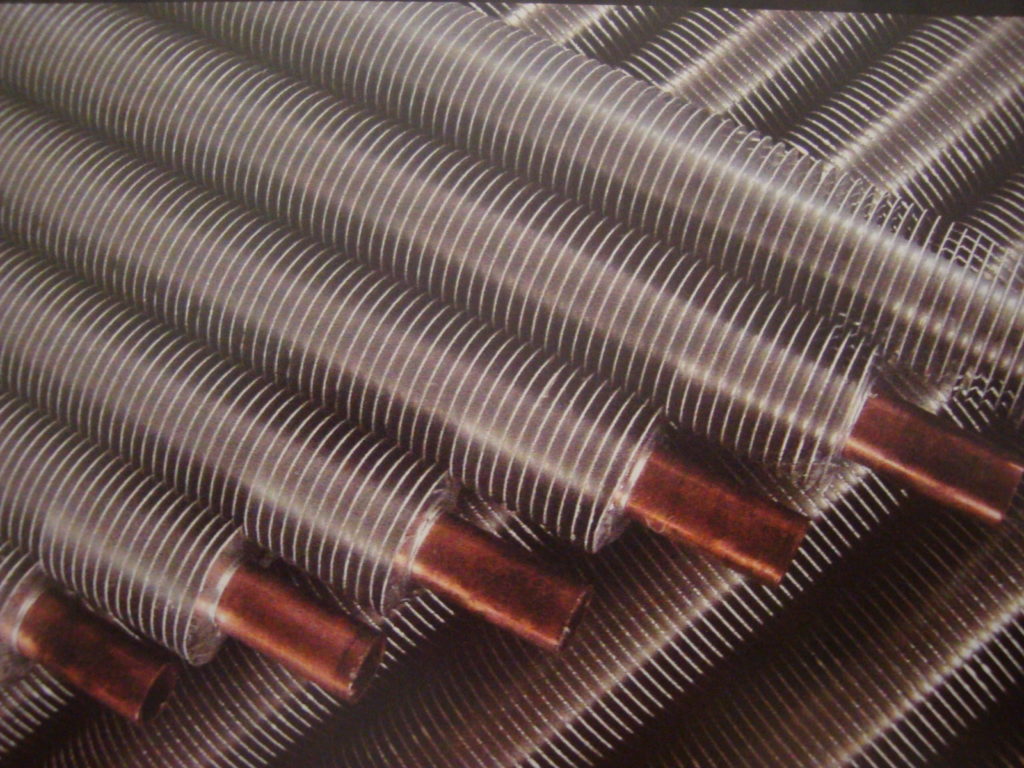
Copper-base finned tubes for HVAC heat exchangers — high-thermal-conductivity finned surface.

Copper-base finned tubes for HVAC heat exchangers — high-thermal-conductivity finned surface.

View on supplier site →

Heat exchanger tube categories

Tube typeConstructionBest applicationsTypical FOB China per meter (DN25)
Smooth seamless tube (carbon steel)OD 12-219mm; cold-drawn or hot-rolledBoilers, heat exchangers (general), pipe systemsUSD 1.20-4.50
Smooth seamless tube (stainless 304)OD 6-219mm; cold-drawnHeat exchangers, food/dairy, mild chemicalUSD 4.50-12.00
Smooth seamless tube (stainless 316L)OD 6-219mm; cold-drawnMarine, chemical, pharma, brackish waterUSD 6.50-18.00
Smooth tube (copper / copper-alloy)OD 6-159mm; soft-annealed or hard-temperHVAC, refrigeration, condensers, marineUSD 6.50-22.00
Spiral / helical fin tube (carbon steel)Smooth tube + steel fin spirally wound and weldedBoiler economizers, heat-recovery, HRSGUSD 12-38
L-foot finned tubeAluminum or copper L-foot fin tension-wrapped on tubeAir-cooled heat exchangers, fin-coil heat exchangersUSD 14-42
Integral low-fin tubeFins machined integrally with tube wallRefrigeration condensers, premium HVAC, marineUSD 22-65
Studded fin tubeSteel studs welded to base tubeHeavy-duty boiler economizers, exhaust gas systemsUSD 18-58
Duplex stainless tube (UNS S31803, S32205)Cold-drawn duplex stainlessSeawater, sour gas, chemical processingUSD 28-75
Super-austenitic (254 SMO, AL-6XN)Cold-drawn high-Ni-Mo stainlessSeawater service, chloride-rich brineUSD 65-180
Hastelloy / Inconel tubesCold-drawn nickel alloyHigh-temperature, corrosive, refineryUSD 95-380

Material selection by service environment

Service environmentRecommended tube materialAvoid
Steam / boiler tube (high-pressure water-side)Carbon steel SA-178 / SA-179, alloy SA-213 T22 for higher tempStainless for cost reasons
HVAC / refrigeration (R134a, R410A)Copper C12200 (deoxidized phosphorus copper)Carbon steel (corrodes), aluminum (bimetallic issues)
Seawater condenserCu-Ni 90/10 or 70/30, titanium, super-austenitic304 stainless (chloride pitting), copper (biofouling)
Brackish / cooling tower water304L for low chloride; 316L for moderate; duplex for high chlorideCarbon steel without corrosion allowance
Sour gas / oil-fieldDuplex stainless (UNS S31803), Hastelloy C-276Carbon steel (sulfide stress cracking), 316 (CSCC at high temp)
Refinery / petrochemicalSA-213 T22 / T91 for high-temp; duplex for chlorideStandard carbon steel above 400°C
Power plant economizer (flue gas side)Carbon steel finned tubes; alloy steel if SO2 condensation possibleStandard CS where dewpoint corrosion occurs
Pulp & paper black liquor304L stainless (chloride limited)Carbon steel (rapid attack)
Pharmaceutical / sanitary316L electropolished, double-tube-sheet config304 (insufficient corrosion margin)
Cryogenic / LNG9% nickel steel, 304L, aluminum brazed plate-finCarbon steel below -29°C (brittle)

Fin tube selection — when each type makes sense

Fin typeHeat transfer area ratio (vs smooth)Best applicationsLimitations
Spiral / helical wound10-20×Boiler economizers, HRSG, large air-cooled HXCleaning fins is harder; stress-corrosion at fin-tube weld
L-foot tension wrapped8-15×Air-cooled HX, fin-coil HVACLower temperature limit (~150-180°C); thermal cycling separates fin
Extruded / overlap-rolled10-18×Power plant air-cooled, premium air-cooled HXHigher cost; specialty fabrication
Integral low-fin (ILF)2-3×Refrigeration condensers, premium HVAC, falling-film evaporatorsModest area increase; very robust
Studded3-6×Heavy industrial economizer where fouling is severeDifficult to clean; high cost
Crimped / corrugated1.5-2.5×Specialty applicationsLimited area gain

Heat exchanger tube failures are expensive and dangerous

Tube failure in steam boilers, refinery heat exchangers, refrigeration systems, and process exchangers can cause: (1) production shutdown (USD 50,000-2,000,000+ per day for major industrial facilities); (2) safety incidents from contaminated cross-flow (chemical/process exchangers); (3) catastrophic equipment damage from overheating or pressure release. Material selection MUST match service environment — undersizing or wrong material is the dominant root cause of premature failure.

Specify tubes with mill test certificates per relevant standards: ASME SA-178, SA-179, SA-249 (carbon and stainless boiler/heat exchanger tubes); ASTM B111 (copper-alloy condenser tubes); ASTM B677 (high-Ni austenitic). For critical service, additional qualification testing (intergranular corrosion per ASTM A262 for stainless; flaring/flattening tests for bend-quality; ultrasonic inspection for wall thickness uniformity) is appropriate. Reputable suppliers like FB Material provide complete documentation packages.

Pricing brackets — wholesale

Order tierTotal quantityDiscountContainer utilizationLead time
Sample / small fabrication500-3,000mList priceLCL20-40 days
Mid OEM / fabrication shop5,000-30,000m5-15%20' container35-55 days
Large OEM / project order50,000-200,000m15-25%40' or 40HQ container50-90 days
Multi-unit project / power plant200,000+ m22-32%Multiple 40HQ containers60-120 days

Compliance and certification

StandardApplies toMarkets where critical
ASME SA-178 / SA-179 / SA-213 / SA-249Boiler and heat-exchanger tubes (US)USA + global oil/gas/power
ASTM B111 / B395Copper-alloy condenser tubesUSA marine and HVAC
EN 10216-2 / EN 10217-7Steel tubes for pressure purposes (EU)EU pressure equipment
EN 10305-4Cold-drawn precision steel tubesEU industrial
JIS G3461 / G3463Boiler and heat-exchanger tubes (Japan)Japan power generation
PED 2014/68/EUPressure Equipment DirectiveEU pressure systems
NACE MR0175 / ISO 15156Sour-service material qualificationOil-and-gas with H2S
ASTM A262Intergranular corrosion susceptibility (stainless)Critical chemical service
API 661Air-cooled heat exchangersRefinery air-cooled HX

Order workflow — heat exchanger tube procurement

  1. Application analysis — define service environment (fluid composition, temperature, pressure, flow rate); map to tube type (smooth / finned) and material grade
  2. Specification clarification — for each SKU define: material grade per relevant standard, OD/ID/wall thickness with tolerance, length, ends (plain / beveled / threaded), surface finish, and special tests
  3. Sample order — typically 100-500m per candidate spec; verify dimensional accuracy with calipers/micrometers, material composition with spectrometer (PMI testing), wall thickness uniformity with ultrasonic gauge
  4. Material qualification — for critical service, request hydrostatic test certificate per relevant standard, eddy-current testing for surface defects, intergranular corrosion test (ASTM A262 for stainless), NACE qualification for sour service
  5. First commercial order — typically 5,000-30,000m for OEM trial; specify packaging (capped ends, oiled surface for carbon steel, woven cloth wrap for premium alloys)
  6. Quality acceptance — incoming inspection for dimensional, surface quality, hydrostatic test, mill cert verification; document any out-of-spec tubes for supplier feedback
  7. Series replenishment — quarterly orders aligned with project schedule; for ongoing OEM production, monthly drumbeat orders with safety stock 8-16 weeks consumption

FB Material on weisourcing.com

View the full supplier profile, certifications, contact details, and complete product catalogue.

Frequently asked questions

What's the difference between smooth and finned tubes — when do I use each?
Different geometries optimized for different heat-transfer regimes. SMOOTH TUBES — used when: (1) Both sides of tube have liquid flow (water-water, oil-water, etc.); (2) Fluid pressure on either side is high (deformations from fins reduce pressure capacity); (3) Fluid is fouling-prone (smooth tubes are easier to clean). Common applications: shell-and-tube heat exchangers in refineries, condensers in power plants, water-water heat exchangers. FINNED TUBES — used when one side has gas flow (air, flue gas, refrigerant vapor) where heat-transfer coefficient is much lower than the liquid side. Adding extended fin surface compensates for the gas-side resistance. Common applications: (a) Air-cooled heat exchangers (refineries, gas processing); (b) Boiler economizers and HRSG (steam-side has water/steam, gas-side has flue gas); (c) HVAC fin-coils (refrigerant inside, air outside); (d) Refrigeration condensers (refrigerant inside, air outside). SELECTION RULE: when your dominant heat-transfer resistance is on the GAS SIDE, finned tubes deliver 5-15x more heat transfer per unit length at modest cost premium. When both sides are liquid, smooth tubes are simpler, cheaper, and easier to clean. For ambiguous cases (e.g., refrigerant phase change with gas inside vs liquid inside), engineering analysis is needed.
How does ASME SA-178 vs SA-179 vs SA-213 vs SA-249 fit my application?
Different ASME codes for different tube applications. SA-178 — Electric-resistance-welded carbon and carbon-manganese steel boiler and heat-exchanger tubes. Properties: welded construction (cheaper than seamless), pressure rating limited by weld strength, max temperature ~480°C. Best for: water-side boiler tubes, low-pressure steam, general heat exchangers in non-critical service. SA-179 — Seamless cold-drawn low-carbon steel heat-exchanger tubes. Properties: seamless construction (no weld), cold-drawn for tight tolerance, max temperature ~480°C. Best for: heat exchangers in refineries, chemical plants where weld-free preference applies. SA-213 — Seamless ferritic and austenitic alloy steel boiler, superheater, and heat-exchanger tubes. Available in many alloy grades: T11, T22, T91, etc. for high-temperature service; TP304, TP316, TP321 for stainless. Best for: high-temperature boiler tubes, superheaters, pressurized stainless heat exchangers. SA-249 — Welded austenitic steel boiler, superheater, heat-exchanger, and condenser tubes. Same alloy grades as SA-213 but welded construction. Cheaper than SA-213 by ~15-25% but with weld at the cost of slightly lower allowable stress. SELECTION: cost-driven non-critical → SA-178 (welded) or SA-179 (seamless basic); high-temperature alloy → SA-213 grade T22 or T91; austenitic stainless welded → SA-249 (cheaper) or SA-213 (more critical applications); reputable supplier should provide certificates per the relevant grade.
Can I source heat exchanger tubes from China for ASME pressure vessel manufacturing?
Yes, with appropriate certification. ASME Section VIII Division 1 and Division 2 pressure vessel construction allows materials per ASME Section II Material Specifications. Suppliers must maintain (1) ASME Section II material specification compliance with mill test certificates per relevant SA-XXX standard; (2) ASME Boiler and Pressure Vessel Code certification (BPVC) for tubes intended for code-stamped vessels; (3) heat treatment certificates as applicable. KEY DOCUMENTATION required from supplier: chemical analysis showing composition per spec, mechanical properties (tensile, yield, elongation, impact), hydrostatic test certificate, NDT (non-destructive testing) report (ultrasonic, eddy-current, hydrostatic), heat treatment certificate. PROCUREMENT WORKFLOW for ASME work: (1) Verify supplier maintains active ASME quality system with manuals reviewed by ASME survey; (2) Request specific lot/heat traceability — every tube batch traceable to specific heat number with full documentation; (3) Pre-shipment inspection by buyer or third party for critical orders; (4) Witness testing during production for very critical orders. Premium-tier Chinese tube manufacturers like FB Material maintain ASME certification and ship to US, EU, and global pressure vessel manufacturers regularly. Cost savings vs Tier-1 European/Japanese suppliers: typically 25-45% for mainstream alloys, 15-25% for premium alloys.
What's the typical service life of heat exchanger tubes?
Highly material- and service-dependent. CARBON STEEL boiler tubes: 15-30 years typical with proper water treatment; can be longer with conservative service or premium-grade tubes. Failure modes: hydrogen damage (high-pressure boilers), erosion-corrosion, oxygen pitting. STAINLESS STEEL (304/316L) heat exchanger tubes: 20-40 years typical for proper service; can be 50+ years for conservative use. Failure modes: chloride stress corrosion cracking, intergranular corrosion (sensitized 304/316), pitting. COPPER tubes (HVAC/refrigeration): 25-50 years for indoor service; 15-25 years for harsh outdoor or marine. Failure modes: ammonia stress corrosion, formicary corrosion (formic acid from VOC), erosion-corrosion. CU-NI tubes (seawater condensers): 20-40 years typical. Failure modes: erosion-corrosion at high velocities, pitting. TITANIUM tubes (seawater): 40-80+ years typical — essentially lifetime for most applications. SHORTER LIFE INDICATORS: aggressive flow velocities (>3 m/s for copper, >2.5 m/s for steel), poor water treatment (allows oxygen pitting), thermal cycling (induces fatigue), contaminated water (chlorides, sulfides, ammonia). For critical applications, design for inspectability — eddy-current testing of tube bundle every 3-5 years catches early degradation; tubes can be plugged or replaced individually before catastrophic failure. Tubeing replacement is typically 5-15% of original heat exchanger cost.
What's the difference between L-foot, integral low-fin, and spiral fin tubes?
Three different fin manufacturing methods with different applications. L-FOOT FIN — aluminum or copper fin foil rolled around the tube and tension-bonded; the fin "L-shape" wraps the tube. Properties: high fin density possible (8-14 fins per inch typical), lower temperature limit (~180°C max — beyond this, thermal expansion separates fin from tube), good heat transfer per cost. Best for: HVAC fin-coils, air-cooled heat exchangers, refrigeration evaporators. INTEGRAL LOW-FIN (ILF) — fins are machined or cold-rolled directly into the tube wall, becoming part of the tube itself. Properties: very robust (no separation from tube possible), lower fin height (1.5-3mm typical), modest area increase (2-3x smooth), excellent for fluid-side heat transfer. Best for: refrigeration condensers (refrigerant inside, water outside), falling-film evaporators, specialty premium applications. SPIRAL / HELICAL FIN — separate steel fin spirally wound around carbon steel tube and welded continuously. Properties: very high fin density possible, high-temperature capable (up to 480°C+), most economical for large-scale industrial. Best for: boiler economizers, heat-recovery steam generators, large air-cooled industrial HX. SELECTION: HVAC and refrigeration → L-foot (cheap, well-suited to temp range); high-temperature industrial → spiral wound (heat tolerance); premium liquid-liquid → ILF (durability and reliability). For specific application, supplier engineering can recommend optimal fin geometry based on heat-transfer requirements.
How do I plan inventory for tube replacement projects?
Tube replacement is project-driven with seasonal/turnaround timing. PROJECT WORKFLOW: (1) Engineering analysis identifies tubes due for replacement (typical trigger: more than 5-10% of tube population plugged from prior inspections, or scheduled overhaul interval reached); (2) Tube quantity and specification determined; (3) Procurement 3-9 months ahead of turnaround; (4) Tubes received at site 2-4 weeks before turnaround for staging; (5) Turnaround installation (typically 2-8 weeks for major heat exchanger). PROCUREMENT TIMING: 12-20 week lead time typical for premium alloy or specialty tubes from China; 8-14 weeks for mainstream materials. For larger tube quantities (>10,000m), supplier may need 16-24 weeks. INVENTORY HOLDING: most owners do not hold tube inventory between projects — too capital-intensive. Exception: critical-service tubes for 24/7 industrial sites where rapid replacement capability matters; typical hold 50-200% of expected annual replacement quantity. SAFETY STOCK CONSIDERATIONS: dimensional and material variability can require 2-5% extra tube quantity beyond exact count to allow for handling damage, dimensional rejects, etc. SUPPLIER RELATIONSHIPS: develop 2-3 qualified suppliers with documented qualification packages; for major projects, dual-source 70/30 to reduce single-supplier risk; maintain working relationships for emergency procurement (24-48 hour quotes for unplanned outages possible with active suppliers).
⚠ Important Disclaimer

Source: Product images on this page are hosted on the manufacturer's official website (fbmaterial.com) and link directly back to that website. All product information was summarised from the supplier's public catalogue.

Brand mentions and trademark compliance: References to Tier-1 heat exchanger tube manufacturer brands (Wieland-Werke, Outokumpu, Sandvik Materials Technology, Tubacex, Aperam, Tenaris) are made for the sole purpose of describing functional benchmarks and supply-chain context. FB Material is not authorized by, affiliated with, or endorsed by any of these brand owners. Products are aftermarket-fit cross-reference materials manufactured under FB Material's own brand or buyer-private-label only.

Critical-service responsibility: Heat exchanger tubes used in pressure vessels, boilers, and process equipment must meet relevant codes (ASME BPVC, EN 10216, PED 2014/68/EU, etc.) with documented test certificates. Improperly specified tubes can cause catastrophic equipment failure with safety, environmental, and financial consequences. For ASME-stamped pressure vessel work, supplier must maintain active ASME quality system certification.

Material-application matching: Tube material selection for specific service environments requires engineering analysis of fluid chemistry, temperature, pressure, flow velocity, and stress conditions. Wrong material selection can cause premature failure (chloride stress corrosion in stainless, hydrogen damage in carbon steel, dezincification in brass-alloy copper, etc.). Engage qualified materials engineering for critical service environment evaluation.

Pricing & specifications: All price ranges, service-life figures, and tier definitions reflect general market observation. Real-world tube performance depends on water/process treatment, operating conditions, and maintenance practices. Confirm current pricing, MOQ, lead time, and material certifications directly with the supplier.

No middleman role: Weisourcing provides supplier discovery and editorial content. All transactions occur directly between buyer and supplier through the contact channels published on the supplier's official website.