Electric two-wheelers — motorcycles, scooters, e-bikes, and tricycles — are the most actively traded category in China's vehicle export market. The combination of mature lithium battery supply, well-established frame and motor manufacturing, and tightening global emissions regulation has made China the source for nearly 80% of world electric two-wheeler production. For dealers, distributors, and importers in North America, Latin America, Africa, Southeast Asia, and the Middle East, sourcing electric motorcycles by container directly from a Chinese manufacturer is now the standard procurement model — bypassing the multi-tier distributor markups that historically inflated end-customer prices by 2-3×.
This guide explains how to specify, certify, and import electric motorcycles by container, what the realistic price points are, and the documentation that makes customs clearance smooth.
Product range — actual catalogue images
The product images below are hosted on the manufacturer's official website (zpmotos.com) and link directly to the manufacturer's catalogue. Click any image to view the full specification page in a new tab.

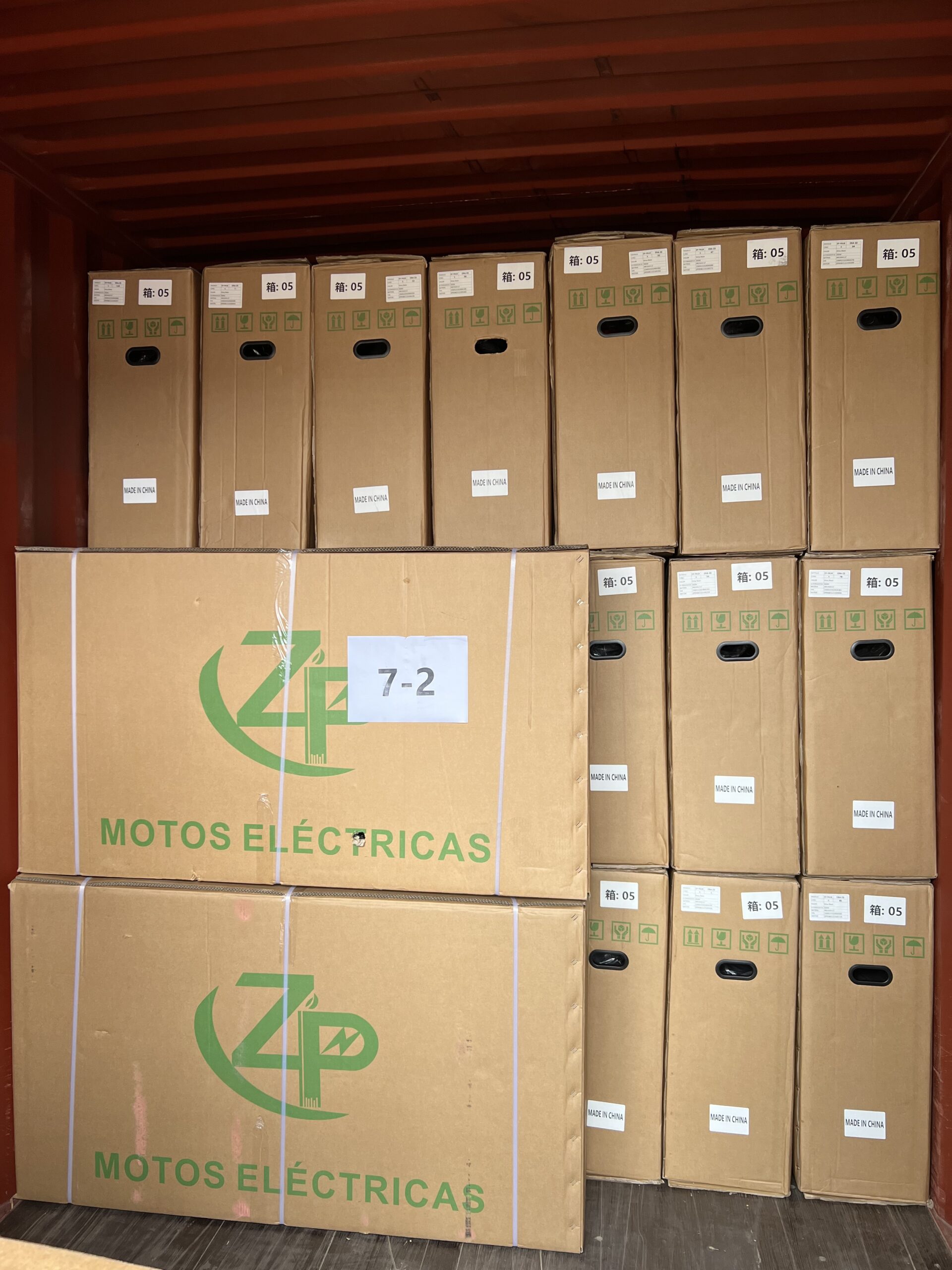
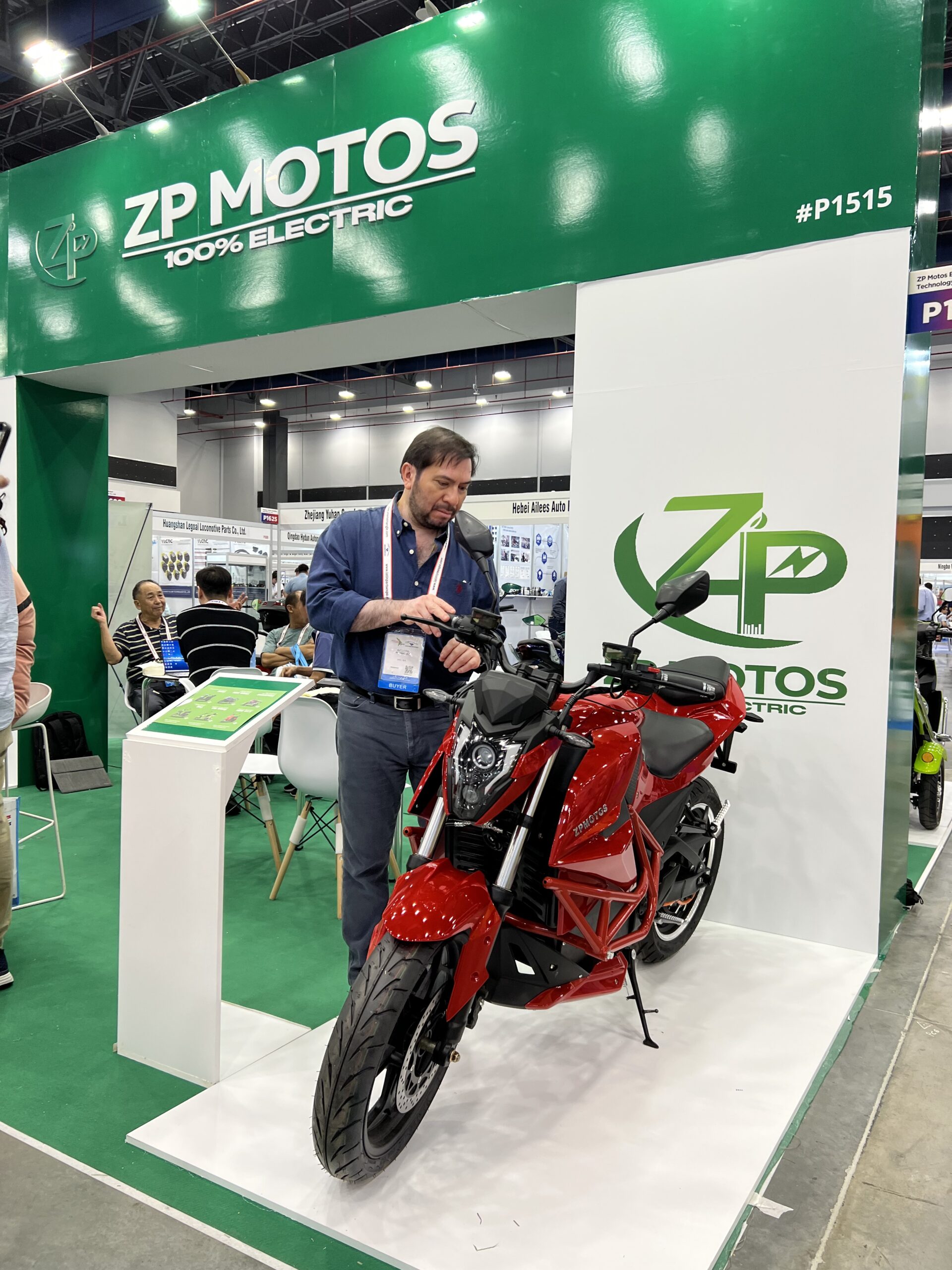
High-speed electric motorcycle — 3000W with disc brakes and full LED package.
View on supplier site →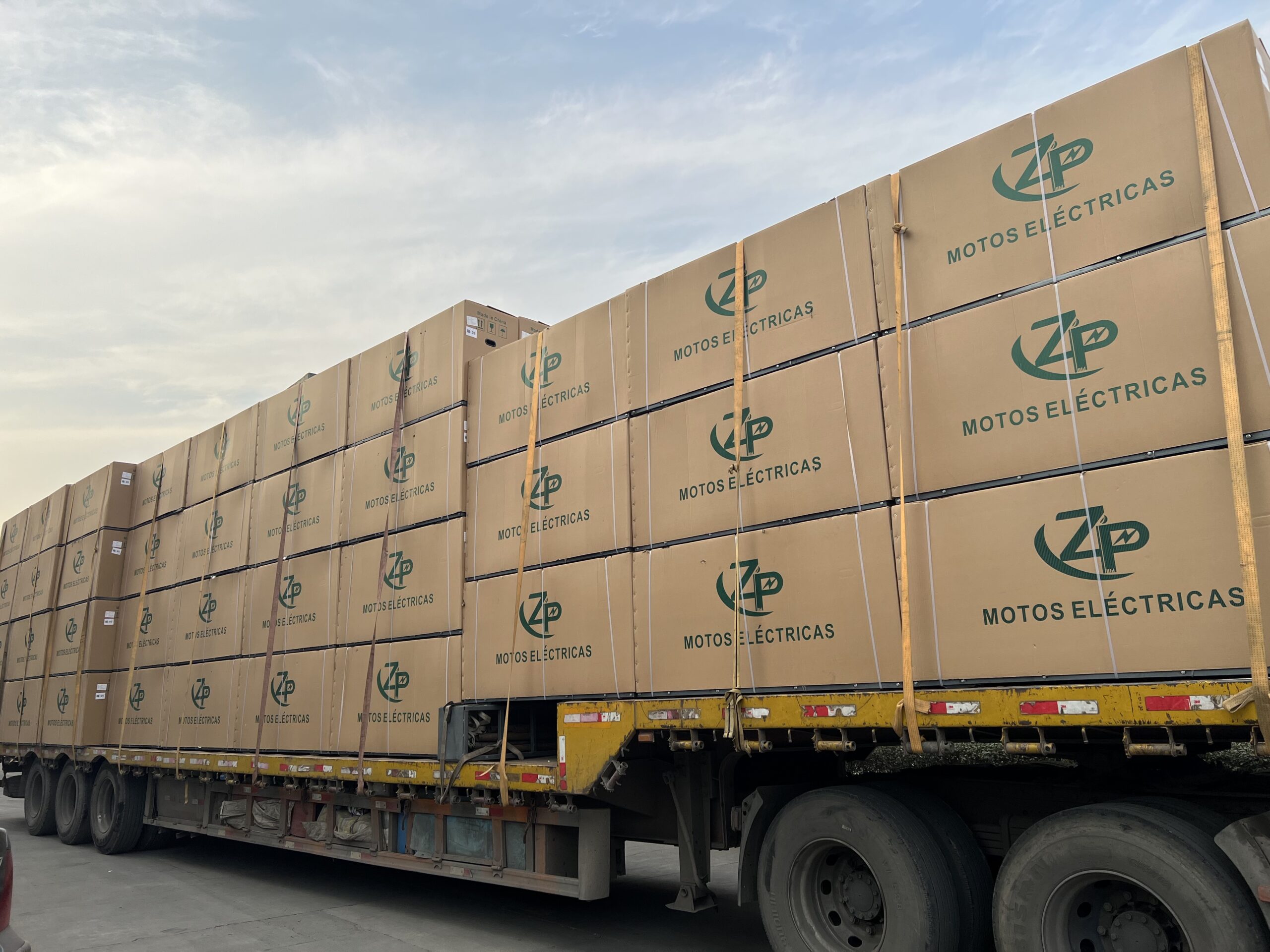
Cargo electric tricycle — last-mile delivery for urban logistics, 1000-1500W.
View on supplier site →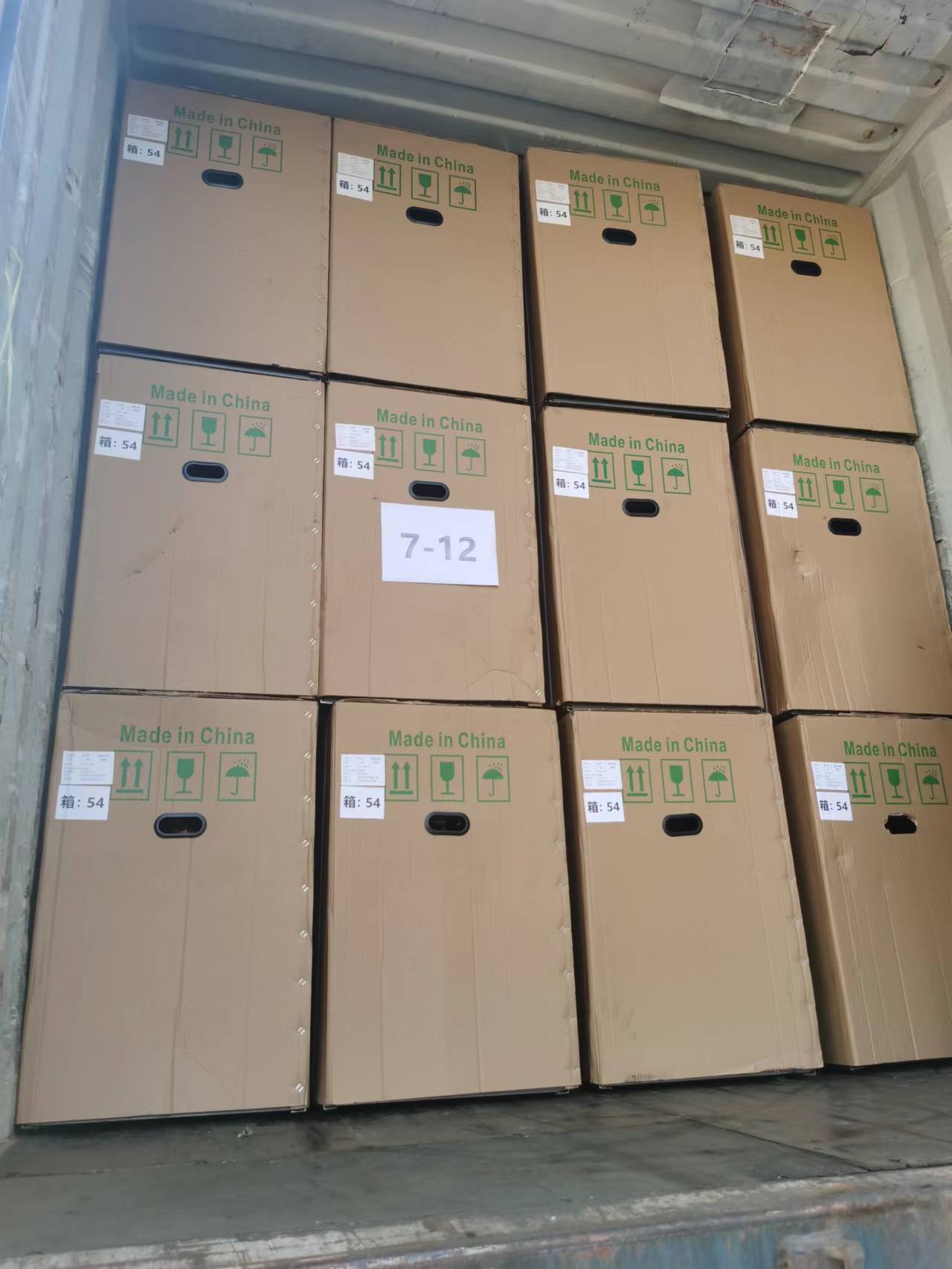
Electric motorcycle high-spec model — premium components, lithium battery option.
View on supplier site →Vehicle classes — what fits in a container
| Vehicle class | Motor power | Top speed | Range / charge | FOB China unit | Pcs / 40HQ container |
|---|---|---|---|---|---|
| E-bike fat-tire | 500-1000W | 32-45 km/h | 40-60 km | USD 380-650 | 50-65 |
| Electric scooter (commuter) | 1500-2000W | 45-65 km/h | 50-80 km | USD 580-950 | 40-55 |
| Electric motorcycle (mid-power) | 2000-3000W | 55-75 km/h | 70-110 km | USD 850-1,400 | 32-42 |
| Electric motorcycle (high-power) | 3000-5000W | 70-95 km/h | 80-130 km | USD 1,200-1,950 | 28-38 |
| Cargo / delivery e-tricycle | 1000-1500W | 30-45 km/h | 60-100 km | USD 720-1,250 | 14-22 |
| Premium lithium-battery sport | 4000-8000W | 85-130 km/h | 120-200 km | USD 1,800-3,800 | 22-32 |
Battery options — the most important specification choice
Battery technology dominates the cost structure and customer experience of electric two-wheelers. Two main options:
| Parameter | SLA / Lead-acid | LiFePO4 lithium | NCM lithium (high-density) |
|---|---|---|---|
| Energy density (Wh/kg) | 30-40 | 90-120 | 140-200 |
| Cycle life (80% capacity retention) | 250-450 cycles | 2,000-4,000 cycles | 800-1,200 cycles |
| Weight, typical 60V 20Ah pack | 20-25 kg | 7-9 kg | 5-7 kg |
| FOB cost (60V 20Ah) | USD 75-130 | USD 250-380 | USD 220-340 |
| Charge time (full) | 6-10 hours | 3-5 hours | 2-4 hours |
| Operating temperature | 0 to +40°C | -20 to +60°C | -10 to +50°C |
| Replacement cost over 5 years | 2-3 sets needed | Usually 1 set | 1-2 sets |
| Best for | Lowest entry price, budget markets | Long service life, mid-tier | Premium models, weight-critical |
Most container orders today specify lithium battery as standard for upper-tier models, SLA still common for budget e-bikes destined for African and Southeast Asian markets where replacement battery infrastructure favours SLA's lower up-front cost. For European, North American, and developed-Asia markets, lithium is essentially mandatory for resale.
Container loading — what fits in 40HQ
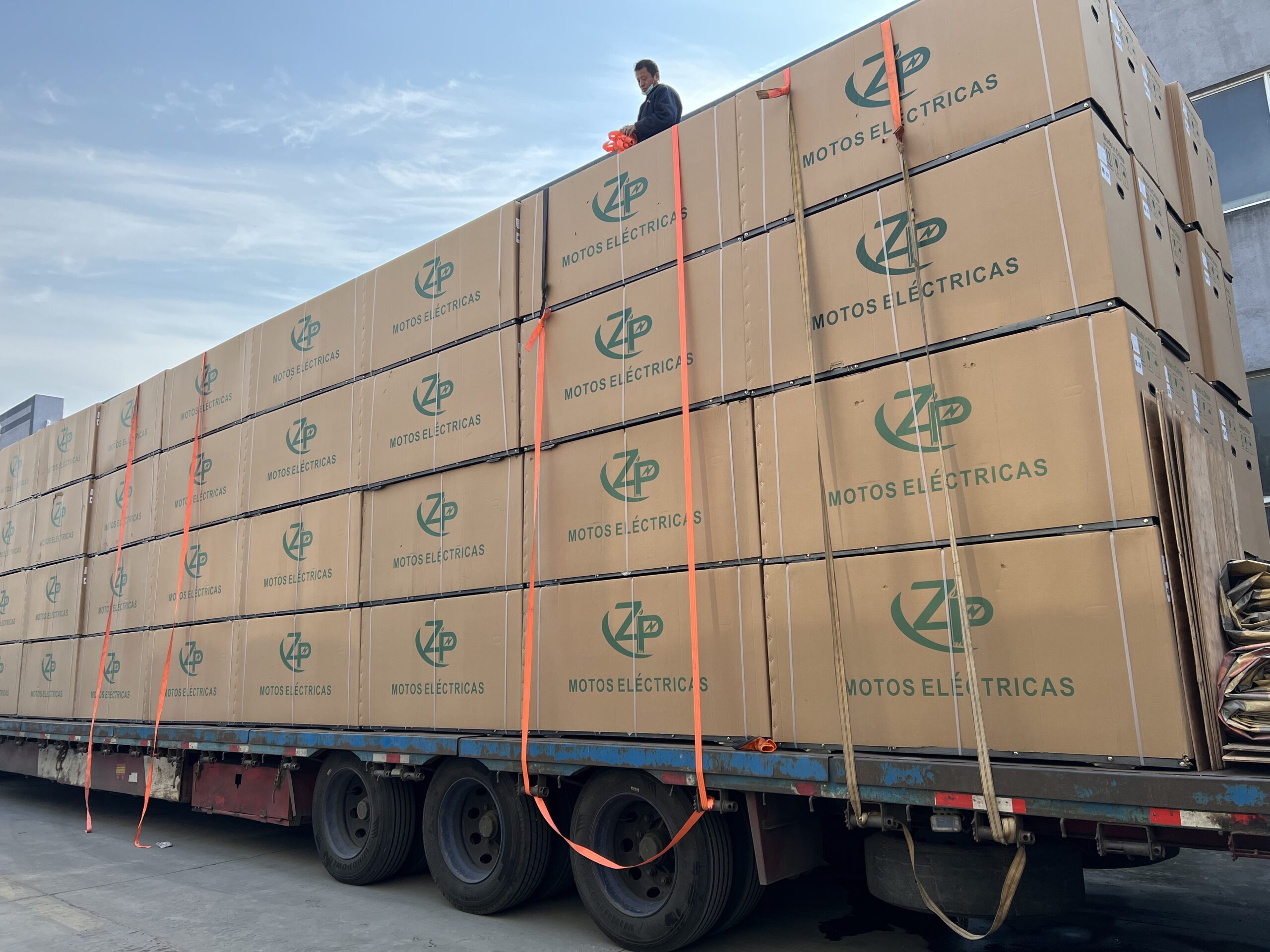
Container utilization is the single biggest determinant of landed cost per unit. Standard loading patterns for 40-foot high-cube containers:
| Vehicle class | Per 20' container | Per 40' container | Per 40HQ container | CBM each |
|---|---|---|---|---|
| E-bike fat-tire (boxed) | 22-28 | 45-55 | 50-65 | 0.95-1.10 |
| Electric scooter (semi-knock-down) | 20-26 | 40-50 | 45-58 | 1.10-1.35 |
| Electric motorcycle mid-power (boxed CKD) | 16-22 | 30-38 | 35-45 | 1.55-1.95 |
| Electric motorcycle (assembled) | 10-13 | 22-28 | 26-34 | 2.20-2.85 |
| Cargo e-tricycle (CKD) | 6-9 | 14-18 | 16-22 | 3.40-4.50 |
"CKD" (Completely Knocked Down) means the vehicle ships in a wood crate with frame, motor, wheels, battery, and harness packed separately. CKD reduces shipping volume by 35-50% versus assembled units but requires post-import assembly labour. "SKD" (Semi-Knocked Down) is the typical compromise — partially assembled with major sub-systems pre-fitted, requiring only handlebar and front-wheel installation at destination.
Required documentation by destination market
| Market | Required certification | Vehicle category notes |
|---|---|---|
| European Union | EEC Type Approval (L1e/L3e), CE EMC | Strict — full L1e/L3e/L6e categories with COC documentation |
| UK | UKCA + DVLA registration | Replaces EEC for post-Brexit imports |
| USA | DOT compliance (49 CFR 571), EPA, FCC for e-system | VIN required; Class-1/2/3 e-bike rules vary by state |
| Canada | RVCC + Transport Canada compliance | VIN for power-assisted bicycles 500W+ federal class |
| Brazil | INMETRO / DENATRAN registration | Local content requirements for some categories |
| Argentina | RTO + INTI test | Tariff classification critical for import duty |
| Saudi Arabia / GCC | SASO, GCC mark | Pre-shipment inspection often required |
| Kenya / Tanzania / Uganda | KEBS / TBS PVoC | Pre-export verification of conformity required |
| Mexico | NOM compliance | NOM-200 for motorcycles, NOM-194 for batteries |
| Philippines / Vietnam / Indonesia | National type approval / homologation | Each country has different category limits and processes |
Pricing brackets — what your landed cost looks like
Total landed cost per electric motorcycle in your destination market typically breaks down as:
- FOB China unit price — USD 850-1,400 for mid-power motorcycles
- Sea freight share — USD 80-180 per unit (40' HQ = USD 3,500-6,500 ÷ 32-42 units)
- Marine insurance — 0.3-0.8% of CIF value
- Import duty — varies massively by country: 0% (some FTA partners), 5-15% (most developed markets), 25-40% (some Latin America / Africa), up to 60-80% (protectionist markets)
- Local VAT / GST — typically 10-20% on CIF + duty
- Customs clearance + inland — USD 30-120 per unit
- Local certification / homologation amortization — varies; some markets USD 50-300 per unit pre-amortized over container quantity
For most markets, expect landed cost per unit to be 1.6-2.4× the FOB China price. Retail price typically lands at 2.5-4.5× FOB depending on local competition and brand positioning.
Procurement checklist — what to verify
Before placing the container order
- Vehicle homologation — confirm the manufacturer has experience with YOUR target market's certification process and provides the documents you need (COC, EEC certificate, EPA/DOT, etc.)
- VIN format — must comply with destination country requirements; VIN structure is typically locked in by the factory at production
- Battery transport documentation — UN38.3 test report and MSDS are mandatory for lithium battery shipments by sea; without these, the carrier won't book the cargo
- Charger voltage/plug — confirm input voltage (110V vs 220V), frequency (50Hz vs 60Hz), and plug type (Type A/B/C/F/G/I/L) match destination
- Spare parts kit — first container should include spare-parts-kit covering 2-3% of unit value (controllers, throttle, brake levers, mirrors, lights — the items most often damaged in shipping or first-year warranty)
- After-sales support arrangement — defined warranty terms, response time for warranty claims, replacement parts shipment terms (DDP free, or buyer-pays-freight)
- Service manual + electrical schematic in destination language — required for buyer's service technicians
Order workflow — container procurement
- Specification inquiry — provide model interest, target retail price, destination market, certification requirements, electrical configuration, and quantity range
- Quote + sample images — supplier returns FOB quote, sample model photos with your color scheme, certification feasibility within 5-7 days
- Sample order — 1-3 units air-shipped or by ocean LCL for inspection, dealer testing, and homologation submission
- Homologation / certification process — typically 60-180 days depending on market; sample units used for type approval testing at destination labs
- First container order — 30% deposit, 70% balance against pre-shipment inspection or B/L copy; production lead time 35-60 days
- Pre-shipment inspection — buyer or third-party inspector verifies units functioning, spec correct, packaging correct before container loading
- Sea freight — 18-45 days transit depending on destination
- Customs clearance + delivery — work with experienced customs broker who has handled electric two-wheeler imports before; new importers typically encounter unexpected duty rate or certification documentation issues on first shipment