weisourcing.com / products / ACooker / Commercial Kitchen Equipment

Commercial Kitchen & Restaurant Equipment from China — A B2B Wholesale Buyer's Guide

A practical sourcing guide for commercial kitchen equipment from China — written for restaurant equipment dealers, hotel and hospitality buyers, restaurant chain procurement teams, foodservice export distributors, school and institutional foodservice, hospital foodservice, and catering operators. Real product images from acooker.com covering commercial cooking equipment (gas ranges, electric ranges, fryers, char broilers, griddles, ovens, induction cooktops), refrigeration (commercial fridges, freezers, ice machines, salad bars, display cases), food processing (slicers, mincers, vegetable cutters, mixers), stainless steel furniture (prep tables, sinks, shelving, hoods), warewashing (dishwashers, glasswashers). Equipment categorization with FOB pricing brackets, certification requirements by destination market (NSF, UL, ETL, CE, AGA, SAA, RCM), refrigerant compliance considerations, and the procurement workflow that establishes commercial kitchen equipment sourcing relationships.

Manufacturer: ACooker (acooker.com)
Category: Home, Kitchen & Decor
Reading time: 14 min

Commercial kitchen equipment — gas ranges, deep fryers, char broilers, ovens, refrigerators, freezers, ice machines, dishwashers, food processors, prep tables, sinks, shelving, and a hundred other items — represents one of the highest single-investment categories in the foodservice industry. A new restaurant typically invests USD 80,000-300,000 in commercial kitchen equipment; a hotel kitchen USD 200,000-2 million; a chain expansion or remodel can run into millions. Beyond initial purchase, the equipment must be reliable, durable, energy-efficient, easy to clean, and compliant with food-safety codes — failed equipment costs restaurants USD 1,500-15,000 per day in lost revenue and emergency replacements. China dominates global commercial kitchen equipment supply, with specialist factories serving everything from small independent restaurants to multi-national chain rollouts.

This guide covers the ACooker product family — commercial cooking equipment (gas ranges, electric ranges, fryers, char broilers, griddles, ovens, induction cooktops), refrigeration (commercial fridges, freezers, ice machines, salad bars, display cases), food processing (slicers, mincers, vegetable cutters, mixers, dough sheeters), stainless steel furniture (prep tables, sinks, shelving, hoods), warewashing (dishwashers, glasswashers), and supporting items. Real product images linking back to the supplier's catalog at acooker.com.

Product range — actual catalogue images

The product images below are hosted on the manufacturer's official website (acooker.com) and link directly to the manufacturer's catalogue. Click any image to view the full specification page in a new tab.
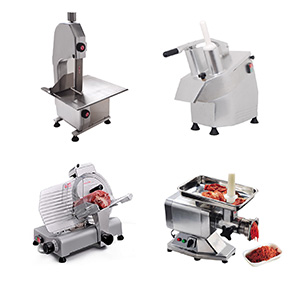
Commercial food processing line — bone saw, vegetable cutter, meat slicer, mincer in compact catalog grid.

Commercial food processing line — bone saw, vegetable cutter, meat slicer, mincer in compact catalog grid.

View on supplier site →
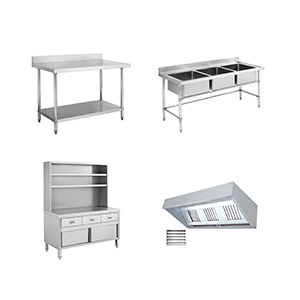
Stainless steel commercial kitchen equipment — prep tables, 3-compartment sinks, exhaust hoods, prep with shelving.

Stainless steel commercial kitchen equipment — prep tables, 3-compartment sinks, exhaust hoods, prep with shelving.

View on supplier site →

Equipment categories and pricing brackets

CategoryCommon itemsFOB China typical price range
Commercial gas range (4-6 burner)Free-standing range with oven belowUSD 350-1,200 per unit
Commercial gas range (6-10 burner)With double oven, salamander optionUSD 1,200-3,800 per unit
Commercial deep fryer (single basket)Free-standing 12-22L oil capacityUSD 220-680 per unit
Commercial deep fryer (double basket)Higher-capacity twin basketUSD 480-1,400 per unit
Char broiler / grill (counter-top)Gas-fired with lava rock or radiantUSD 280-1,100 per unit
Convection oven (single deck)Forced-air convection, electric or gasUSD 580-2,400 per unit
Pizza oven (deck or conveyor)Stone deck, gas or electricUSD 850-4,800 per unit
Rotary rack oven (bakery)For high-volume bread/pastry productionUSD 4,500-18,000 per unit
Combi steam ovenCombined convection + steamUSD 2,500-12,000 per unit
Induction cooktop (commercial)High-power induction for restaurant useUSD 380-1,800 per unit
Walk-in cooler / freezerModular panel constructionUSD 4,500-22,000 per unit
Reach-in refrigerator (1-3 door)Stainless front, full-heightUSD 680-2,800 per unit
Salad bar / cold displayCounter-top or free-standingUSD 850-3,200 per unit
Hot food display / bain-marieHeated holding for buffet serviceUSD 380-1,800 per unit
Ice machine (50-200 kg/day)Cube or flake ice productionUSD 850-3,800 per unit
Commercial dishwasher (under-counter)Hood-type for café/small restaurantUSD 1,200-3,800 per unit
Commercial dishwasher (rack conveyor)High-volume restaurant/cafeteriaUSD 6,500-28,000 per unit
Commercial meat slicer (10-14")Manual or auto slicerUSD 220-980 per unit
Commercial meat mincer / grinder22-32 size with hopperUSD 280-1,400 per unit
Commercial vegetable cutterChop / dice / shred attachmentsUSD 380-1,200 per unit
Bakery dough mixer (spiral or planetary)20-80L bowl capacityUSD 580-2,800 per unit
Bone saw (commercial)Vertical band saw for meat processingUSD 380-1,400 per unit
Stainless steel prep tableStandard 4ft to 8ft length, 304 SSUSD 180-680 per unit
3-compartment sink (stainless)With drain boards both sidesUSD 480-1,800 per unit
Stainless steel shelving (4-tier)NSF-grade adjustableUSD 120-480 per unit
Exhaust hood (4-12ft)Type I cooking hood with grease filtersUSD 580-3,800 per unit
Make-up air unitFor exhaust hood balanceUSD 1,800-6,500 per unit

Critical compliance certifications

CertificationScopeMarkets where required
NSF/ANSI Standard 2 (food zones)Food-contact equipment surfaces and designUSA — required for commercial use
NSF/ANSI Standard 4 (commercial cooking)Cooking equipment standardsUSA
NSF/ANSI Standard 7 (refrigeration)Commercial refrigeration food safetyUSA
UL listedElectrical safetyUSA / Canada
cUL / CSACanadian electrical safetyCanada
CE markingEU machinery + electrical complianceEU / EEA
EN 631 (gastronorm)European standard pan sizing for prep equipmentEU
ETL listedAlternative to UL listing in USUSA
RoHSRestriction of hazardous substancesEU; increasingly other markets
Energy StarEnergy efficiency labelingUSA voluntary; preferred by chains
AGA (Australian Gas Association)Gas appliance safetyAustralia / NZ
SAA / RCM markAustralian electrical safetyAustralia / NZ
F-Gas / refrigerant complianceHFC/HFO refrigerant rulesEU; tightening in other markets

NSF / UL listing is non-negotiable in regulated markets

For commercial kitchen equipment in US installations, NSF (National Sanitation Foundation) listing for food-contact equipment and UL listing for electrical equipment are essentially mandatory. Health departments inspect for these listings; uncertified equipment may fail inspection or be ordered out of service. Chain restaurants typically require NSF listing as a condition of supplier approval.

For Chinese aftermarket-fit equipment to enter US market legitimately, manufacturer must work with NSF to certify specific product models. Counterfeit "NSF marked" equipment without legitimate certification creates liability for buyer if discovered. Verify NSF certification by checking the public NSF database (info.nsf.org) — listing should match exact product model. Reputable manufacturers like ACooker maintain proper certification on US-export models; budget-tier suppliers may sell uncertified equipment with counterfeit markings — never acceptable for US commercial use.

Common buyer profiles

Buyer typeTypical project valueEquipment scope
Independent restaurant (new build)USD 60,000-180,00030-80 equipment items; full back-of-house + counter
Chain restaurant rollout (10-50 locations)USD 500,000-3 millionStandardized equipment package per store; same SKU across rollout
Hotel kitchen (mid-size)USD 250,000-800,00050-150 items; banquet + room service + restaurant kitchens
Hotel kitchen (luxury / large)USD 1-4 million200-500 items; multiple kitchens, bakery, banquet, fine dining
Catering / event companyUSD 80,000-400,000Mobile equipment + central commissary; transport-friendly
School / institutional foodserviceUSD 150,000-500,000Heavy-duty production equipment; cafeteria service line
Hospital foodserviceUSD 200,000-1 millionHACCP-compliant; patient-tray system
Restaurant equipment dealer (regional)USD 500,000-2 million annual purchasingCatalog stock across 200-500 SKUs; project-based custom orders
Foodservice export distributorUSD 1-5 million annualMulti-container shipments to specific country markets

Key technical specifications

EquipmentCritical specifications to verify
Gas equipmentBTU rating; gas type (natural / LPG); manifold pressure; ignition system (pilot, electronic, hot-surface); meets local gas code
Electric equipmentVoltage (single phase 220V/240V; 3-phase 380V/400V/480V); kW rating; amperage; plug type or hard-wire
RefrigerationRefrigerant type (R134a, R290, R600a, R448A); ambient operating range; reach-in capacity; door swing direction
Cooking dimensionsCooking surface area; chamber capacity (for ovens); BTU/hour input capacity
Stainless steel grade304 SS (standard food contact) vs 430 (cheaper, less corrosion-resistant); thickness (16-gauge typical for prep tables)
Insulation (refrigeration)Polyurethane density; thickness (50-100mm typical); CFC-free
Welding quality (stainless)TIG welds vs spot welds; smooth-finish for food contact
Casters / legsNSF-listed casters with brakes; adjustable height legs

Order workflow — commercial kitchen procurement

  1. Project scope analysis — work with kitchen designer or consultant to define equipment list per menu, throughput, kitchen layout; final equipment specification document with model numbers, dimensions, electrical/gas requirements, exhaust calculations
  2. Compliance specification — verify destination-market certifications (NSF, UL, ETL for US; CE for EU; AGA/SAA for Australia); explicit refrigerant compliance for refrigeration units
  3. Supplier shortlist — identify 2-4 candidate suppliers with relevant export track record + appropriate certifications
  4. Sample/showroom evaluation — visit factory or showroom; verify equipment quality, finish, controls, durability of construction
  5. Container order plan — typical commercial kitchen project fits 1-3 containers (40HQ); large hotel projects 5-15 containers; chain rollouts ongoing container streams
  6. Pre-shipment acceptance test — for major equipment (combi ovens, dishwashers, refrigeration), supplier should perform PSAT on actual product before shipping
  7. Container shipment — coordinate with kitchen-build schedule; equipment typically arrives 2-3 months before kitchen opening
  8. Installation + commissioning — professional installation + start-up; for major equipment, supplier engineer may attend on-site (especially for combi ovens, dishwashers, large refrigeration)
  9. Training + warranty period — operator training; warranty typically 12 months parts; spare parts kit recommended for high-failure consumables

ACooker on weisourcing.com

View the full supplier profile, certifications, contact details, and complete product catalogue.

Frequently asked questions

How does Chinese aftermarket commercial kitchen equipment compare to Tier-1 brands like Vulcan, Hobart, True, Manitowoc?
For mainstream applications, premium-tier Chinese equipment delivers 80-95% of Tier-1 functional performance at 30-50% of Tier-1 pricing. Examples: VULCAN 6-burner gas range with oven, US dealer price USD 4,500-7,500. Equivalent ACooker or premium Chinese 6-burner range FOB USD 1,200-1,800; landed cost USD 1,800-2,500 after freight + duty. Quality difference: Vulcan typically uses heavier-gauge steel, more refined burner controls, longer-life components; Chinese premium tier uses adequate-gauge steel and standard components with reasonable service life. SERVICE LIFE EXPECTATIONS: Tier-1 commercial range typical 15-25 years; Chinese premium aftermarket-fit 8-15 years. The 50% lower service life is often economically acceptable given the 50-65% lower upfront cost. WHERE TIER-1 STILL WINS: (1) Heavy-volume operations (chain restaurants doing 500+ covers per day); (2) Premium fine-dining where equipment quality affects food output; (3) Specialty applications requiring sophisticated controls (combi ovens, sous-vide, modern bakery); (4) Markets with strong service network for Tier-1 (US, EU mature markets). WHERE CHINESE AFTERMARKET WINS: (1) New restaurants on tight budgets; (2) Casual dining and quick-service; (3) Emerging markets without strong Tier-1 service network; (4) Catering and event operations where equipment moves frequently and replacement is acceptable. Many established chains use a tiered approach: Tier-1 for critical "production" equipment (combi ovens, primary refrigeration); Chinese premium for secondary equipment (prep tables, shelving, secondary refrigeration). The cost-quality trade-off is worth analyzing equipment-by-equipment.
What's NSF certification and why does it matter so much for US installations?
NSF (National Sanitation Foundation) is a US-based public health and safety organization that develops standards for products including commercial kitchen equipment. NSF/ANSI Standards 2 (food zones), 4 (cooking equipment), 7 (refrigeration), 8 (commercial powered appliances), and others apply to commercial kitchen equipment. PRACTICAL IMPLICATIONS for US commercial kitchens: (1) HEALTH INSPECTION — most US health departments inspect for NSF listing on food-contact equipment as part of routine inspection; uncertified equipment may fail inspection. (2) CHAIN RESTAURANT REQUIREMENTS — chain restaurants typically require NSF listing as condition of supplier approval; uncertified equipment is rejected at procurement stage. (3) INSURANCE — commercial property insurance increasingly requires NSF/UL certified equipment for coverage on liability claims. (4) FOOD SAFETY — NSF standards encompass food-zone smoothness, drain-ability, cleanability, materials non-toxicity. CERTIFICATION VERIFICATION: NSF maintains public database at info.nsf.org searchable by manufacturer name and product model. Verified NSF listings show specific model numbers, certification dates, and scope. PRACTICAL APPROACH for Chinese aftermarket-fit equipment in US market: (1) Specify NSF certification explicitly at procurement; (2) Verify in NSF database before commercial deployment; (3) Be aware some Chinese manufacturers offer "NSF compliant design" without actual NSF listing — this is NOT equivalent to NSF certification. Reputable Chinese manufacturers like ACooker maintain NSF certification on their US-export models specifically; budget tier suppliers often don't. Cost premium for NSF-certified product is typically 5-15% over uncertified equivalent — worthwhile insurance for US deployment.
How do I plan refrigerant compliance for commercial refrigeration?
Refrigerant regulations are tightening globally. CURRENT MAINSTREAM REFRIGERANTS for commercial: (1) HFC R134a — single-component, low GWP among HFCs but still 1,430. Being phased out under EU F-Gas regulation; legal but increasingly restricted for new equipment. (2) HFC R448A / R449A — replacement for R404A in commercial refrigeration; lower GWP than R404A. (3) HFO blends (R1234yf, R454C, etc.) — much lower GWP, growing adoption. (4) NATURAL REFRIGERANTS — R290 (propane), R600a (isobutane), R744 (CO2), R717 (ammonia). Lowest GWP, growing rapidly. R290 dominant in small commercial refrigeration; R744 in large supermarket systems. REGIONAL REGULATIONS: (a) EU F-GAS REGULATION — phased restrictions on HFCs based on GWP; new commercial refrigeration must use lower-GWP refrigerants. (b) USA EPA SNAP — restrictions on specific HFCs for new equipment. (c) AUSTRALIA — Hydrofluorocarbon Phase-down Plan effective 2024+; mirrors EU. (d) Many countries follow Kigali Amendment (Montreal Protocol) HFC phase-down schedule. PRACTICAL IMPLICATIONS for buyers: (1) Specify refrigerant type explicitly at procurement; verify it's legal in destination market; (2) For new equipment, prefer R290 or HFO refrigerants for future-proofing; (3) Verify refrigerant charge weight, leak-test certification, and any service requirements per destination market. PROCUREMENT IMPACT: Chinese manufacturers like ACooker typically offer refrigerant choice on commercial refrigeration; specify R290 for EU and AU export, HFO for US, latest specs for sustainability claims. Pricing premium for natural refrigerant variants vs HFC is typically 5-15%, easily justified by future-compliance and operating cost.
What about delivery, installation, and commissioning logistics for commercial kitchens?
Commercial kitchen logistics are complex and often underestimated. DELIVERY CONSIDERATIONS: (1) SEA FREIGHT typical 30-45 days from China to most major ports; for US 25-35 days West Coast, 35-45 days East Coast. (2) CUSTOMS clearance 5-15 days depending on port and product type. (3) INLAND TRUCKING typically 3-10 days from port to delivery site. (4) SCHEDULING — equipment delivery should align with construction milestones; equipment cannot be delivered until kitchen floor, walls, ceiling are ready; equipment in storage 3-6 months degrades. INSTALLATION REQUIREMENTS: (1) UTILITIES — gas piping (correct pressure for equipment specs), electrical (correct voltage/phase for equipment), plumbing (drain and water supply for sinks, dishwashers, ice machines), exhaust (CFM matched to cooking equipment); (2) FLOOR LOAD — heavy equipment (large ranges, ovens, refrigeration) requires floor capacity 200-400 lbs/sqft minimum; (3) DOORWAYS — verify equipment fits through delivery doors and corridors before commissioning; (4) PROFESSIONAL INSTALLERS — gas connections require licensed gas fitters; refrigeration requires HVAC-certified technicians; electrical requires licensed electricians. COMMISSIONING: (1) Initial start-up typically supplier engineer for major equipment (combi ovens, dishwashers, large refrigeration); (2) Operator training 2-4 hours typical per major equipment; (3) Calibration of cooking temps, refrigeration setpoints, dishwasher chemical dosing; (4) Final acceptance test before turning over to operations. TYPICAL TIMELINE: 30-60 days from container delivery to fully-commissioned kitchen ready for opening. Plan accordingly with general contractor schedule. SERVICE NETWORK CONSIDERATIONS: Chinese equipment in US/EU markets requires local service capability — either supplier-authorized service network or third-party servicer with parts access. Verify local service availability before commercial commitment.
How do I budget spare parts for commercial kitchen equipment?
Spare parts strategy critical for restaurant operations. TYPICAL FAILURE PATTERN: (1) FIRST 6 MONTHS — early-life electronic / electrical issues (control board, igniter, sensor); 5-15% of equipment may need warranty service. (2) 6-24 MONTHS — wear items begin requiring replacement (door gaskets, drain valves, ignition components). (3) 2-7 YEARS — major component failures (compressor, motor, control board, heating element). (4) 7+ YEARS — structural / cosmetic deterioration; planned replacement starts. SPARE PARTS BUDGET RECOMMENDATION: 2-5% of equipment cost annually for maintenance and consumables. SPECIFIC HIGH-FAILURE PARTS to stock: (a) DOOR GASKETS (refrigeration) — fail every 18-36 months from cleaning chemicals + repeated open/close cycles; stock 1-2 spare per refrigeration unit. (b) IGNITERS / GLOW PLUGS (gas equipment) — fail every 2-4 years; stock 1-2 per unit. (c) THERMOSTATS / TEMPERATURE PROBES — fail occasionally; stock universal types. (d) HEATING ELEMENTS — long life (5-10 years) but expensive to wait for; consider stocking for critical equipment. (e) DOOR HINGES — often fail from heavy use; stock for high-traffic refrigeration. (f) DRAIN VALVES + SINK COMPONENTS — frequent replacement. (g) CASTERS — wheels wear out; stock universal types. (h) FRYER ELEMENTS + FILTERS — for fryer-heavy kitchens. SPARE PARTS KIT for typical full-service restaurant: USD 2,500-6,500 initial spare parts inventory; USD 1,500-3,500 annual replenishment. SOURCING STRATEGY: original supplier for proprietary parts; specialty distributors for universal parts (motors, capacitors, controls). For Chinese aftermarket-fit equipment, verify spare parts availability BEFORE purchase — equipment without local parts support faces extended downtime when failures occur. Reputable suppliers maintain parts inventory in destination markets through distributor networks.
What's the right way to manage warranty claims on imported commercial kitchen equipment?
Warranty management is operationally critical. INDUSTRY-STANDARD WARRANTY for premium aftermarket-fit Chinese commercial kitchen equipment: 12-24 months parts only on most equipment; 36 months on compressors and major sealed components. Warranty does NOT typically cover labor in destination markets unless explicitly negotiated. EXCLUSIONS commonly include: water-quality damage (require softener); voltage variations beyond spec; improper installation (gas pressure, electrical hookup); chemical damage from cleaning products; physical damage / abuse; routine wear items. WARRANTY CLAIM PROCESS: (1) Document failure with photos, error codes, operating context; (2) Submit claim to supplier or local distributor with documentation; (3) Supplier diagnosis (often remote / video); (4) Replacement part shipped to local distributor or directly to operator; (5) Local technician installs warranty part. TYPICAL CYCLE TIME: 7-21 days for parts arrival; longer if part needs to ship from China rather than local stock. PROACTIVE MANAGEMENT for restaurant operators: (1) Maintain comprehensive purchase documentation including invoices, serial numbers, installation reports for warranty eligibility; (2) Photograph equipment condition at delivery to document any shipping damage immediately; (3) Establish relationship with local service technician familiar with the equipment brand; (4) Stock critical spare parts (door gaskets, igniters, thermostats) for fast replacement during warranty processing; (5) For chain operations, negotiate enhanced warranty terms (extended periods, on-site labor, expedited parts). PRICING IMPACT: enhanced warranties (3-year all-parts vs standard 1-year) typically cost 8-15% premium upfront — often justified by reduced operational risk. For new restaurant launches, the 12-18 month period after opening is the highest-risk for equipment failures; warranty coverage during this critical period is most valuable.
⚠ Important Disclaimer

Source: Product images on this page are hosted on the manufacturer's official website (acooker.com) and link directly back to that website. All product information was summarised from the supplier's public catalogue.

Brand mentions and trademark compliance: References to Tier-1 commercial kitchen equipment brands (Vulcan, Hobart, True Refrigeration, Manitowoc, Garland, Pitco, Wolf, Vollrath, Frigidaire Commercial, etc.) are made for the sole purpose of describing recognized industry benchmarks. ACooker is not authorized by, affiliated with, or endorsed by any of these brand owners. Products are aftermarket-fit equivalent items manufactured under ACooker's own brand or buyer-private-label only.

Code compliance and certification: Commercial kitchen equipment must meet local building, electrical, gas, food-safety, and environmental codes. NSF / UL / ETL / CE / AGA / SAA / RCM / equivalent certifications required by destination market. Buyer is responsible for ensuring equipment meets all applicable codes; uncertified equipment may fail health inspection, building inspection, or insurance requirements. Verify all certifications are current at order time. Refrigerant compliance (R290, R744, HFC phase-down per EU F-Gas, US EPA SNAP) varies by market and is evolving rapidly.

Installation and gas/electrical safety: Commercial kitchen equipment installation requires licensed gas fitters (gas connections), licensed electricians (electrical hook-up), and HVAC-certified technicians (refrigeration commissioning). Improper installation creates fire hazards, gas leaks, electrical safety issues, and may void warranty. DIY or unlicensed installation is prohibited in most jurisdictions.

Pricing & specifications: All price ranges, equipment specifications, and tier definitions reflect general market observation. Real-world commercial kitchen equipment pricing varies significantly with steel commodity, electrical components, refrigerant costs, and freight. Confirm current pricing, MOQ, lead time, certification status, and configuration directly with the supplier.

No middleman role: Weisourcing provides supplier discovery and editorial content. All transactions occur directly between buyer and supplier through the contact channels published on the supplier's official website.