weisourcing.com / products / Anchors Machinery / Cold-Forging Machinery

Cold-Forging & Fastener-Making Machinery from China โ€” A Capital Equipment Buyer's Guide

A practical sourcing guide for cold-forging machines and fastener-making machinery from China โ€” written for fastener factory investors, industrial machinery distributors, fastener manufacturers planning capacity expansion, and turnkey factory project developers. Real product images from anchorsmachinery.com covering multi-station cold-heading machines (1D2B through 6D6B for complex precision fasteners), hot-forging for large/hard fasteners, thread rolling machines (2-axle and 3-axle hydraulic), wire drawing and straightening, trimming and nut tapping equipment, heat treatment furnaces, surface treatment plating lines, and complete fastener production lines from small (5-15 t/month) through industrial-scale (1,000+ t/month). Wire material specifications, multi-station cold-heading explained, cold-forging vs hot forging vs CNC economics, and the procurement workflow for fastener machinery capital projects.

Manufacturer: Anchors Machinery (anchorsmachinery.com)
Category: Industrial Machinery
Reading time: 14 min

Cold-forging machines, thread-rolling machines, and complete fastener production lines are the foundational capital equipment for the global fastener industry. A single fastener factory typically produces 50-500 million fasteners per year. China dominates global fastener manufacturing and is also the leading source of fastener-making machinery, supplying both Chinese fastener factories and increasingly exporting to Vietnam, India, Mexico, Turkey, and other manufacturing regions. For fastener factory investors, industrial machinery distributors, and existing fastener manufacturers planning expansion, sourcing fastener-making machinery from a Chinese specialist manufacturer delivers significant cost savings vs Japanese (Sakamura, Nakashimada) and European (Hatebur, Bรผhler) Tier-1 brands.

This guide covers the Anchors Machinery product family โ€” multi-station cold-heading machines (for bolts, screws, rivets, complex fasteners), thread-rolling machines (hydraulic and mechanical, two-axle and three-axle), wire drawing and straightening equipment, fastener finishing equipment, and complete fastener production lines. Real product images linking back to the supplier's catalog at anchorsmachinery.com.

Product range โ€” actual catalogue images

The product images below are hosted on the manufacturer's official website (anchorsmachinery.com) and link directly to the manufacturer's catalogue. Click any image to view the full specification page in a new tab.
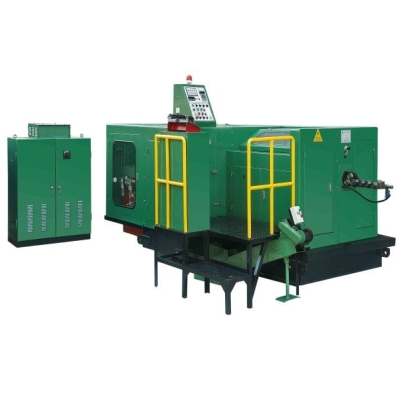
Multi-station high-speed cold-forging machine โ€” mass-production of bolts, screws, and specialty fasteners from wire stock.

Multi-station high-speed cold-forging machine โ€” mass-production of bolts, screws, and specialty fasteners from wire stock.

View on supplier site โ†’
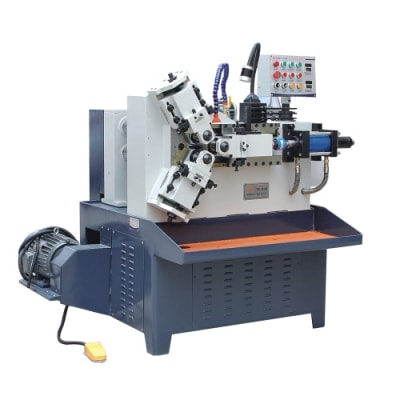
Hydraulic three-axle thread rolling machine โ€” produces external threads on bolts via cold-forming for stronger threads vs cutting.

Hydraulic three-axle thread rolling machine โ€” produces external threads on bolts via cold-forming for stronger threads vs cutting.

View on supplier site โ†’
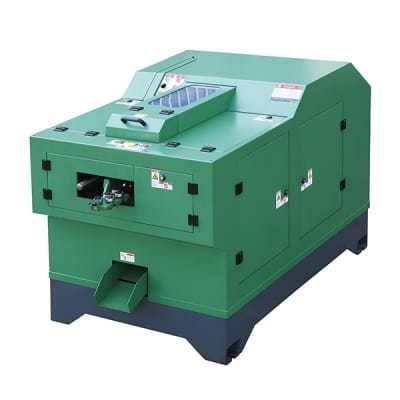
Cold-heading machine for screws, bolts, and rivets โ€” automated wire-feed with multi-station forming for high-volume production.

Cold-heading machine for screws, bolts, and rivets โ€” automated wire-feed with multi-station forming for high-volume production.

View on supplier site โ†’

Equipment categories

Equipment typeCommon variantsProduction capacityFOB China price
Cold-heading (single-blow)1-die 2-blow simple fasteners80-160 pieces/minUSD 25,000-95,000
Cold-heading (multi-station)4-die 4-blow, 5-die 5-blow standard complex fasteners150-300 pieces/minUSD 95,000-380,000
Cold-heading (premium multi-station)6-die 6-blow precision fasteners200-450 pieces/minUSD 280,000-950,000
Hot-forging machineFor larger/harder fasteners40-120 pieces/minUSD 180,000-850,000
Thread rolling (2-axle)Hydraulic or mechanical; M3-M1660-180 pieces/minUSD 25,000-95,000
Thread rolling (3-axle)Hydraulic three-axle; M3-M30120-280 pieces/minUSD 65,000-220,000
Wire drawing machineReduces wire diameter to spec100-500 m/minUSD 28,000-180,000
Wire straightener / cutterPrepares wire for cold-heading500-2,000 m/hourUSD 18,000-75,000
Trimming machine (boltheads)Forms hex/square heads120-280 pieces/minUSD 35,000-145,000
Nut tapping (multi-spindle)Cuts threads in nut blanks200-600 pieces/minUSD 45,000-180,000
Heat treatment furnaceCarburizing/hardening; batch or continuous500-3,000 kg/hourUSD 95,000-450,000
Surface treatment (plating)Zinc, chrome, ZnNi, phosphate1,000-8,000 kg/hourUSD 180,000-850,000

Multi-station cold-heading explained

StationsWhat it produces
1-die 2-blow (1D2B)Hex head bolts, round head screws โ€” standard simple fasteners
2-die 2-blow (2D2B)Hex bolts with point chamfering โ€” secondary features
3-die 3-blow (3D3B)Socket head cap screws, flange bolts โ€” complex heads
4-die 4-blow (4D4B)Complex specialty/automotive fasteners โ€” precision geometry
5-die 5-blow (5D5B)Precision automotive/aerospace fasteners โ€” tight tolerances
6-die 6-blow (6D6B)Premium specialty fasteners โ€” highest complexity

Cold-heading economics vs hot forging vs CNC machining

COLD-HEADING โ€” wire stock deformed at room temperature; 150-450 pieces/min, >95% material utilization, excellent dimensional accuracy. Best for high-volume bolts, screws, rivets. HOT FORGING โ€” material heated then formed; works for harder materials and larger sizes; lower productivity. Best for large fasteners (M24+), high-tensile, specialty geometries. CNC MACHINING โ€” turned/milled from bar stock; extreme flexibility but very low productivity (10-50 pieces/min), poor material utilization. Best for low-volume specialty/prototype. ECONOMICS: cold-headed bolt USD 0.02-0.05 each vs hot-forged USD 0.08-0.18 vs CNC USD 0.50-3.00. Production line investment higher for cold-heading but per-piece cost dramatically lower at high volume.

Wire material specifications

Wire gradeCommon application
SAE 1018 (low carbon)Class 4.6 bolts, screws, rivets โ€” most common
SAE 1035-1045 (medium carbon)Class 5.6-6.8 mid-strength fasteners
SAE 4135-4140 (alloy)Class 8.8-10.9 structural after heat treatment
SAE 4340 (premium alloy)Class 12.9 premium aerospace/race
Stainless 304L / 316LA2/A4-class stainless fasteners
Stainless 410/416 (martensitic)Self-tapping/drilling screws

Complete fastener production line specifications

Production line sizeEquipmentCapacityFOB China price
Basic small line1 cold-header + 1 thread roller + finishing5-15 t/monthUSD 180K-450K
Medium line (3-5 products)3-5 cold-headers + thread rollers + finishing + heat treat30-100 t/monthUSD 850K-2.5M
Large line (multi-SKU)10-20 cold-headers + thread rollers + plating200-1000 t/monthUSD 3.5M-12M
Industrial-scale factory50+ machines + automation + quality system1000+ t/monthUSD 15M+

Pricing brackets โ€” wholesale

Order tierEquipment scopeDiscountLead time
Single machineOne specific machineList price60-120 days
Production lineCoordinated equipment for one product5-12%90-180 days
Complete factoryFull equipment + installation supervision10-18%120-240 days
Multi-line industrialMultiple lines + integration + automation15-22%180-360 days
Turnkey packageEquipment + install + train + commission + warrantyCustom240-480 days

Order workflow โ€” fastener machinery procurement

  1. Product specification โ€” define fasteners produced (size, material, grade, head type); volume forecast
  2. Process flow design โ€” supplier designs production sequence from wire to finished fastener
  3. Equipment specification โ€” for each station, define capacity, tooling, automation level
  4. Factory inspection visit โ€” for major orders (USD 500K+), visit Chinese factory to see equipment in operation
  5. Equipment ordering โ€” 30% deposit to start, 60-65% before shipment, 5-10% after commissioning
  6. Manufacturing โ€” 60-180 days depending on complexity
  7. Pre-shipment inspection โ€” third-party (SGS) or buyer visit; verify specification and first-article test
  8. Shipping โ€” 30-60 days sea freight; major equipment may need special transport
  9. Installation โ€” supplier supervision 15-45 days on-site; buyer provides labor
  10. Commissioning โ€” supervised test production; verify production rate, quality, dimensional accuracy
  11. Operator training โ€” supplier-supervised; documentation in customer language
  12. Production ramp-up โ€” initial production at 60-75% of nameplate; full capacity over 1-3 months

Anchors Machinery on weisourcing.com

View the full supplier profile, certifications, contact details, and complete product catalogue.

Frequently asked questions

How does Chinese fastener machinery quality compare to Sakamura, Hatebur, Nakashimada?
For mainstream fastener production, premium Chinese cold-heading machinery approaches Tier-1 Japanese/European specifications at significantly lower cost. Performance parity is achievable because: same manufacturing processes (CNC-machined parts, ground surfaces, hydraulic systems), many premium Chinese machines use imported critical components (Bosch Rexroth hydraulics, SKF bearings, Siemens controls), and cold-heading is mature technology with well-understood engineering. WHERE TIER-1 RETAINS ADVANTAGES: (1) Proven 30-50 year operational record vs shorter Chinese history; (2) Premium high-precision applications (aerospace, Class 12.9 fasteners) โ€” Tier-1 preferred for tightest tolerances; (3) Global service network; (4) Faster production rates at premium tier (Hatebur 600+ ppm vs Chinese 400-450 ppm). FOR MAINSTREAM PRODUCTION (Class 4.6-10.9 standard fasteners), premium Chinese delivers 90-95% of Tier-1 productivity and quality at 30-50% of capital cost. ECONOMIC ANALYSIS: typical 5D5B premium cold-header โ€” Sakamura SHA-25 USD 1.2-2M vs equivalent Chinese USD 450K-850K. PROCUREMENT STRATEGY: aerospace/Class 12.9 โ†’ Tier-1; mainstream automotive 8.8/10.9 โ†’ premium Chinese with documented quality; commodity โ†’ mainstream Chinese mid-tier.
What's involved in starting a fastener manufacturing operation?
Fastener manufacturing startup is a major capital and operational commitment. PHASE 1 โ€” MARKET RESEARCH (2-6 months): define target segment (automotive/industrial/retail/specialty), identify customer base, pricing analysis, business plan. PHASE 2 โ€” FACILITY PLANNING (3-6 months): building 2,000-10,000 mยฒ, utilities (500-2,000 kW electrical, compressed air, cooling water), environmental permits, ISO 9001 system. PHASE 3 โ€” EQUIPMENT PROCUREMENT (3-6 months): cold-heading machines, thread rollers, heat treatment, plating, inspection, material handling. PHASE 4 โ€” INSTALLATION AND COMMISSIONING (2-4 months). PHASE 5 โ€” RAMP-UP (3-12 months): operator training, process optimization, customer qualification (3-6 months for major customers). TYPICAL CAPITAL: equipment USD 1.5-15M, building USD 500K-3M, inventory USD 200K-800K, working capital USD 300K-1.5M; total USD 2.5-20M for small to large factory. ECONOMICS: typical revenue USD 5-50M/year, gross margin 15-30%, net margin 5-15%, ROI 3-7 years for well-positioned operation. SUCCESS FACTORS: customer relationships, quality consistency (automotive especially demanding), cost discipline, technology adoption.
How do I source raw material (wire) for fastener production?
Wire grade must match target fastener class: SAE 1018 for Class 4.6, SAE 1035-1045 for Class 5.6-6.8, SAE 4135-4140 alloy for Class 8.8-10.9 after heat treatment, stainless 304L/316L for stainless fasteners. WIRE FORM: cold-heading wire as drawn coils or rod; diameter slightly larger than finished fastener shank; surface must be smooth (no scale/scratches) โ€” poor surface causes cracking. SUPPLIER OPTIONS: domestic Chinese wire (quality varies by tier), premium Chinese specialty producers, imported Japanese/German premium wire (15-30% premium), in-house wire drawing for large factories. PRICING: low-carbon USD 700-1,100/ton, alloy USD 1,200-2,500/ton, stainless USD 3,500-7,500/ton. CONSUMPTION: typical 95% material utilization; final fastener weight 95-98% of input wire. SUPPLIER QUALIFICATION: verify chemistry per certificate, mechanical properties (tensile, elongation, hardness), surface finish, dimensional consistency (ยฑ0.05mm typical). Use primary supplier for 60-70% volume + secondary 30-40% for risk management.
What's the typical scrap and reject rate for fastener production?
SCRAP MATERIAL: 5-8% of wire input typically becomes scrap (head/point trim, start-up scrap). Multi-station machines achieve higher utilization (95-98%) vs single-station (90-95%). PROCESS REJECTS: 0.5-3% of production. Common defects: dimensional out-of-spec (30-50% of rejects), surface defects (20-30%), tool wear marks (15-25%), material defects from wire (10-20%), thread defects (5-15%). CUSTOMER REJECTS: 0.1-1% after shipment. Automotive OEM rejects critical โ€” single defective fastener can cause vehicle recall. QUALITY CONTROL: in-process vision system, batch sampling with CMM, shipment 100% sortation for premium customers, raw material inspection. ECONOMIC IMPACT: 100 tons/month ร— 1% rejects = 1 ton/month scrap = USD 800-2,500/month loss + lost production time. KEY MAINTENANCE: die/punch life management (replace at 50,000-300,000 piece intervals), lubrication system maintenance, thread roll die maintenance, operator training (most defects trace to operator decisions).
How do I plan export market entry for Chinese fastener production?
STEP 1 โ€” MARKET ANALYSIS: demand size, customer types, supplier landscape, trade barriers (tariffs, anti-dumping duties, quotas). STEP 2 โ€” CUSTOMER QUALIFICATION: automotive OEMs require PPAP (Production Part Approval Process) โ€” dimensional measurements, mechanical testing, capability studies, plant audit (IATF 16949 typically required), trial production, approved supplier status (6-18 month process). STEP 3 โ€” CERTIFICATIONS: ISO 9001 essential, IATF 16949 for automotive, AS9100 for aerospace, test reports per fastener grade (DIN/ISO/SAE), material certificates per shipment. STEP 4 โ€” TRADE COMPLIANCE: anti-dumping considerations (EU/US have anti-dumping duties on certain Chinese fasteners), REACH for EU, RoHS, country-of-origin documentation. STEP 5 โ€” LOGISTICS: containerized shipping, customs documentation, distribution warehouse, local sales presence. CAPITAL REQUIREMENTS: typical exporter (USD 5-20M annual revenue) needs USD 500K-2M working capital. TIMELINE: 12-36 months from first contact to ramp production.
What's the typical ROI and payback period for fastener manufacturing investment?
CAPITAL: equipment USD 1.5-3M (small/medium), building USD 500K-1.5M, inventory USD 200K-500K, working capital USD 300K-800K; total USD 2.5-5.8M typical. PRODUCTION ECONOMICS (100 tons/month ร— USD 1,500/ton = USD 1.8M/year revenue): variable costs 60-70%, fixed costs USD 250K-500K, net profit USD 100K-400K/year. ROI: payback 5-10 years for well-positioned small factory; 8-15 years for premium specialty (higher equipment cost); 3-7 years for commodity if market access established. KEY ROI DRIVERS: production volume (fixed costs need volume dilution), market access (customer relationships enable higher prices), quality consistency (automotive pays premium for low rejects), product mix (specialty earns higher margins than commodity), operational efficiency. SCALING ECONOMICS: small (50 t/month) margins ~15-25%; medium (200 t/month) ~20-35%; large (1000+ t/month) ~25-40%. RISK FACTORS: raw material volatility (wire prices fluctuate 30-100% with steel cycles), currency exposure on exports, trade barriers, technology obsolescence.
โš  Important Disclaimer

Source: Product images on this page are hosted on the manufacturer's official website (anchorsmachinery.com) and link directly back to that website. All product information was summarised from the supplier's public catalogue.

Brand mentions and trademark compliance: References to Tier-1 fastener machinery brands (Sakamura, Nakashimada, Hatebur, Bรผhler, Schumag, National Machinery) are made for the sole purpose of describing functional benchmarks. Anchors Machinery is not authorized by, affiliated with, or endorsed by any of these brand owners. Products are aftermarket-equivalent manufactured under Anchors Machinery's own brand.

Capital equipment risk: Fastener manufacturing equipment is major capital deployment with extended commitment to specific production approach. Buyers should conduct comprehensive supplier qualification, verify equipment specifications match contract, and engage qualified technical support for installation and commissioning. Pre-shipment third-party inspection is strongly recommended.

Worker safety: Cold-heading machines, thread rolling machines, and heat treatment equipment are heavy machinery with significant safety implications. Improper installation, maintenance, or operation can cause severe injury. Verify all equipment meets destination country machinery safety standards (CE Machinery Directive in EU, OSHA in US, equivalent international).

Pricing & specifications: All price ranges, capacity figures, and ROI estimates reflect general market observation. Real-world fastener production economics depend significantly on raw material costs (steel wire), product mix, market access, and operational management. Confirm current pricing, MOQ, lead time, and specifications directly with the supplier.

No middleman role: Weisourcing provides supplier discovery and editorial content. All transactions occur directly between buyer and supplier through the contact channels published on the supplier's official website.