weisourcing.com / products / Food Machinery China / Food & Beverage Machinery

Food & Beverage Processing Machinery from China — A Capital Equipment Buyer's Guide

A practical sourcing guide for food and beverage processing machinery from China — written for craft brewery startups, juice and beverage producers, fruit and vegetable processors, dairy operations, sauce and condiment manufacturers, sausage and meat processors, pet food and animal feed producers, and food machinery distributors. Real product images from foodmachinerych.com covering fruit and vegetable washing equipment (bubble washer, brush washer, ozone washer), juice extraction (belt press, screw press, peelers, slicers, sorters), brewery and beverage equipment (fermentation tanks, brewhouses, mash tuns, bottling lines, kegging systems), dairy processing (pasteurizers, separators, homogenizers, fillers), sauce and emulsification (high-shear tanks, jacketed mixers), sterilization equipment (tunnel pasteurizer, batch pasteurizer, autoclave), bakery and confection equipment, and complete production lines. Brewery sizing by batch capacity (nano through industrial), juice line capacity tiers, sanitary design and certification requirements (3-A, EHEDG, FDA, ISO 22000), and the procurement workflow for food machinery capital projects.

Manufacturer: Food Machinery China (foodmachinerych.com)
Category: Industrial Machinery
Reading time: 15 min

Food and beverage processing machinery — fruit and vegetable juicing equipment, fermentation systems for craft beer and beverages, washing and pre-treatment equipment, mixing and emulsification tanks, sterilization equipment, and complete production lines — represent a multi-billion-dollar global B2B equipment category. The market spans craft brewery startups (typical investment USD 50,000-500,000), juice and beverage producers (USD 100,000-2,000,000+ for production lines), fruit and vegetable processors, dairy operations, sauce and condiment manufacturers, sausage and meat processors, and pet food / animal feed production. China dominates global production of food machinery with comprehensive coverage from small batch equipment through automated industrial lines.

This guide covers the Food Machinery China product family — fruit and vegetable processing (juice extractors, peelers, slicers, washers, sorters), beer and beverage equipment (fermentation tanks, bottling lines, kegging systems, mash tuns), dairy processing (pasteurizers, separators, homogenizers, fillers), sauce and condiment production (high-shear tanks, jacketed mixers, emulsifiers), bakery and confection equipment (mixers, ovens, depositors), and complete production lines for specific products (fruit juice, beer, dairy, sauce, snacks). Real product images linking back to the supplier's catalog at foodmachinerych.com.

Product range — actual catalogue images

The product images below are hosted on the manufacturer's official website (foodmachinerych.com) and link directly to the manufacturer's catalogue. Click any image to view the full specification page in a new tab.
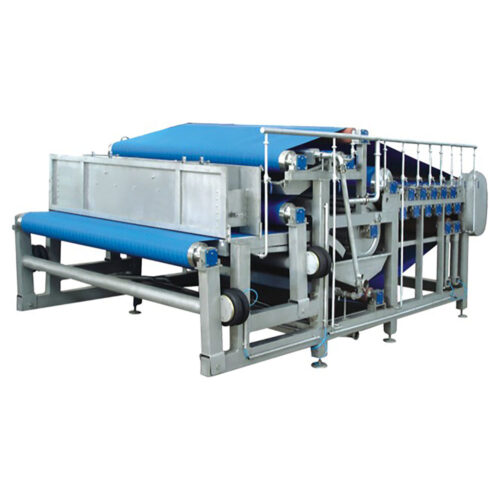
Apple belt press juice extractor — continuous fruit juice production line for cider, juice, and concentrate manufacturing.

Apple belt press juice extractor — continuous fruit juice production line for cider, juice, and concentrate manufacturing.

View on supplier site →
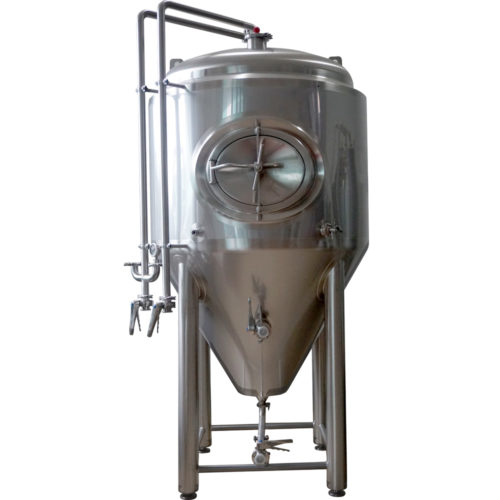
Stainless steel beer fermentation tank — conical-bottom vessel with cooling jacket for craft brewery and microbrewery production.

Stainless steel beer fermentation tank — conical-bottom vessel with cooling jacket for craft brewery and microbrewery production.

View on supplier site →
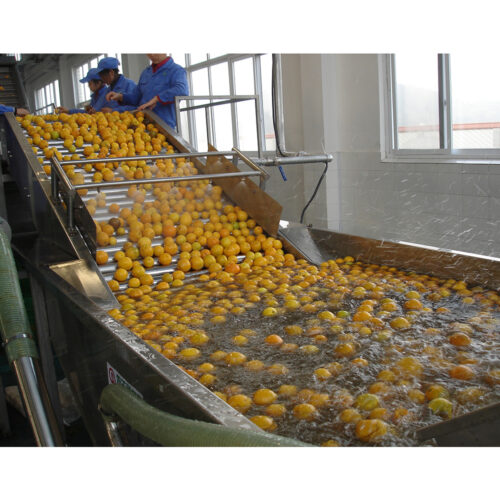
Bubble washing machine — vegetable and fruit cleaning system with air-bubble agitation for food processing pre-treatment.

Bubble washing machine — vegetable and fruit cleaning system with air-bubble agitation for food processing pre-treatment.

View on supplier site →
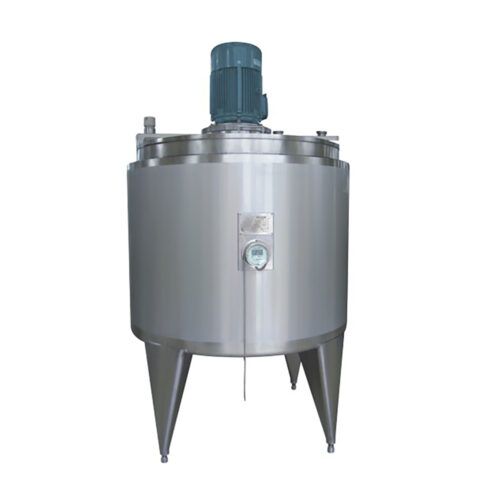
High-shear emulsification tank — sanitary stainless tank for sauce, dressing, and homogeneous mixture production.

High-shear emulsification tank — sanitary stainless tank for sauce, dressing, and homogeneous mixture production.

View on supplier site →

Equipment categories

Equipment familyCommon productsTypical applicationsFOB China typical price range
Fruit & vegetable washingBubble washer, brush washer, ozone washerFruit juice, salad processing, frozen vegetableUSD 3,500-25,000
Fruit & vegetable processingBelt press, screw press, peeler, slicer, sorterJuice production, sauce, frozen, dried fruitUSD 4,500-65,000 per unit
Fermentation tanks (brewery)Conical bottom, cooling jacket, sanitary stainlessBeer brewery, kombucha, wine productionUSD 1,800-45,000 (200L-10,000L tank)
Mash tuns and brewhousesSanitary stainless brewing vesselsCraft and microbrewery beer productionUSD 8,500-180,000 (small to medium brewhouse)
Mixing & emulsificationHigh-shear mixer, jacketed mixing tank, homogenizerSauce, dressing, dairy, cosmetics, pharmaUSD 4,500-85,000
Sterilization equipmentTunnel pasteurizer, batch pasteurizer, autoclaveBeverages, sauces, canned foodsUSD 8,500-145,000
Filling & packagingBottle filler, can filler, pouch filler, capperBeverage, sauce, dairy productionUSD 12,000-280,000
Concentration & evaporationMulti-effect evaporator, single-effectJuice concentrate, dairy concentrationUSD 25,000-380,000
Heat exchangersPlate, tubular for sanitary applicationsPasteurization, cooling, heatingUSD 4,500-45,000
Drying equipmentSpray dryer, drum dryer, fluid bedPowder production, dehydrated foodsUSD 18,000-280,000
Bakery & confectionMixers, ovens, depositors, conveyorsBread, pastry, candy, snacksUSD 5,500-95,000 per unit
Meat & sausage processingMixers, smoking chambers, sausage stuffersMeat product manufacturingUSD 4,500-65,000

Brewery equipment specification by capacity

Brewery sizeMash tun + brewhouseFermentation capacityFOB China typical price (full equipment)
Nano (50-150L per batch)50-100L mash tun + 100L brewhouse200-500L fermenters (4-8 fermenters)USD 25,000-65,000
Micro (300-1,000L per batch)300-500L mash tun + 500-1000L brewhouse1,000-3,000L fermenters (4-8 fermenters)USD 65,000-180,000
Small commercial (1,000-3,000L per batch)1,000-2,000L mash tun + 1500-3000L brewhouse3,000-10,000L fermenters (8-15 fermenters)USD 180,000-450,000
Medium commercial (3,000-10,000L per batch)3,000-5,000L mash tun + 5,000-10,000L brewhouse10,000-30,000L fermenters (15-30 fermenters)USD 450,000-1,200,000
Large industrial (10,000+ L per batch)10,000+ L mash tun + matching brewhouse30,000+ L fermenters with multiple zonesUSD 1,000,000+ (custom)

Juice production line specifications

Line capacity (tons fruit per hour)Typical fruit typeOutput (liters juice per hour)FOB China typical price (complete line)
0.5-1 t/h (small)Apple, pear, citrus300-700 L/h juiceUSD 50,000-120,000
1-3 t/h (mid)Apple, pear, citrus, soft fruits700-2,100 L/h juiceUSD 120,000-350,000
3-10 t/h (commercial)Apple, pear, citrus, tropical fruits2,100-7,000 L/h juiceUSD 350,000-950,000
10+ t/h (industrial)Apple, citrus, mass production7,000+ L/h juiceUSD 800,000+ (custom)

Sanitary design is mandatory for food contact equipment

Food and beverage processing equipment must comply with sanitary design principles to prevent contamination. KEY REQUIREMENTS: (1) MATERIAL — typically 304 or 316L stainless steel for product contact surfaces; 304 for non-contact structure. Surfaces in product contact must have Ra ≤ 0.8 μm or better; (2) DESIGN — no dead-legs (where product can stagnate), no rough welds, all internal welds polished and sanitary; (3) CIP/SIP CAPABILITY — Clean-in-Place and Sterilize-in-Place compatible design; (4) DRAINAGE — equipment can drain fully without product retention.

CERTIFICATIONS REQUIRED for food market: 3-A Sanitary Standards (US dairy and food), EHEDG (European Hygienic Engineering Design Group), USDA / FDA compliance for US food applications, ISO 22000 for food safety management. For beverage applications additional: NSF/ANSI certifications. Reputable suppliers like Food Machinery China provide documentation per relevant sanitary standards. CHEAP NON-COMPLIANT EQUIPMENT may pass initial inspection but cause food safety issues, contamination recalls, and regulatory action that costs orders of magnitude more than equipment savings. Always verify supplier provides materials certifications and sanitary design documentation.

Production economics — small brewery example

Cost elementTypical figureNotes
Equipment (500L brewhouse + 5 fermenters + bottling)USD 80,000-150,000Mid-tier Chinese supplier; premium European 2-4× higher
Building / utilities setupUSD 50,000-200,000Brewery space + drainage + electrical + glycol cooling
Initial raw materials inventoryUSD 8,000-25,000Malt, hops, yeast, kegs, bottles, labels
Working capital for first 6 monthsUSD 30,000-80,000Until sales revenue covers operations
TOTAL CAPITAL FOR LAUNCHUSD 170,000-450,000Excludes property purchase
Production capacity (500L brewhouse, 1 batch/day)180,000 L/year (~1,500 hL)Typical for small craft brewery
Material cost per literUSD 0.45-0.85Malt + hops + yeast + packaging
Selling price (wholesale to bars/restaurants)USD 2.50-5.50 per literVaries by product tier and market
Selling price (direct retail through brewery)USD 3.50-8.50 per literHigher margin direct sales
Gross margin per literUSD 1.80-4.50 (60-75% gross)Excellent margin if execution is good
Typical revenue first full yearUSD 350,000-900,000Depends on market access and capacity utilization

Pricing brackets — wholesale

Order tierEquipment scopeDiscountLead time
Single equipment unitOne specific machineList price30-60 days
Production line (multiple units)Coordinated equipment for specific product5-12%45-90 days
Complete brewery / juice plantFull equipment package + installation supervision10-20%60-120 days
Multi-line industrial projectMultiple production lines + integration15-25%90-180 days
Turnkey packageEquipment + installation + training + commissioningCustom pricing120-240 days

Order workflow — food machinery procurement

  1. Process design — define product specifications, target capacity, recipe parameters; for greenfield projects, detailed process flow diagram with equipment requirements
  2. Site assessment — verify available space, utilities (water, steam, electricity, drainage, glycol), regulatory compliance (food handling permits, environmental)
  3. Specification development — for each equipment piece define: material grade (304/316L), capacity, sanitary design level, control system, automation level
  4. Supplier qualification — verify supplier maintains 3-A / EHEDG / ISO 22000 certifications; reference customers in destination market and food category
  5. Sample / pilot — for critical custom equipment, sample run or factory acceptance test to verify performance
  6. Order placement — typical 30% deposit to start production, 60-65% before shipment, 5-10% after commissioning
  7. Pre-shipment inspection — third-party inspection or buyer site visit before shipping; verify equipment matches specification
  8. Installation and commissioning — supplier supervision typically 7-21 days on-site; buyer provides labor; commissioning includes test production with operator training
  9. Validation — for regulated food products, equipment validation (IQ/OQ/PQ) per food safety management system
  10. Ongoing operation — spare parts inventory, preventive maintenance schedule, periodic re-validation

Food Machinery China on weisourcing.com

View the full supplier profile, certifications, contact details, and complete product catalogue.

Manufacturer · Industrial Machinery

Food Machinery China

foodmachinerych.com

Food Machinery China — manufacturer of food and beverage processing machinery. Fruit & vegetable processing: bubble washers, brush washers, ozone washers, belt press juice extractors, screw press, peelers, slicers, sorters. Brewery equipment: stainless steel fermentation tanks (200L-30,000L conical-bottom with cooling jackets), mash tuns and brewhouses (50L through 30,000L per batch), kegging systems, bottling lines, complete craft brewery packages. Beverage equipment: bottle and can fillers, cappers, labelers. Dairy processing: pasteurizers, separators, homogenizers, fillers, packaging. Sauce and emulsification: high-shear mixers, jacketed mixing tanks, homogenizers. Sterilization: tunnel pasteurizers, batch pasteurizers, autoclaves. Concentration & evaporation: multi-effect evaporators, single-effect concentrators. Heat exchangers: plate, tubular sanitary. Drying equipment: spray dryers, drum dryers, fluid bed dryers. Bakery and confection: mixers, ovens, depositors. Meat & sausage: mixers, smoking chambers, sausage stuffers. Sanitary design per 3-A Sanitary Standards (US dairy/food), EHEDG (European Hygienic Engineering Design Group), FDA 21 CFR compliance, ISO 22000 food safety management. ASME Section VIII Div 1 / PED 2014/68/EU certification for pressure vessels. Material grades 304 and 316L stainless steel for product-contact surfaces with Ra ≤ 0.8 μm surface finish.

View full profile →

Frequently asked questions

How does Chinese food machinery quality compare to European brands like Krones, Tetra Pak, GEA?
For mainstream food and beverage equipment, premium-tier Chinese suppliers like Food Machinery China deliver products at quality close to European Tier-1 at significantly lower cost. The performance parity is achievable for mainstream applications because: (1) MANUFACTURING TECHNOLOGY — same processes (sanitary stainless welding, polishing, NDT testing); (2) MATERIALS — 304/316L stainless steel from same global suppliers; (3) DESIGN PRINCIPLES — sanitary design requirements are well-documented and reproducible. WHERE EUROPEAN TIER-1 RETAINS ADVANTAGES: (1) PROPRIETARY HIGH-TECH PROCESSES — aseptic filling, ultra-high-temperature sterilization, advanced membrane technology; (2) INTEGRATION CAPABILITY — turnkey solutions for complex products with specialized engineering; (3) BRAND VALUE for premium Western markets where customer expects German or Italian engineering; (4) GLOBAL SERVICE NETWORK — service technicians and spare parts available globally. FOR MAINSTREAM USE (craft brewery, mid-scale juice production, sauce and condiment, dairy mid-tier), premium Chinese equipment delivers fully-equivalent performance at 30-60% of European Tier-1 cost. PROCUREMENT STRATEGY: (1) Mainstream commercial-scale production → premium Chinese supplier optimal value; (2) Highly-regulated specialty (infant formula, premium dairy, aseptic packaging) → European Tier-1 still preferred; (3) Hybrid approach — Chinese tanks and basic equipment + European specialty equipment for critical processes. Quality verification: sanitary design certificates (3-A, EHEDG), material test certificates, production trial before main order. Reputable suppliers like Food Machinery China provide complete documentation packages and welcome customer inspection visits.
How do I plan a small brewery startup investment?
Brewery startup is a structured capital deployment with predictable phases. PHASE 1 — BUSINESS PLANNING (3-6 months before equipment order): (1) Market research — local craft beer market size, competition, distribution channels; (2) Recipe development — typically 6-12 months developing signature beers before commercial scale; (3) Business plan with financial projections; (4) Funding source identification (own capital, bank loan, investor, crowdfunding); (5) Legal/regulatory pre-work (TTB permits in US, equivalents elsewhere). PHASE 2 — EQUIPMENT SELECTION (1-3 months): (1) Define batch size based on market plan (200L, 500L, 1000L, etc.); (2) Source qualified suppliers; (3) Site selection compatible with equipment; (4) Equipment specification finalized. PHASE 3 — EQUIPMENT ORDER AND DELIVERY (3-9 months): (1) Order placement with deposit; (2) Manufacturing 60-120 days; (3) Sea freight 30-50 days; (4) Customs clearance 1-3 weeks; (5) Site preparation in parallel with manufacturing. PHASE 4 — INSTALLATION AND COMMISSIONING (1-3 months): (1) Equipment installation; (2) Utilities connection (water, steam/glycol cooling, electrical, drainage); (3) Equipment commissioning with supplier supervision; (4) First trial brews and recipe replication. PHASE 5 — REGULATORY AND COMMERCIAL LAUNCH (1-3 months): (1) Production permit verification; (2) Initial production runs; (3) Quality testing and sensory evaluation; (4) First commercial sales. TOTAL TIMELINE: 12-24 months from business concept to first commercial sales. CRITICAL SUCCESS FACTORS: (1) Recipe quality — beer must taste excellent; (2) Distribution access — relationships with bars, restaurants, retailers; (3) Marketing and brand — small brewery competes on story and quality; (4) Quality consistency — replicate same beer reliably batch-to-batch. CAPITAL REQUIREMENTS for small brewery: USD 200,000-500,000 typical including equipment, building modifications, initial inventory, working capital. ROI: well-positioned brewery in growing market typically reaches breakeven year 2-3, positive cash flow year 3-5.
What's involved in installing a juice production line?
Juice line installation is a coordinated multi-week process. WEEK 1-2 (SITE PREP): (1) Foundation pad pouring and curing (concrete, 7+ days cure); (2) Drainage system installation (food-grade trench drains, anti-bacterial floors); (3) Utilities — steam line (for pasteurization), water line, electrical service, glycol cooling, compressed air; (4) Building modification if needed (ceiling height for tanks, equipment access). WEEK 3-4 (EQUIPMENT POSITIONING): (1) Equipment delivery from port to site; (2) Equipment positioning per process flow (washer → press → tank → pasteurizer → filler); (3) Major equipment lifting (tanks, large machines); (4) Mechanical assembly per supplier instructions. WEEK 4-5 (INTERCONNECTING PIPING): (1) Sanitary stainless piping (304 or 316L) connecting all equipment; (2) Steam piping for pasteurization; (3) Glycol cooling piping for fermentation; (4) Drain piping; (5) Electrical wiring per panels. WEEK 5-6 (INSTRUMENTATION & CONTROLS): (1) Sensors (temperature, pressure, level, flow); (2) Control panel installation; (3) PLC or DCS controller programming; (4) HMI setup. WEEK 6-7 (CIP & VALIDATION): (1) CIP (Clean-in-Place) system installation; (2) System cleaning per CIP protocol; (3) Equipment cleanliness validation; (4) System functional test. WEEK 7-8 (TEST PRODUCTION): (1) Water trial runs to verify all equipment functions; (2) First product trial with actual fruit; (3) Process parameter optimization; (4) Quality testing of first product. WEEK 8-9 (REGULATORY & LAUNCH): (1) Local food safety inspection; (2) Production permit verification; (3) Initial commercial production. TOTAL TIMELINE: 8-12 weeks from equipment arrival to commercial production. SUPPLIER SUPPORT: typical Chinese supplier provides 7-14 days of installation supervision included with equipment; longer supervision 30+ days available at additional cost; remote video support after initial installation. RAMP-UP: initial production at 50-70% of nameplate capacity; 1-3 months to reach full design capacity as crew skills develop and supply chains stabilize.
What materials and certifications matter for food machinery destined for the US/EU market?
Food machinery exported to regulated markets requires extensive compliance documentation. MATERIAL REQUIREMENTS: (1) PRODUCT-CONTACT SURFACES — must be 304L or 316L stainless steel; certification requires chemistry test certificates per ASTM A240 / EN 10088; (2) NON-CONTACT SURFACES — typically 304 stainless with painted carbon steel for non-product structure; (3) GASKETS AND SEALS — must be FDA-compliant (21 CFR 177) elastomers (silicone, EPDM, FKM with food-grade certification); (4) LUBRICANTS — H1 food-grade lubricants where contact possible. SANITARY DESIGN: (1) Surface finish — Ra ≤ 0.8 μm for product contact, often Ra ≤ 0.4 μm for premium; (2) Welds — internal welds polished and continuous (no laps, voids); (3) No dead-legs in piping (capacity ≥ 6× pipe diameter typically); (4) Drain-able by gravity. CERTIFICATIONS: (1) 3-A SANITARY STANDARDS (US dairy/food) — voluntary but expected for premium dairy; equipment certified per specific standard number; (2) EHEDG (European Hygienic Engineering Design Group) — voluntary but expected for EU food; (3) USDA AMS dairy or food approval for US dairy/food; (4) NSF/ANSI for specific applications; (5) FDA-compliant material declarations. DOCUMENTATION REQUIRED: (1) Material test certificates for each batch of stainless steel; (2) Welding procedure specifications and welder qualifications; (3) Sanitary design certification documents; (4) FDA / EU compliance declarations; (5) Pressure test certificates for pressurized vessels (ASME for US, PED 2014/68/EU for EU); (6) Operating manuals in destination language. PROCUREMENT WORKFLOW: verify supplier has experience exporting to destination market; request sample documentation package before order to verify completeness; for high-value orders, factory inspection visit recommended. Reputable suppliers like Food Machinery China maintain experience exporting to US, EU, Australia, and other regulated markets with documentation pipeline established.
What's the typical service life and maintenance schedule for food processing equipment?
Component lifespans differ across the system. STAINLESS STEEL VESSELS AND TANKS — 25+ years typical service life with proper maintenance; primary failure modes: pitting corrosion (especially 304 in chloride-rich environments — use 316L for chloride exposure), stress corrosion cracking from cold-working without subsequent annealing. PUMPS AND ROTATING EQUIPMENT — 5-15 years typical; primary failure modes: seal failures (mechanical seals replaced every 6-24 months), bearing wear, impeller erosion. HEAT EXCHANGERS — 10-25 years; failure modes: gasket failure (replaced annually for plate exchangers), corrosion, fouling. AGITATORS AND MIXERS — 10-20 years; failure modes: shaft seal wear, bearing failures, impeller damage. CONTROL SYSTEMS — 5-10 years for electronics; failure modes: capacitor aging, communication card failures. PIPING SYSTEMS — 20-30+ years for stainless; gaskets need annual replacement. MAINTENANCE SCHEDULE: (1) DAILY — visual inspection, cleaning per CIP procedure, equipment functional checks; (2) WEEKLY — pump and motor lubrication checks, verify gauge calibration; (3) MONTHLY — gasket inspection, leak detection, sanitation effectiveness verification; (4) QUARTERLY — full equipment inspection, vibration analysis on rotating equipment; (5) ANNUALLY — major maintenance event including gasket replacements, valve service, pump rebuild as needed; (6) BIENNIALLY — pressure vessel testing per ASME / PED requirements; (7) AT 10-15 YEARS — major refurbishment including stainless polishing, pump and seal overhauls, control system upgrades. PREVENTIVE MAINTENANCE COST: typical 5-10% of equipment value per year for well-run plant. UNPLANNED FAILURE COST: production downtime is typically 5-50× planned maintenance cost; predictive maintenance (vibration analysis, thermography, oil analysis) more than pays for itself. EQUIPMENT REFURBISHMENT: at 20-25 year mark, major equipment overhaul vs replacement evaluation; well-maintained stainless equipment often has 30-40+ year economic life with periodic refurbishment.
What documentation should I receive with food machinery purchase?
Comprehensive documentation enables installation, validation, and regulatory compliance. EQUIPMENT DOCUMENTATION: (1) Specification sheet for each piece of equipment with delivered specifications; (2) General arrangement (GA) drawings with dimensions and connection points; (3) Process and instrumentation diagram (P&ID) for production lines; (4) Equipment-specific operating and maintenance manuals. MATERIAL DOCUMENTATION: (1) Mill test certificates for each batch of stainless steel (chemistry, mechanical properties); (2) Material declarations for gaskets and seals (FDA 21 CFR 177 or EU 1935/2004); (3) Surface finish measurements (Ra) for product-contact surfaces; (4) Welding procedure specifications and welder qualifications. SANITARY DESIGN DOCUMENTATION: (1) 3-A or EHEDG certification documents where applicable; (2) Sanitary design declaration with reference to specific standards; (3) CIP/SIP design documentation. PRESSURE VESSEL DOCUMENTATION (where applicable): (1) ASME Section VIII Div 1 documentation for US; (2) PED 2014/68/EU certificate for EU; (3) Hydrostatic test certificate; (4) Manufacturer's data report. CONTROL SYSTEM DOCUMENTATION: (1) Programming logic / PLC code with comments; (2) HMI configuration; (3) Communication protocols; (4) Recipe management system documentation. INSTALLATION DOCUMENTATION: (1) Installation manual; (2) Foundation specifications; (3) Utility connection requirements; (4) Tools and consumables list. COMMISSIONING DOCUMENTATION: (1) Factory Acceptance Test (FAT) report; (2) Site Acceptance Test (SAT) report; (3) Operator training records; (4) IQ/OQ/PQ validation documents (for regulated applications). MAINTENANCE DOCUMENTATION: (1) Recommended spare parts list with part numbers; (2) Preventive maintenance schedule; (3) Troubleshooting guide; (4) Warranty terms with claim procedure. Reputable suppliers like Food Machinery China provide complete documentation packages aligned with destination market regulatory requirements.
⚠ Important Disclaimer

Source: Product images on this page are hosted on the manufacturer's official website (foodmachinerych.com) and link directly back to that website. All product information was summarised from the supplier's public catalogue.

Brand mentions and trademark compliance: References to Tier-1 food machinery manufacturer brands (Krones, Tetra Pak, GEA, Alfa Laval, JBT, Bühler, Sidel) are made for the sole purpose of describing functional benchmarks. Food Machinery China is not authorized by, affiliated with, or endorsed by any of these brand owners. Products are aftermarket-fit cross-reference manufactured under Food Machinery China's own brand or buyer-private-label only.

Food safety and sanitary compliance: Food machinery installations must comply with destination jurisdiction food safety regulations including HACCP, FSMA (USA), Regulation EC 852/2004 (EU), and equivalent international frameworks. Sanitary design certifications (3-A, EHEDG) and materials certifications (FDA, EU 1935/2004) must be verified for product-contact equipment. Improperly designed or installed equipment can cause food safety incidents with serious public health consequences.

Capital equipment risk: Food machinery purchase is a major capital deployment with extended commitment to specific production approach. Buyers should conduct comprehensive supplier qualification, verify equipment specifications match contract, and engage qualified technical support for installation and commissioning.

Pricing & specifications: All price ranges, capacity figures, and ROI estimates reflect general market observation. Real-world food production economics depend significantly on raw material costs, market demand, distribution access, and operational management. Confirm current pricing, MOQ, lead time, and certifications directly with the supplier.

No middleman role: Weisourcing provides supplier discovery and editorial content. All transactions occur directly between buyer and supplier through the contact channels published on the supplier's official website.