weisourcing.com / products / Linlan Corp / Marine Engine Spare Parts

Marine Engine Spare Parts from China — Aftermarket-Fit Wholesale Buyer's Guide

A practical sourcing guide for marine diesel engine spare parts from China — written for ship owners, ship management companies, shipyards, marine engine workshop operators, and marine spare parts distributors. Real product images from linlancorp.com covering cylinder blocks, cylinder heads, valve covers, pistons and piston rings, connecting rods, crankshafts, camshafts, fuel injection equipment, turbochargers, and ancillary spares — aftermarket-fit cross-reference for major marine engine families (MAN B&W slow-speed and four-stroke, Wärtsilä / Sulzer two-stroke and four-stroke, Mitsubishi UE / S series, Daihatsu DK/DC, Yanmar Marine, Hyundai HiMSEN, MTU / Detroit Diesel high-speed, Cummins Marine, Caterpillar Marine, Pielstick / SEMT, and orphan engines from Niigata / Hanshin / Akasaka). Material selection by component, class society approval framework (ABS, DNV, Lloyd's Register, BV, CCS, KR, NK, RINA), maintenance interval planning, pricing brackets at 30-60% below OEM list, and the procurement workflow that establishes profitable aftermarket marine engine spares supply.

Manufacturer: Linlan Corp (linlancorp.com)
Category: Marine, Crane & Heavy Equipment
Reading time: 15 min

Marine diesel engines — slow-speed two-stroke main engines on ocean-going ships, medium-speed four-stroke auxiliary engines, and high-speed diesels on small craft and emergency generators — are the workhorses of global shipping. The world's commercial fleet operates roughly 60,000-100,000 large diesel engines plus hundreds of thousands of auxiliary and small-craft diesels, all requiring scheduled maintenance and unscheduled overhauls throughout typical 25-30 year service lives. The aftermarket for marine engine spare parts is a multi-billion-dollar global business dominated by OEM brand-name parts at premium pricing — with a substantial parallel aftermarket-fit channel serving cost-sensitive shipowners, ship management companies, and shipyards.

This guide covers the Linlan Corp product family — cylinder blocks, cylinder heads, valve covers, pistons and piston rings, connecting rods, crankshafts, camshafts, fuel injection components, turbochargers, and ancillary spares for major marine engine families (MAN B&W, Wärtsilä, Sulzer, Mitsubishi, Daihatsu, Yanmar, Hyundai, MTU, Cummins Marine, Caterpillar Marine — all aftermarket-fit cross-reference, none authorized OE supply). Real product images linking back to the supplier's catalog at linlancorp.com.

Product range — actual catalogue images

The product images below are hosted on the manufacturer's official website (linlancorp.com) and link directly to the manufacturer's catalogue. Click any image to view the full specification page in a new tab.
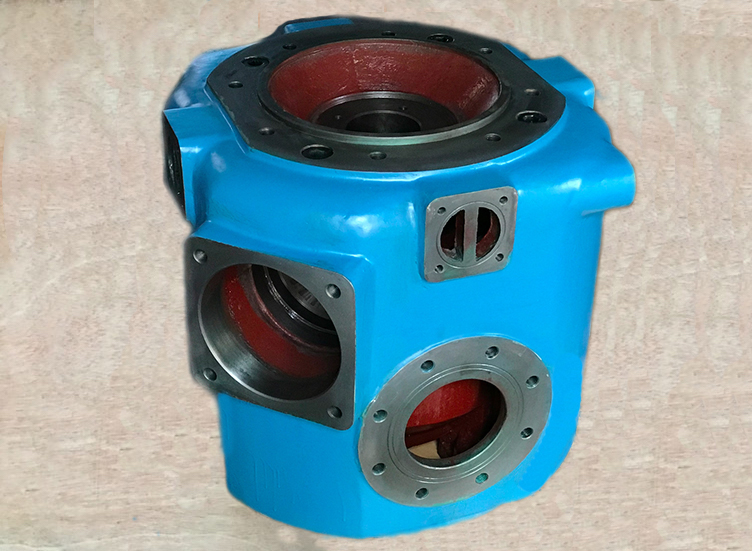
Marine diesel engine cylinder block — large-bore casting for ship main engines and auxiliary diesels.

Marine diesel engine cylinder block — large-bore casting for ship main engines and auxiliary diesels.

View on supplier site →
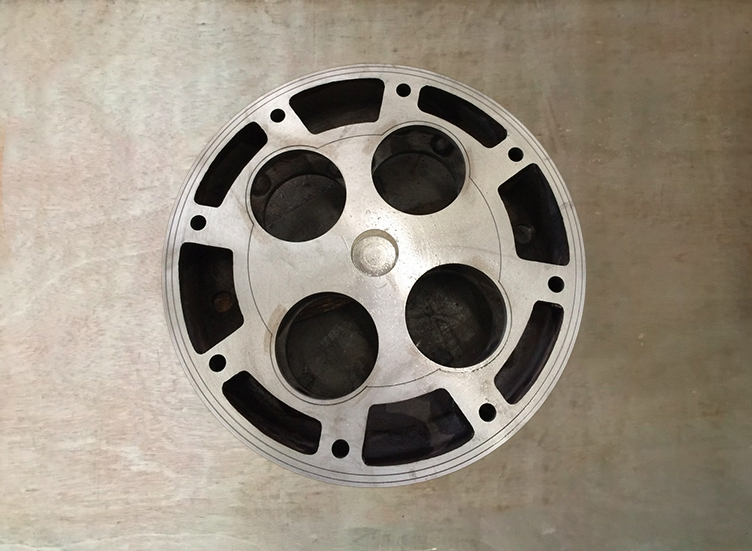
Marine engine cylinder head — multi-valve casting with integrated fuel injector and valve seats.

Marine engine cylinder head — multi-valve casting with integrated fuel injector and valve seats.

View on supplier site →
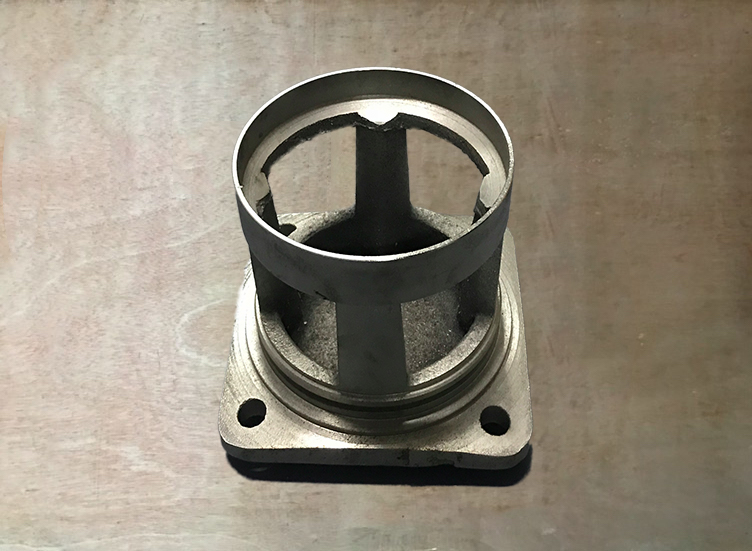
Valve cover for marine diesel engines — sealed casting protecting valve train.

Valve cover for marine diesel engines — sealed casting protecting valve train.

View on supplier site →
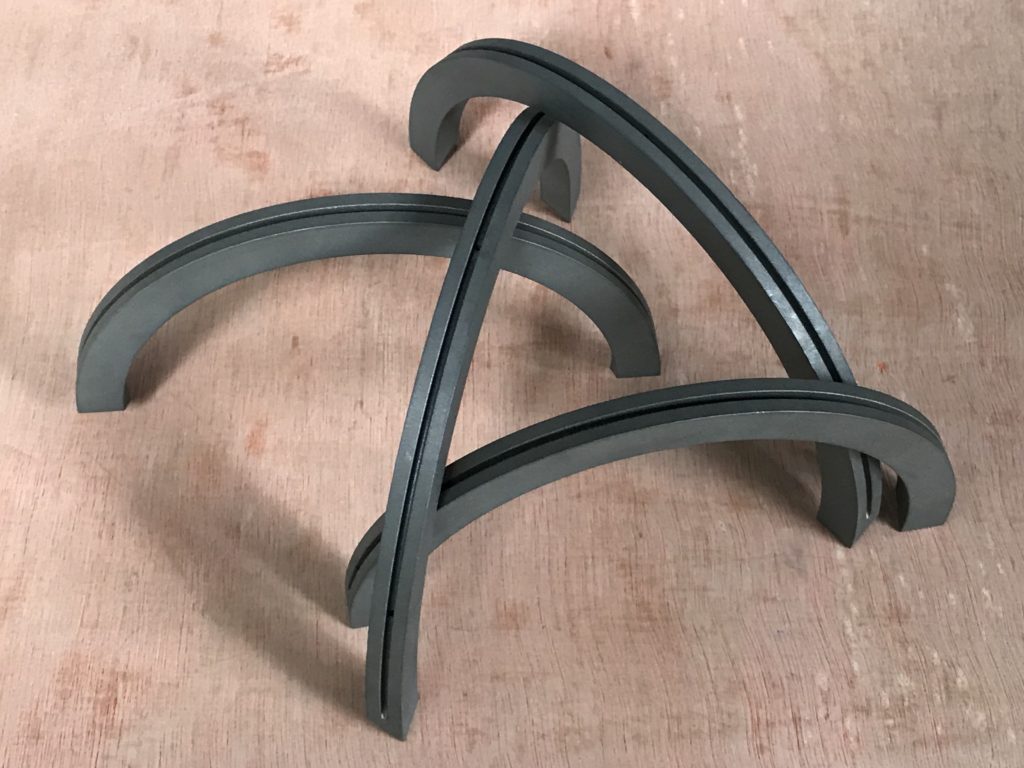
Large piston rings for marine engines — heavy-section compression and oil-control rings for slow-speed and medium-speed diesels.

Large piston rings for marine engines — heavy-section compression and oil-control rings for slow-speed and medium-speed diesels.

View on supplier site →

Marine engine categories and parts demand

Engine typeTypical bore × strokePower rangeCommon applicationsAftermarket parts demand
Slow-speed two-stroke (low RPM)500-980mm bore × 1500-3500mm stroke2-90 MWContainer ships, bulk carriers, tankers — main propulsionCylinder liners, piston crowns, rings, fuel injection equipment
Medium-speed four-stroke200-460mm bore × 250-600mm stroke0.5-25 MWAuxiliary generators, smaller vessel propulsion, ferriesCylinder heads, valves, pistons, turbochargers
High-speed four-stroke120-220mm bore × 130-280mm stroke0.1-5 MWTugs, fishing vessels, fast craft, emergency generatorsComplete engine spares, frequent rebuilds
Very high-speed (small craft)80-160mm bore × 90-180mm stroke50-1000 kWSmall commercial, recreational, RIBs, lifeboatsHigh-volume consumer-style aftermarket

Spare parts categories

Part categoryTypical replacement intervalFOB China typical price (medium-speed engine)
Cylinder liners10,000-30,000 hours / major overhaulUSD 1,800-12,000 each (depends on bore)
Piston crowns / pistons10,000-25,000 hoursUSD 1,200-9,500 each
Piston rings (set per cylinder)5,000-15,000 hoursUSD 250-2,400 per set
Cylinder heads15,000-40,000 hours / major overhaulUSD 2,800-18,000 each
Valve coversLong life / replace if crackedUSD 350-1,800 each
Inlet and exhaust valves5,000-15,000 hoursUSD 180-650 each
Valve seats and guides15,000-30,000 hoursUSD 80-280 each
Connecting rods / bolts30,000+ hours / inspect during overhaulUSD 850-4,500 each (rod), USD 65-220 each (bolt set)
Main and big-end bearings15,000-25,000 hoursUSD 320-2,200 per set
Crankshafts40,000+ hours / lifetime if not overstressedUSD 18,000-95,000 each (medium-speed)
Camshafts and segments20,000-40,000 hoursUSD 1,200-8,500 each (segment)
Fuel injectors4,000-12,000 hoursUSD 380-2,400 each
Fuel injection pumps15,000-30,000 hoursUSD 1,800-9,800 each
Turbocharger CHRA / cartridge15,000-30,000 hoursUSD 4,500-22,000 each
Gaskets, seals, O-rings (kit)Each overhaulUSD 280-2,800 per kit

Engine families and aftermarket cross-reference

OEM familyTypical engines coveredAftermarket-fit availability
MAN B&W (slow-speed)S-series, K-series, L-series, G-series two-strokeWide aftermarket-fit availability for major wear parts
MAN (medium-speed)L+V series 28/32, 32/40, 32/44, 48/60Wide aftermarket-fit availability
Wärtsilä / SulzerRT-series two-stroke; W20, W26, W32, W34, W38, W46 four-strokeStrong aftermarket-fit market
Mitsubishi (UE)UEC and UEX two-stroke; S series four-strokeLimited aftermarket availability for newer engines
DaihatsuDK, DC, DCE-series medium-speedModerate aftermarket availability
Yanmar MarineUE-X, KE, EYM-seriesStrong domestic Asia aftermarket
Hyundai HiMSENH21, H25, H32 series medium-speedGrowing aftermarket availability
MTU / Detroit DieselSeries 4000, 8000 high-speedModerate aftermarket availability
Cummins MarineQSK, QSM, QSB seriesStrong consumer-style aftermarket
Caterpillar Marine3500, 3600, C-seriesWide aftermarket availability
Pielstick / SEMTPA-series, PC-series medium-speedSpecialty aftermarket
Niigata / Hanshin / AkasakaVarious Japanese medium-speedDomestic Asia aftermarket

Class society approval matters for SOLAS-regulated vessels

For commercial vessels regulated under SOLAS (Safety of Life at Sea), engine spare parts in critical applications (main engine cylinder components, propulsion-system bearings, fuel injection equipment) may require class society approval. The major class societies are: ABS (American Bureau of Shipping), DNV (Det Norske Veritas), Lloyd's Register (LR), BV (Bureau Veritas), CCS (China Classification Society), KR (Korean Register), NK (Nippon Kaiji Kyokai), RINA (Italian classification). Each maintains type-approval programs for marine spare parts.

For non-class-critical parts (gaskets, seals, valve covers, accessories, fuel filters), commercial-grade aftermarket parts are generally acceptable. For class-critical parts, two paths: (1) Source from class-approved supplier with documented approval certificates; (2) Source aftermarket-fit and obtain individual approval per part per class society — typically requires significant testing and documentation. Reputable suppliers like Linlan Corp can provide class society approval documentation for relevant product categories. Verify class approval scope matches specific vessel's class society and intended part application before procurement.

Materials and manufacturing

ComponentTypical materialManufacturing process
Cylinder block / cylinder headCast iron (GG-25 / GG-40 / GGG-50 ductile iron)Sand casting + heat treatment + machining
Cylinder linerCast iron with chrome-plated wear surfaceCentrifugal casting + chrome plating + honing
Piston (medium-speed)Aluminum-silicon alloy (low-RPM); composite forged steel + aluminumForging + machining
Piston (slow-speed two-stroke)Cast steel piston crown + cast iron skirtForging + casting + machining
Piston ringsCast iron (compression); chrome-plated cast iron (top compression)Centrifugal casting + grinding + chrome plating
Connecting rodsForged steel (typical 42CrMo4 / SCM440)Forging + heat treatment + machining
Crankshaft (medium-speed)Forged steel (typical 42CrMo4 / SCM440)Forging + induction hardening + machining
CamshaftForged steel + induction-hardened lobesForging + machining + induction hardening
Valves (inlet)Heat-resistant steel (typical 21-4N)Forging + machining + tip-induction hardening
Valves (exhaust)Stellite-faced heat-resistant alloy (typical Inconel-base)Forging + Stellite welding + machining
Valve seat insertsHigh-chrome cast iron or sintered alloyCasting / sintering + grinding
Bearings (main + big-end)Steel-back tri-metal bearingMulti-layer rolling + machining

Order workflow — marine engine spares procurement

  1. Engine identification — exact engine model, serial number, build year; for slow-speed engines, also cylinder count and stroke variant; this drives part-number specification
  2. Part specification — OEM part number cross-reference, dimensional drawings if available, material specification, surface treatment specification
  3. Class approval requirement — verify if part is class-critical for vessel's class society; obtain approval documentation before committing if required
  4. Sample / prototype order — for non-emergency procurement, sample part for dimensional and material verification; test fit before committing to larger order
  5. Production order — typical order quantity 1-10 of larger components, 10-50 of smaller wear parts; lead time 30-90 days depending on complexity
  6. Material certification — request material test certificates (chemical analysis, mechanical properties); for class-critical parts, type-approval certificate
  7. Quality acceptance — incoming inspection (dimensional, hardness, surface finish); for major castings, NDT (non-destructive testing) per relevant procedure (UT for forgings, MT for cast iron, PT for surface defects)
  8. Installation and commissioning — for major parts (crankshafts, cylinder blocks), supervise installation per OEM procedure; document installation parameters for warranty purposes
  9. Service tracking — record installation date, running hours, performance for future analysis; aftermarket-fit parts often have similar service life to OEM but tracking is essential

Pricing brackets — aftermarket marine engine spares

Order tierBuyer typeDiscount vs OEM equivalentLead time
Single ship maintenanceSingle vessel routine maintenance40-60% below OEM list30-60 days
Ship management companyFleet operator routine procurement45-65% below OEM list40-75 days
Major fleet operatorContainer line, tanker company, bulk operator50-70% below OEM list with framework agreement45-90 days
Shipyard project orderMajor repair / drydocking50-65% below OEM list60-120 days for major components
Aftermarket dealerIndependent ship-supply distributor55-75% below OEM list at distributor cost45-90 days

Critical context: marine engine OEM spare parts pricing has historically been 3-6× the cost of equivalent automotive engine parts, reflecting low volume, specialty engineering, and captive customer base. Aftermarket-fit parts typically priced at 30-50% of OEM list price, delivering meaningful operating cost savings to ship operators. For class-critical parts, the savings vs OEM may be smaller (15-30%) due to type-approval testing costs.

Linlan Corp on weisourcing.com

View the full supplier profile, certifications, contact details, and complete product catalogue.

Frequently asked questions

How do aftermarket-fit marine engine parts compare to OEM (MAN, Wärtsilä, Mitsubishi)?
For non-critical and standard wear parts, premium-tier Chinese aftermarket parts deliver fully-equivalent performance at 30-55% of OEM pricing. The performance parity for mainstream parts is achievable because: (1) METALLURGY — same alloy specifications produce same fatigue and wear performance regardless of manufacturer brand; (2) MANUFACTURING TECHNOLOGY — sand casting, forging, induction hardening, machining are mature processes; (3) DIMENSIONAL ACCURACY — modern CNC machining achieves OEM-equivalent tolerances. WHERE OEM RETAINS ADVANTAGE: (1) PROPRIETARY DESIGNS — newer engine families (post-2015) have tighter design tolerances and proprietary features; aftermarket lag of 5-10 years for full coverage; (2) CLASS APPROVAL — OEM parts come with built-in class society approval; aftermarket requires separate approval process; (3) INTEGRATED ELECTRONICS — modern engine monitoring, control, fuel-injection electronics often proprietary and harder to source aftermarket. FOR MAINSTREAM USE on engines built 2000-2015 (which is most of the global fleet), premium Chinese aftermarket-fit parts deliver fully-acceptable performance. PROCUREMENT STRATEGY: (1) Class-critical or warranty-related parts during build period: OEM; (2) Routine wear parts (rings, bearings, gaskets, valves) on aging engines: aftermarket-fit; (3) Major castings (cylinder blocks, heads, crankshafts) — consider OEM for high-stakes applications, aftermarket-fit acceptable for cost-driven scenarios. Quality verification matters more than brand choice — verify material certificates, dimensional inspection, and reference customer feedback regardless of supplier. Reputable suppliers like Linlan Corp provide complete documentation packages including material test certificates and reference vessel installations.
What's the difference between class-approved and standard aftermarket parts?
Class society approval is the regulatory framework that defines whether a marine spare part is acceptable for use on SOLAS-regulated vessels. STANDARD AFTERMARKET PARTS — manufactured to OEM dimensional and material specifications without specific class society approval. Acceptable for: (1) Yacht and recreational craft (typically not class-regulated); (2) Some inland waterway vessels; (3) Non-critical parts on commercial vessels (gaskets, seals, valve covers, lubrication system parts, accessories); (4) Auxiliary engines on smaller commercial vessels in some jurisdictions. CLASS-APPROVED PARTS — manufactured by suppliers maintaining active type-approval certification with specific class societies. Properties: (1) Type-approved by class society after testing per their procedures; (2) Manufactured under quality system audited by class society; (3) Each part traceable to approved manufacturing batch; (4) Requires class society documentation at installation. Required for: (1) Main propulsion engine parts on SOLAS vessels; (2) Critical auxiliary system parts; (3) Parts installed during class-supervised drydocking; (4) Insurance-required parts categories. APPROVAL PROCESS for aftermarket suppliers: (1) Type-approval testing (typical 6-18 months, cost USD 50,000-300,000 per part family); (2) Manufacturing facility audit by class society; (3) Ongoing surveillance audits annually; (4) Per-batch certificate issuance. PROCUREMENT VERIFICATION: (1) Request type-approval certificate showing specific class society and product scope; (2) Verify certificate is current (annual renewal typical); (3) Match certificate to specific product variant being supplied; (4) Confirm class society number on individual parts where applicable. Working with established class-approved suppliers like Linlan Corp for class-critical parts protects against approval-related rejection at installation or class survey.
What's the typical maintenance cycle for a medium-speed marine diesel?
Standardized maintenance intervals based on running hours. MINOR INSPECTION (every 250-500 hours or 1-3 months whichever comes first): visual inspection, lube oil sample, fuel system check, basic instrumentation review. MEDIUM INSPECTION (every 2,000-5,000 hours or annually): valve clearance check and adjustment, cylinder head bolt re-torque, fuel injector replacement (typical interval 4,000-12,000 hours), turbocharger service. MAJOR OVERHAUL (every 15,000-30,000 hours or 5-10 years): full disassembly, cylinder liner replacement (if worn), piston ring replacement, valve replacement, fuel injection pump rebuild or replacement, complete bearing replacement, crankshaft journal inspection, comprehensive testing. CLASS-MANDATED INSPECTIONS: SOLAS vessels typically require detailed engine inspections at 5-year drydock intervals plus periodic intermediate surveys. Major drydocking occurs every 2.5 years for most commercial ships, with full hull inspection and maintenance. SPARE PARTS STOCKING: typical ship carries spare parts inventory worth 5-15% of engine value, focused on high-frequency consumables (gaskets, filters, light wear parts) plus selected critical-path parts (turbocharger spares, fuel pump elements). Major overhaul work typically arranges parts 3-9 months in advance through ship management procurement. PROCUREMENT IMPLICATIONS: (1) Routine consumable parts: high-volume aftermarket procurement, routine timing; (2) Overhaul parts: planned procurement on 6-12 month horizons, can use aftermarket-fit; (3) Emergency replacement: typically OEM for speed, but aftermarket suppliers with stock can fill emergency demand. Premium aftermarket suppliers often maintain "ship-from-stock" inventory of high-demand wear parts to support emergency procurement, competitive with OEM rapid-response capability.
How do I source parts for engines from manufacturers no longer in business?
Orphan-engine support is a meaningful aftermarket sub-segment. ENGINE FAMILIES WITH LIMITED OEM SUPPORT: (1) Niigata, Hanshin, Akasaka older designs (production declining since 1990s); (2) Some Pielstick/SEMT older engines (corporate consolidation reduced OEM support); (3) Some Sulzer pre-RTA designs (Wärtsilä acquired but limited support for older variants); (4) Older MAN B&W variants (full OEM support remains but pricing premium for older parts). AFTERMARKET COVERAGE: established marine aftermarket suppliers maintain pattern shops, drawings, and material specifications for many older engine families. Order workflow: (1) Provide engine identification and part description with available drawings or measurements; (2) Aftermarket supplier quotes based on existing tooling or new tooling charge; (3) For small-quantity orders, supplier may amortize tooling cost across order; (4) For routine orders, established tooling allows competitive pricing. PROCUREMENT TIMELINE: orphan parts typically 60-180 days lead time vs 30-60 for current production parts. PROVE-FIT REQUIREMENTS: for critical applications, supplier may produce sample part for dimensional verification before full order. CLASS APPROVAL: for class-critical orphan parts, type-approval may not be available; alternative is per-part approval or accepting non-class-approved replacement (with class society notification at survey). REVERSE ENGINEERING: for parts where drawings are unavailable, suppliers can reverse-engineer from broken or worn samples; this adds cost (USD 1,500-15,000 per part for engineering) and time (60-120 days additional). Linlan Corp and similar suppliers maintain capability for orphan-engine support; preserving older engines through aftermarket parts extends vessel service life economically.
What's the typical service life of marine engine components, and when do I plan replacement?
Component service life varies dramatically by engine type, fuel quality, and operating conditions. SLOW-SPEED TWO-STROKE COMPONENTS (low-RPM, ocean main engines): cylinder liners 25,000-60,000 hours, piston crowns 15,000-30,000 hours, piston rings 8,000-15,000 hours, exhaust valves 8,000-15,000 hours, crankshaft typically lifetime (60,000-100,000+ hours). MEDIUM-SPEED FOUR-STROKE COMPONENTS: cylinder liners 15,000-30,000 hours, pistons 12,000-25,000 hours, piston rings 5,000-15,000 hours, exhaust valves 6,000-15,000 hours, valve guides 15,000-30,000 hours, fuel injectors 4,000-12,000 hours. HIGH-SPEED COMPONENTS: significantly shorter — cylinder liners 8,000-20,000 hours, pistons 6,000-15,000 hours, frequent overhaul cycles. SERVICE LIFE FACTORS: (1) FUEL QUALITY — heavy fuel oil (HFO) operation accelerates wear vs marine diesel oil; sulfur content affects valve life; ash content affects piston ring groove wear. (2) OPERATING LOAD — engines running near rated load have shorter component life than engines running at 60-75% load (typical economic operation). (3) MAINTENANCE QUALITY — proper lube oil management, fuel filtration, cooling water treatment significantly extends component life. (4) STARTING/STOPPING — frequent start-stop cycles accelerate thermal-fatigue damage; continuously-running engines have longer component life. REPLACEMENT PLANNING: (1) Track running hours per cylinder; replace at scheduled interval or sooner if condition monitoring (oil analysis, vibration analysis, performance metrics) indicates accelerated wear; (2) For class-supervised vessels, align major replacements with 2.5-year drydock intervals; (3) For tramping operations, balance replacement scheduling with available drydock periods worldwide. Reputable marine engine spare suppliers track customer running-hour data to support replacement planning; this becomes a major value-add beyond just parts supply.
How do I verify quality of aftermarket-fit marine engine parts?
Three-tier quality verification matched to part criticality. TIER 1 — DOCUMENTATION REVIEW: every batch ships with mill test certificate (chemistry, mechanical properties), dimensional inspection report, and any class society documentation. Cheap suppliers may issue generic certificates not specific to delivered batch — red flag. TIER 2 — INCOMING DIMENSIONAL INSPECTION: on critical components (cylinder liners, pistons, crankshaft journals), verify key dimensions match drawing tolerance: bore diameter, stroke length, journal diameters, surface finish (Ra) by stylus profilometer. TIER 3 — MATERIAL VERIFICATION: positive material identification (PMI) testing with portable XRF or OES; for critical components, send samples to independent lab for full chemistry by ICP-MS, microstructure by metallographic examination. CRITICAL FOR LARGE COMPONENTS: (1) NDT of forgings — ultrasonic testing for internal defects; magnetic particle testing for surface cracks; (2) NDT of castings — radiographic inspection for porosity and shrinkage; (3) HARDNESS TESTING — Brinell or Rockwell hardness verification at multiple locations; (4) DIMENSIONAL CMM — for critical-fit components, full dimensional inspection on coordinate measuring machine. PROCUREMENT WORKFLOW: (1) Initial qualification with sample part receiving full TIER 3 inspection; (2) First 3-5 production orders with TIER 2 inspection; (3) Routine orders with TIER 1 documentation review and random TIER 2 spot-check (5-10% of parts); (4) Quarterly review of supplier QC trends; (5) Adjust inspection rate based on quality consistency. WARRANTY HANDLING: aftermarket parts typically warranted 12-24 months from installation or 4,000-8,000 running hours. Document installation date and conditions; report any premature failures to supplier with detailed forensic data. Quality suppliers like Linlan Corp maintain proactive quality management and respond promptly to warranty claims.
⚠ Important Disclaimer

Source: Product images on this page are hosted on the manufacturer's official website (linlancorp.com) and link directly back to that website. All product information was summarised from the supplier's public catalogue.

Brand mentions and trademark compliance: References to OEM marine engine manufacturer brands (MAN B&W, Wärtsilä, Sulzer, Mitsubishi, Daihatsu, Yanmar, Hyundai HiMSEN, MTU, Detroit Diesel, Cummins Marine, Caterpillar Marine, Pielstick, SEMT, Niigata, Hanshin, Akasaka) are made for the sole purpose of describing engine families and aftermarket-fit cross-reference. Linlan Corp is not authorized by, affiliated with, or endorsed by any of these brand owners. Products are aftermarket-fit cross-reference parts manufactured under Linlan Corp's own brand for cross-reference fitment to the engine families described.

Class society approval: Marine engine spare parts in critical applications on SOLAS-regulated vessels may require class society approval (ABS, DNV, Lloyd's Register, BV, CCS, KR, NK, RINA). Verify approval requirements with vessel's class society before procurement. Installing non-approved parts in class-critical applications can void class certification and create regulatory issues.

Marine safety and operational responsibility: Marine engine spare parts directly affect vessel propulsion and life-safety systems. Improperly specified or installed parts can cause engine failure leading to dead-ship situations, fires, or marine casualties. Engineering review and qualified installation technicians are essential for major component replacement.

Pricing & specifications: All price ranges, service-life figures, and discount estimates reflect general market observation. Real-world parts pricing depends on engine type, part complexity, current market conditions, and order volume. Service life figures represent typical performance under normal operating conditions and may vary significantly with fuel quality, load profile, and maintenance practices. Confirm current pricing, lead time, and certifications directly with the supplier.

No middleman role: Weisourcing provides supplier discovery and editorial content. All transactions occur directly between buyer and supplier through the contact channels published on the supplier's official website.