weisourcing.com / products / Jason Hoses / Industrial Hoses (PVC, Fire, Suction)

Industrial Hoses from China — PVC Layflat, Fire, Suction & Specialty Wholesale Guide

A practical sourcing guide for industrial flexible hoses from China — written for agricultural-equipment dealers, fire-protection equipment dealers, mining-supply distributors, construction-supply distributors, and industrial MRO buyers. Real product images from jasonhoses.com covering PVC layflat hoses (light and heavy-duty, 1″-12″), TPU premium layflat, suction and discharge hoses, fire hoses (single and double-jacket per EN 14540 and NFPA 1961), mine hoses, oil-resistant discharge, and food-grade variants. Construction details, pressure-rating differences (working vs burst), certifications by application (EN / NFPA / ISO / FDA / API), end-fitting selection (camlock, storz, NH, BSP/NPT), and the procurement workflow that establishes industrial hose distribution profitably.

Manufacturer: Jason Hoses (jasonhoses.com)
Category: Valves, Hoses & Fluid Control
Reading time: 13 min

Industrial flexible hoses move water, chemicals, slurries, fuels, and air in agricultural, mining, construction, firefighting, and industrial applications worldwide. The category divides into roughly five families — PVC layflat (irrigation, dewatering), suction hose (vacuum / negative pressure transfer), discharge hose (positive pressure water/slurry), fire hose (firefighting), and specialty hoses (chemical, food-grade, hydraulic). For dealers in agricultural equipment, fire-protection equipment, mining supply, construction supply, and industrial MRO distribution, sourcing industrial hoses from a Chinese specialist supplier delivers significant cost savings vs branded equivalents at comparable performance for typical mid-range applications.

This guide covers the Jason Hoses product family — PVC layflat hoses (1″ through 12″), heavy-duty suction hoses, fire hoses with NBR/EPDM rubber liner, oil-resistant discharge hoses, mine and dredging hoses, and specialty applications. Real product images linking back to the supplier's catalog at jasonhoses.com.

Product range — actual catalogue images

The product images below are hosted on the manufacturer's official website (jasonhoses.com) and link directly to the manufacturer's catalogue. Click any image to view the full specification page in a new tab.
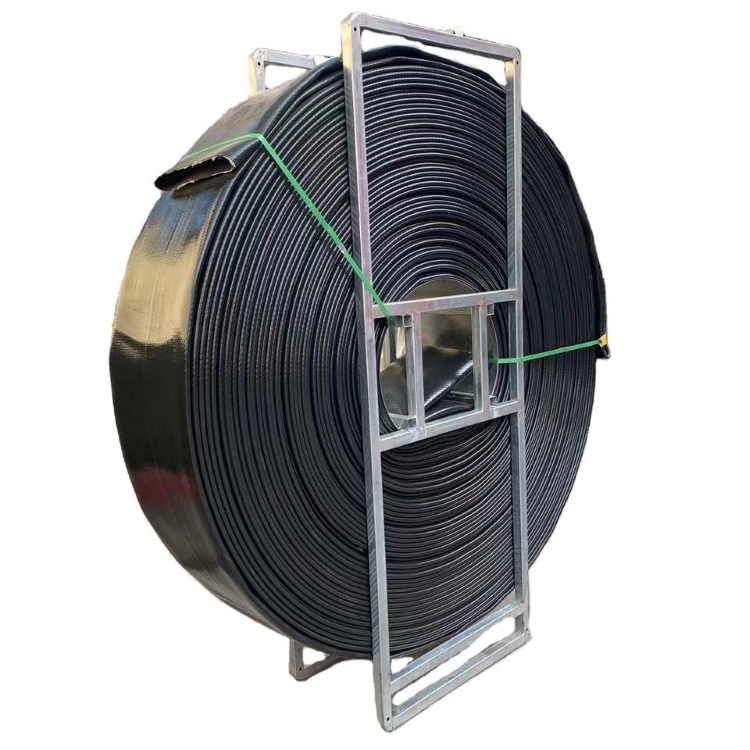
Industrial PVC layflat hose roll on shipping cradle — large-bore agricultural and dewatering applications.

Industrial PVC layflat hose roll on shipping cradle — large-bore agricultural and dewatering applications.

View on supplier site →
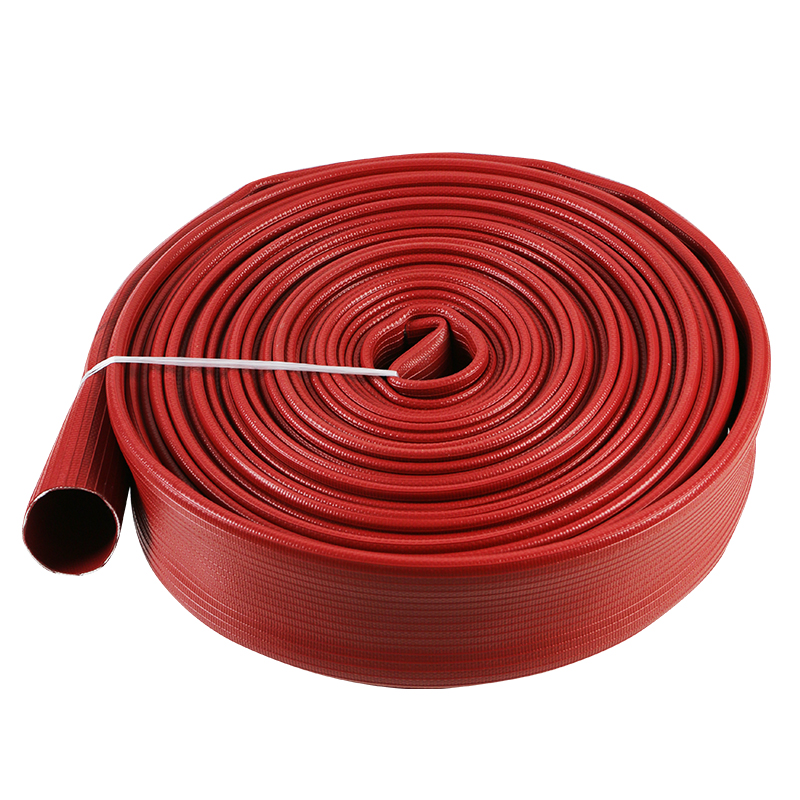
Red PVC fire / discharge hose coiled — high-pressure water transfer for firefighting and emergency response.

Red PVC fire / discharge hose coiled — high-pressure water transfer for firefighting and emergency response.

View on supplier site →
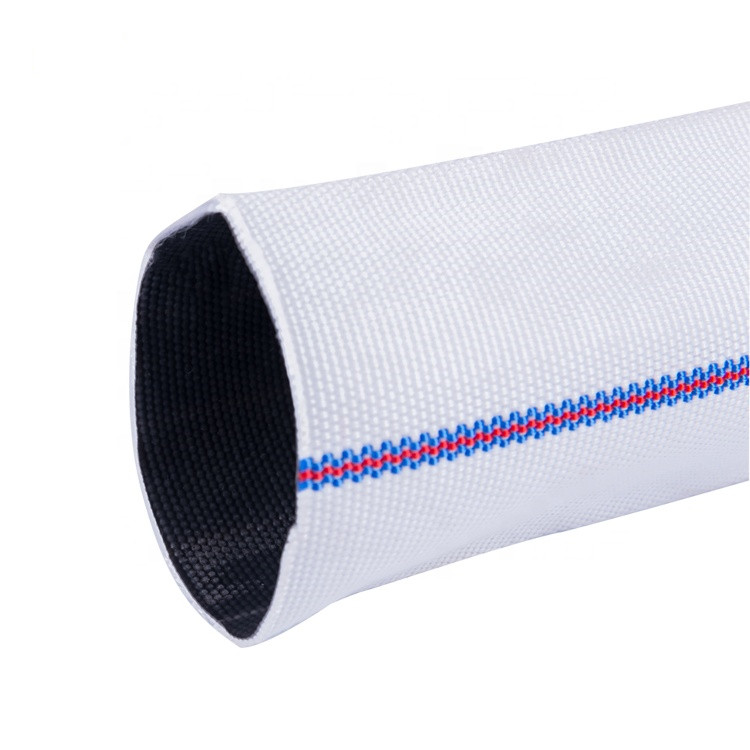
Fire hose with white woven outer cover and tracer threads — premium-grade firefighting hose with rubber liner.

Fire hose with white woven outer cover and tracer threads — premium-grade firefighting hose with rubber liner.

View on supplier site →
Multi-product industrial hose family — PVC layflat, suction, discharge, and fire hose variants.

Multi-product industrial hose family — PVC layflat, suction, discharge, and fire hose variants.

View on supplier site →

Hose family overview

Hose familyInside diameter rangePressure rangeTypical applicationsFOB China per meter (mid-volume)
PVC layflat hose (light-duty)1″-12″ (25-300mm)3-8 bar (45-115 psi)Agricultural irrigation, basic dewatering, garden water transferUSD 0.45-3.50 per meter
PVC layflat hose (heavy-duty)1.5″-12″ (40-300mm)10-20 bar (145-290 psi)Mining dewatering, oil-field water transfer, construction dewateringUSD 0.85-6.50 per meter
TPU layflat hose (premium)1″-12″ (25-300mm)15-25 bar (215-360 psi)Mining slurry, fracking water transfer, abrasive applicationsUSD 1.80-9.50 per meter
Suction & discharge hose (PVC spiral)1″-10″ (25-250mm)3-7 bar suction; 4-10 bar dischargePump suction, slurry transfer, vacuum truckUSD 0.65-5.80 per meter
Heavy suction hose (rubber)2″-12″ (50-300mm)4-10 barHeavy slurry, dredging, mining sludge, abrasive materialUSD 4.50-22.00 per meter
Fire hose (synthetic single-jacket)1.5″-4″ (38-100mm)13-17 bar (190-250 psi)Industrial firefighting, marine firefightingUSD 1.20-3.50 per meter
Fire hose (synthetic double-jacket)1.5″-4″ (38-100mm)17-25 bar (250-360 psi)Municipal firefighting, premium fire serviceUSD 2.20-5.50 per meter
Mine hose (high-pressure)1.5″-6″ (40-150mm)20-40 bar (290-580 psi)Underground mining water/slurry, methane drainageUSD 5.50-15.00 per meter
Oil-resistant discharge hose1″-6″ (25-150mm)10-20 barPetroleum transfer, fuel delivery, oil-fieldUSD 3.20-12.00 per meter
Food-grade hose0.5″-4″ (12-100mm)4-10 barFood processing, beverage, dairy, breweryUSD 4.50-18.00 per meter

Construction details by hose type

Hose typeLiner / inner coverReinforcementOuter cover
PVC layflat (light)PVC compoundHigh-tenacity polyester yarn (single layer)PVC outer layer
PVC layflat (heavy)PVC compoundHigh-tenacity polyester yarn (double layer)PVC outer layer with abrasion-resistant compound
TPU layflatTPU (thermoplastic polyurethane)High-tenacity polyester braidTPU outer (highly abrasion-resistant)
PVC suction (spiral)PVC inner layerRigid PVC helix (spiral) for negative-pressure resistancePVC outer layer
Heavy rubber suctionNBR or natural rubberSteel helix wire + textile reinforcementSynthetic rubber (SBR / NBR) outer
Single-jacket fire hoseEPDM rubber linerSynthetic yarn jacket (single-thickness)Same jacket — exposed to weather
Double-jacket fire hoseEPDM rubber linerTwo synthetic yarn jackets (inner + outer)Outer jacket with rotproof / UV-resistant treatment
Mine hoseNBR or EPDM rubberMultiple steel-wire braid layersSynthetic rubber outer (abrasion + chemical resistant)
Oil dischargeNBR (oil-resistant rubber)Steel helix + textile reinforcementNBR outer with weather protection
Food-gradeWhite FDA-grade EPDM or siliconeTextile reinforcementSmooth EPDM or PVC outer

Standard sizes and packaging

Hose categoryStandard length per coil/rollStandard packagingContainer utilization (40' HQ)
PVC layflat (1-3″)50m, 100m, 200m rollsPlastic-film wrapped or carton-boxed~25,000-40,000m typical
PVC layflat (4-12″)50m or 100m rollsSteel cradle or carton-boxed~8,000-15,000m typical
Suction hose (PVC spiral)30m, 50m rollsCardboard core wrap~10,000-20,000m typical
Heavy rubber suction20m or 30m sectionsWooden crates with end caps~3,500-7,000m typical
Fire hose (1.5-2.5″)20m, 25m, 30m sectionsCartons (10-50 sections per carton)~4,000-8,000 sections typical
Fire hose (3-4″)20m, 30m sectionsCartons (5-15 sections per carton)~2,000-4,000 sections typical
Mine hose30m, 60m, custom lengthsWooden crates with metal end protection~3,000-6,000m typical
Oil discharge10m, 20m, 30m, customWooden crates~2,500-5,500m typical

Why hose specification matters: pressure rating vs working pressure

A common mistake in hose procurement: buying based on burst-pressure rating rather than working-pressure rating. Industrial hose standards (NFPA, EN, ANSI/AWWA) require working pressure (continuous safe operating pressure) be specified separately from burst pressure, with safety factor typically 3:1 (burst pressure = 3 × working pressure). For a hose rated "60 bar burst," continuous safe working pressure is typically 20 bar — selling at "60 bar" performance specification creates field-failure liability and safety incidents.

Reputable suppliers like Jason Hoses publish working-pressure ratings prominently and verify with hydrostatic test certificates per relevant standard (ISO 8332 for PVC layflat, EN 1024 for fire hose, ISO 4641 for mine hose). For all critical applications — firefighting, mining, oil/fuel transfer — specify working pressure with verification certificate, not just nominal rating.

Compliance and certification

StandardApplies toTest requirementsMarkets where critical
ISO 8332PVC layflat hoseHydrostatic test, abrasion, kink resistanceEU, Asia industrial
EN 1024 / EN 14540Fire hose (synthetic)Pressure test, abrasion, oil resistanceEU firefighting service
UL 219 / NFPA 1961Fire hose (US)Pressure test, abrasion, durabilityUS firefighting service
ISO 4641Rubber hose for miningPressure, fire-retardance, antistaticUnderground mining (all markets)
FDA 21 CFR 177.2600Food-contact rubber hoseMigration testing for food safetyUSA food/beverage
EU Regulation 1935/2004Food-contact materials (EU)Migration testing, declaration of conformityEU food/beverage
3-A Sanitary StandardsFood/dairy hoseCleanability, surface finish, traceabilityUSA dairy industry
API 7K / API 16COil-field hosesSour gas, high-pressure, fire-testOil/gas industry worldwide
BS 6391 Type 1/2/3UK fire hosePressure, abrasion, thermal agingUK firefighting service

Order workflow — industrial hose distribution

  1. Application analysis — separate by application family (irrigation / dewatering / firefighting / mining / oil-transfer / food); each has different specification, certification, and price-band
  2. Working-pressure specification — match working pressure (not burst pressure) to actual application requirement; oversize 25-50% for safety margin in critical applications
  3. Certification verification — for fire hose: EN 14540 (EU) or NFPA 1961 (US) with test certificate; for mining: ISO 4641 with antistatic verification; for food-grade: FDA 21 CFR or EU 1935/2004 declarations; for oil-field: API 7K or 16C
  4. Sample order — 10-30m of each candidate SKU; pressure-test on bench at rated working pressure; verify abrasion resistance, kink performance, end-fitting compatibility
  5. Field trial — install on representative applications for 60-180 days; document failure modes (if any), abrasion patterns, end-fitting integrity
  6. First container order — typically 15,000-40,000 meters mixed across 8-25 SKUs based on local application demand and inventory turn velocity
  7. Series replenishment — quarterly orders aligned with seasonal demand patterns (irrigation demand peaks spring; firefighting demand fluctuates with fire-season; mining/oil demand more constant)

Jason Hoses on weisourcing.com

View the full supplier profile, certifications, contact details, and complete product catalogue.

Frequently asked questions

What's the difference between PVC layflat and rubber suction hose, and when do I use each?
Different physical configurations and application categories. PVC LAYFLAT — thin-walled flexible hose that lies flat when not pressurized; coils tightly for compact storage. Properties: light weight (typical 0.6-2.5 kg/m), tight coiling for transport, lower cost, vulnerable to kinking when pressurized in tight bends. Best for: temporary water transfer (irrigation, dewatering), single-shift use, applications where hose is laid out flat. Cannot handle suction/vacuum — collapses when negative pressure applied. RUBBER SUCTION HOSE — thick-walled rigid-spiral or wire-helix-reinforced hose that maintains round cross-section under negative pressure. Properties: heavy weight (typical 3-15 kg/m), rigid coiling (large bend radius), much higher cost, resists negative pressure (vacuum). Essential for: pump suction lines, vacuum trucks, dredge applications, slurry transfer where pump may pull negative pressure. SELECTION: PVC layflat for discharge / positive-pressure water transfer where hose lies flat; rubber suction for any application involving vacuum or where hose needs to maintain round cross-section against negative pressure. For pump applications: rubber suction on suction side, PVC layflat on discharge side is a common configuration.
How does fire hose pressure rating work — what should I specify for industrial fire protection?
Fire hose pressure ratings are specified per relevant standard with multiple ratings on each hose. EN 14540 / EN 1924 (European fire service standard) defines: SERVICE TEST PRESSURE (annual hydrostatic test pressure), MINIMUM BURST PRESSURE (3x service pressure typical), and OPERATING PRESSURE RANGE. For most industrial fire protection, SINGLE-JACKET 1.75″ (45mm) hose at 13-bar service pressure is the workhorse — adequate for typical industrial fire pumps (8-12 bar pump output). For premium industrial / high-rise / municipal applications, DOUBLE-JACKET 2.5″ (65mm) hose at 17-bar service pressure handles the higher pump output (15-20 bar) needed to reach upper floors or large areas. NFPA 1961 (US standard) defines similar service / proof / burst pressure framework. SPECIFICATION RECOMMENDATIONS: (1) Industrial fire pumps typically 8-12 bar output → single-jacket 13-bar service pressure adequate; (2) Premium industrial / high-rise → double-jacket 17-bar service pressure; (3) Always specify hose with test certificate showing actual hydrostatic test results, not just nominal rating; (4) Annual re-test at service pressure required by most fire-protection standards (NFPA 1962); document service-test cycle for liability protection. Cheap fire hose is sometimes sold with optimistic ratings — verify certificates, prefer suppliers with NFPA / EN test reports from accredited test labs.
Can I use Chinese aftermarket-fit hoses for fire-service in EU / US markets?
Yes, with appropriate certifications and quality verification. EU MARKET: fire hose must meet EN 14540 (synthetic-jacketed fire hose) with documented test results; CE marking applies. Suppliers can ship CE-marked product to EU directly. US MARKET: fire hose for use by US fire departments typically must meet NFPA 1961 (operational hose performance standard); UL 219 (UL standard) is voluntary but commonly required by purchasing departments. For industrial fire protection (private fire systems on factories, refineries, etc.), NFPA 1961 compliance is generally adequate; municipal fire department specifications may add UL 219 requirement. UK MARKET: BS 6391 Type 1/2/3 is the historical standard; many UK fire services accept EN 14540 in modern procurement. PRACTICAL APPROACH: verify supplier maintains current certificates from accredited test labs (TÜV, BSI, UL, FM); ask for actual test reports (not just compliance claims); verify supplier has shipped to your destination market previously (export experience matters for documentation handling). Reputable Chinese fire hose manufacturers like Jason Hoses can provide complete certification packages for major export markets. Budget-tier Chinese fire hose may have certifications only for sample testing while shipping production that doesn't match — this is a fundamental compliance issue and creates fire-service liability if hose fails in actual fire response.
What's the typical service life and how do I plan replacement?
Service life varies significantly by application intensity and storage. PVC LAYFLAT (general use): 3-7 years typical service life; 5-10 years if stored properly between uses. Failure modes: UV degradation (cracking when exposed to sun for extended periods), abrasion (dragging on concrete/rocky surfaces), kinking (memory-set kinks reduce flow). FIRE HOSE: 5-10 years typical service life with annual hydrostatic testing; properly stored and maintained hose can reach 15+ years. Failure modes: UV / weather degradation of outer jacket, mildew (if stored damp), liner cracking, abrasion. RUBBER SUCTION HOSE: 5-15 years depending on application; abrasive slurry shortens significantly (mining slurry hose often 1-3 years), water suction much longer. MINE HOSE: 1-5 years depending on slurry abrasiveness, pressure, temperature. OIL-FIELD HOSE: 2-8 years; service-life varies with sour-gas exposure, temperature cycling. REPLACEMENT PLANNING: (1) For fire hose, annual hydrostatic test per NFPA 1962 / EN 671-3 — replace at first failure or by service-life policy (typically 10-15 years regardless of test results). (2) For other industrial hoses, replace at first sign of failure (cracking, kink-set, fitting separation, leakage) or per maintenance interval policy. (3) Inventory holding: typical for distributors is 3-6 months consumption-on-hand, longer for slow-moving SKUs. (4) Fire-service customers often follow 10-year mandatory replacement regardless of condition — this drives steady replacement demand for fire hose distributors.
What size of layflat hose do I need for typical agricultural / dewatering applications?
Application-specific sizing based on flow rate and pressure loss. AGRICULTURAL IRRIGATION (drip / sprinkler from pump): for typical small farm pump (5-10 HP, 200-400 GPM flow), 3″-4″ (75-100mm) layflat handles 100-300m runs with acceptable pressure loss. For larger farm irrigation (20-50 HP, 500-1500 GPM), 6″-8″ (150-200mm) is standard. CONSTRUCTION DEWATERING (basement/excavation drainage): typical pump 2-5 HP at 100-300 GPM → 2″-3″ (50-75mm) layflat adequate for short runs (under 100m); larger pump 10-30 HP at 500-1500 GPM → 4″-6″ (100-150mm). MINING DEWATERING: typically 25-100 HP pumps at 1000-5000 GPM → 6″-10″ (150-250mm) heavy-duty TPU layflat preferred over PVC for abrasion resistance. OIL-FIELD WATER TRANSFER (frac water, produced water): 6″-12″ (150-300mm) heavy-duty TPU layflat, often in 100-200m sections joined by camlock fittings. SIZING CALCULATION: pressure loss in layflat hose roughly: (1) 1″ hose at 50 GPM: 6 psi loss per 100ft; (2) 2″ hose at 100 GPM: 1.5 psi loss per 100ft; (3) 4″ hose at 500 GPM: 1.2 psi loss per 100ft. For pump systems, target hose size where pressure loss is under 10% of pump pressure rating — oversizing slightly is cheaper than undersizing and losing flow. Most distributors stock 2″, 3″, 4″, and 6″ as the high-volume sizes covering 80% of applications.
What end-fittings and accessories do I need to stock alongside hose?
End-fittings represent 10-25% of typical industrial hose distributor revenue and are essential for system completeness. LAYFLAT HOSE FITTINGS: aluminum or galvanized steel camlock fittings (cam-and-groove couplings) per ANSI / DIN standards; standard sizes match hose sizes (Type A, B, C, D, E, F connections). Stock male × female pairs in major sizes. SUCTION HOSE FITTINGS: cam-locks (above) plus heavy-duty bauer / perrot couplings for European markets; storz couplings for fire and emergency services. FIRE HOSE FITTINGS: storz couplings (EU standard), NH (US fire service) or NPSH (forestry) couplings. Coupling type often dictated by destination fire service's historical equipment — verify before specifying. INDUSTRIAL HOSE FITTINGS: BSP or NPT threaded fittings for permanent installations; flange connections for pipe-to-hose interface. ACCESSORIES: hose clamps (worm-drive, T-bolt, two-bolt), hose bridges (for vehicle traffic over hose), hose reels (manual or motorized), hose mending equipment, end protection caps. STOCKING STRATEGY: most distributors stock fittings at approximately 30-50% of hose revenue value. Over-stock female × male variants (matched pairs commonly sold together). For fire-service customers, store-fittings inventory should match local fire department's coupling standards. Reputable hose suppliers like Jason Hoses also supply coordinated fittings — sourcing fittings from same supplier ensures dimensional compatibility and simplified procurement.
⚠ Important Disclaimer

Source: Product images on this page are hosted on the manufacturer's official website (jasonhoses.com) and link directly back to that website. All product information was summarised from the supplier's public catalogue.

Pressure rating responsibility: Industrial hoses must be specified at correct working pressure for the actual application. Selecting hose based on burst pressure rather than working pressure creates field-failure liability and safety incidents. For fire hose, mining hose, oil-field hose, and other safety-critical applications, verify hydrostatic test certificate per relevant standard before commercial deployment. Improperly specified hose in fire/safety applications can cause serious injury or death; in oil-field can cause spills and environmental damage.

Certification and compliance: Industrial hoses for specific applications (fire service, food-grade, oil-field, mining) require relevant certifications (EN 14540 / NFPA 1961 / FDA / EU 1935/2004 / ISO 4641 / API 7K). Verify supplier maintains current certificates from accredited test labs and request actual test reports. Counterfeit or expired certificates are common in lower-tier hose markets — quality verification is buyer's responsibility.

Pricing & specifications: All price ranges, service-life figures, and tier definitions reflect general market observation. Real-world hose service life varies significantly with abrasion exposure, pressure cycling, UV exposure, chemical exposure, and storage practice. Confirm current pricing, MOQ, lead time, and configuration directly with the supplier.

No middleman role: Weisourcing provides supplier discovery and editorial content. All transactions occur directly between buyer and supplier through the contact channels published on the supplier's official website.