weisourcing.com / products / bestprefabhouse / Modular Container & Prefab Houses

Modular Flat-Pack & Folding Container Houses from China — A Wholesale Buyer's Guide

A practical sourcing guide for modular and prefabricated buildings from China — written for mining and remote-camp operators, construction companies, disaster relief and humanitarian organizations, resort and glamping developers, school and healthcare facility builders, and commercial real-estate operators looking at ADU/granny-flat product. Real product images from bestprefabhouse.com covering flat-pack 20-ft and 40-ft container houses, single-fold expandable houses, dual-wing folding houses, capsule houses, sandwich-panel modular buildings, and detached light-steel villas. Construction specifications (frame / panels / insulation / wind / snow / seismic ratings), application market mapping, code compliance considerations for major destination markets (USA state modular programs, CSA A277 Canada, CE + national EU codes, BCA Australia), pricing brackets across order tiers, and the procurement workflow that establishes modular building distribution profitably.

Manufacturer: bestprefabhouse (bestprefabhouse.com)
Category: Building Materials & Construction
Reading time: 14 min

Modular and prefabricated buildings have moved from "construction-site temporary office" status to a real alternative to conventional building for housing, hospitality, education, healthcare, mining/remote camps, disaster relief, and tourism. The economics are increasingly compelling: a flat-pack 20-ft container house ships at USD 1,200-2,800 per unit FOB China, assembles on site in 1-2 days with a small crew, and provides 18-30 m² of finished living/working space. Folding and dual-wing variants triple the deployed area without proportionally increasing shipping cost. Capsule and architectural designs serve premium tourism and resort markets at 5-10x basic flat-pack pricing while still well below conventional construction costs per finished square meter.

This guide covers the bestprefabhouse product family — flat-pack container houses, folding container houses (single-fold and dual-wing), capsule houses, sandwich-panel modular buildings, and detached light-steel villas. Real product images linking back to the supplier's catalog at bestprefabhouse.com.

Product range — actual catalogue images

The product images below are hosted on the manufacturer's official website (bestprefabhouse.com) and link directly to the manufacturer's catalogue. Click any image to view the full specification page in a new tab.
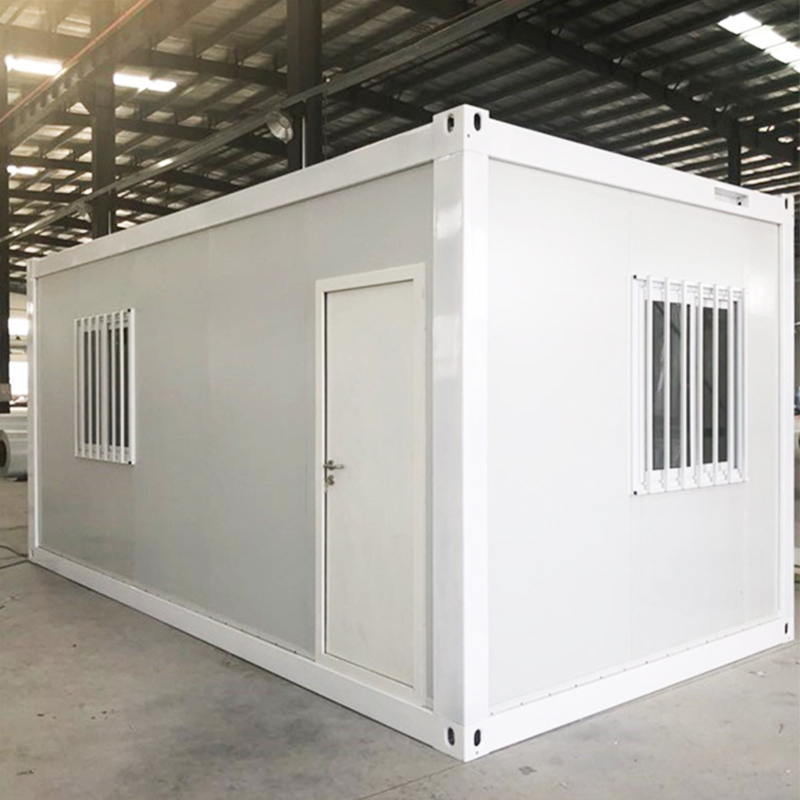
Flat-pack container house — 20-ft footprint, single-storey, ready for site assembly.

Flat-pack container house — 20-ft footprint, single-storey, ready for site assembly.

View on supplier site →
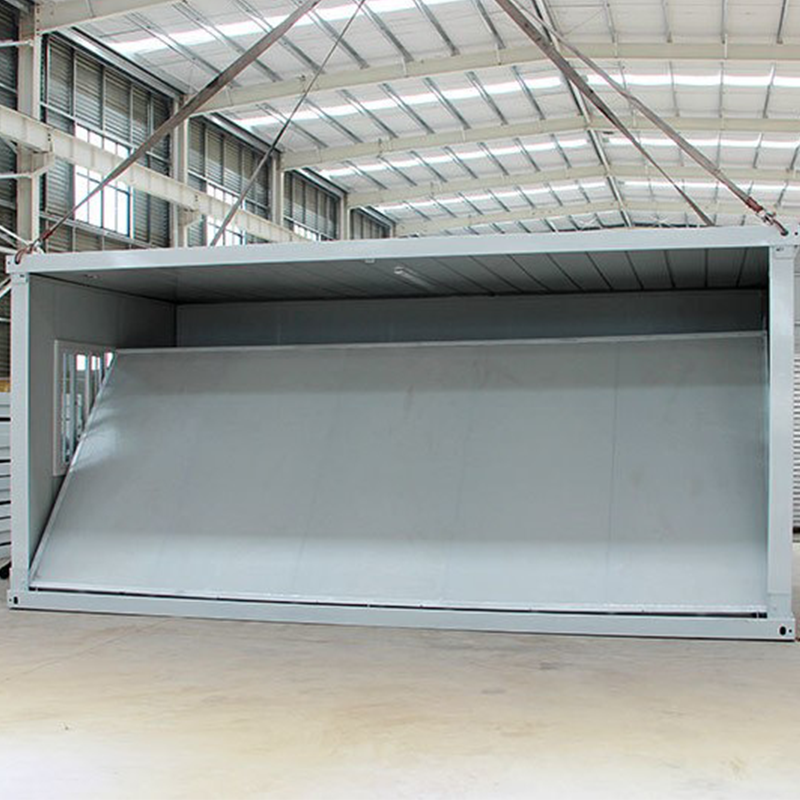
Single-fold container house — being lifted at factory before shipping; expands on site.

Single-fold container house — being lifted at factory before shipping; expands on site.

View on supplier site →
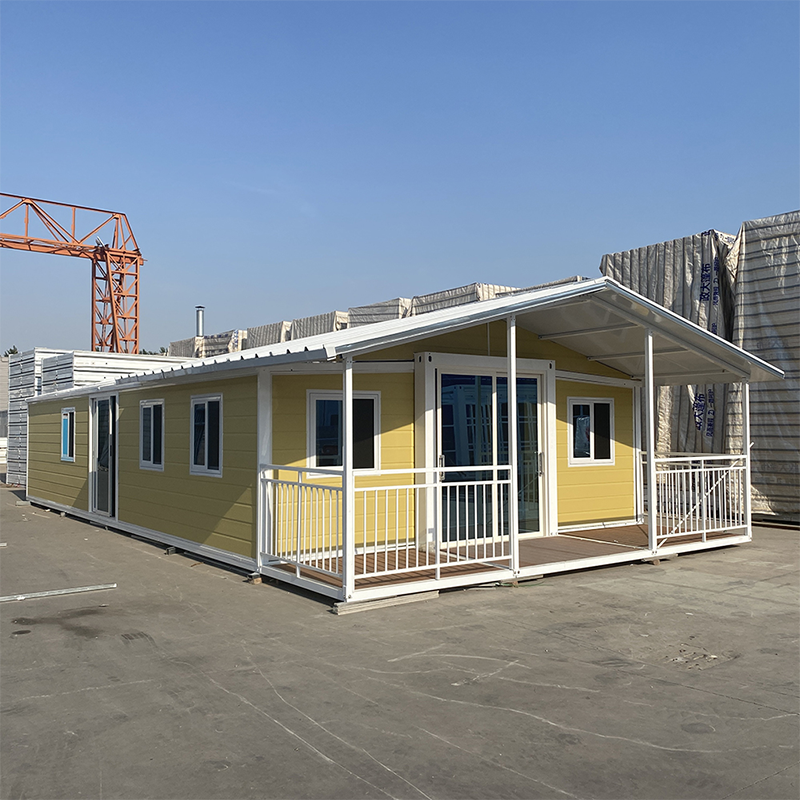
Dual-wing folding container house — triple expansion, faster on-site deployment.

Dual-wing folding container house — triple expansion, faster on-site deployment.

View on supplier site →
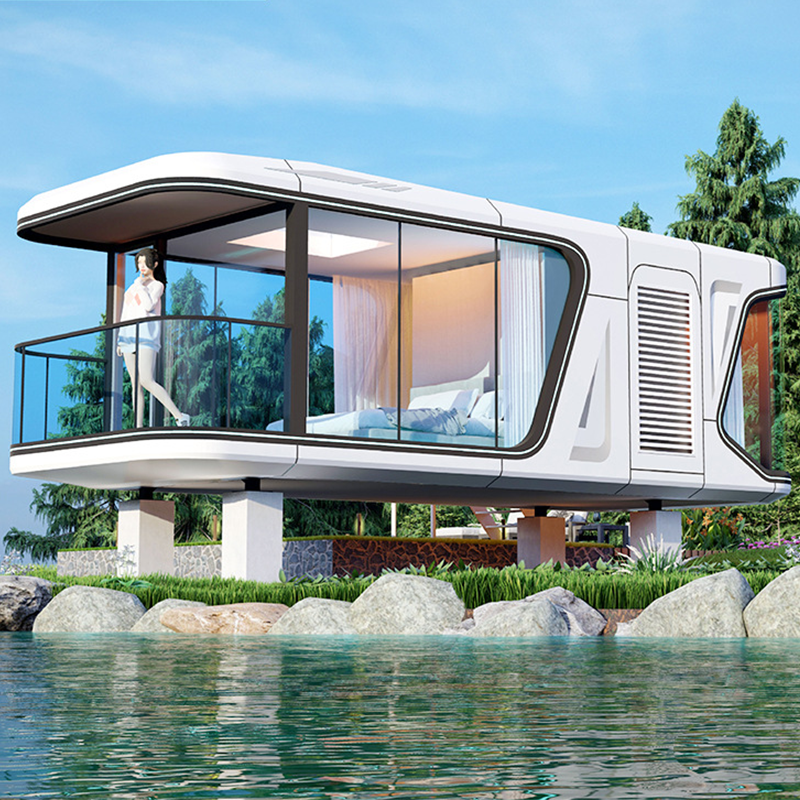
Capsule house design — premium architecture for resort, glamping, and tourism applications.

Capsule house design — premium architecture for resort, glamping, and tourism applications.

View on supplier site →

Product family overview

Product familyFootprintContainer loadingFOB China typical price
Flat-pack container house (single 20-ft)20' × 8' × 8'6" (5.9 × 2.4 × 2.6 m); ~14 m² floor4 units per 40HQ container; flat-packedUSD 1,200-2,800 per unit
Flat-pack container house (single 40-ft)40' × 8' × 8'6"; ~28 m² floor2 units per 40HQ flat-packedUSD 2,400-4,800 per unit
Single-fold expandable houseFolded 20' × 8'; expanded ~28-32 m² floor4-5 units per 40HQUSD 4,500-7,800 per unit
Dual-wing expandable houseFolded 20' × 8'; expanded ~42-48 m² floor3-4 units per 40HQUSD 6,500-12,500 per unit
Capsule house (premium architectural)Various sizes 18-45 m²; premium curved designs1-3 units per 40HQ depending on sizeUSD 12,000-45,000 per unit
Sandwich-panel modular building (kit)Custom sized 20-200+ m²; field-assembled from panels1 building per 20' container (compact panel pack)USD 95-180 per m² floor area
Detached light-steel villa60-300 m² 1-2 storey; full architectural finishing1 villa per 1-2 × 40HQ containersUSD 220-450 per m² floor area
Mobile expandable house (caravan style)Various; trailer-mounted1 unit per 40HQUSD 8,500-22,000 per unit

Construction specifications

SpecStandard flat-packPremium folding / capsule
FrameCold-formed galvanized steel; 1.5-2.0mm wall thicknessHot-dip galvanized steel; 2.0-3.0mm; corner castings ISO 1161 for stacking
Wall panel50-75mm sandwich panel: EPS / rockwool / PU foam core; color-coated steel skin75-100mm panel; rockwool standard for fire performance; thicker for cold climate
Roof panel50-75mm sandwich panel; 1.5-2% slope for drainage75-100mm panel; integrated rain gutters; optional standing-seam metal roof
FloorCement-fiber board on steel frame; vinyl tile or laminate finishMulti-layer plywood + cement board; tile, vinyl, or wood finish
Insulation ratingR-12 to R-15 typical (50-75mm panel)R-20 to R-30 (100mm panel + thermal-break design)
Window / doorAluminum window with single-pane or basic double-pane; steel exterior doorThermal-break aluminum or uPVC double-glazed; insulated steel door with multi-point lock
ElectricalPre-wired with circuit breaker, outlets, lights; standard 220V or 110V configurableSame plus structured cabling, ethernet, smart-home pre-wire optional
PlumbingPEX/PPR water, PVC drain; standard bathroom and kitchen rough-inSame plus on-demand water heating, premium fixtures
HVACSplit AC pre-installed (standard), heat-pump optionMulti-zone heat pump, ERV ventilation, smart thermostat
Wind ratingTypically 100-130 mph (160-210 km/h); verify per local code140-180 mph available with engineered tie-downs
Snow load40-70 psf typical; verify per local codeUp to 100 psf engineered for cold climates
SeismicZone 4 capable with engineered foundationZone 4 standard; full engineering certification

Application markets

Market segmentTypical product fitOrder pattern
Mining / remote work campsFlat-pack container houses; sandwich-panel dormitories20-200 units per project; quick deployment essential
Construction site offices/dormsFlat-pack 20' container houses5-50 units per project; reusable across sites
Disaster relief / emergency housingFlat-pack and folding container houses50-1,000+ units urgent deployment; government/NGO buyers
Refugee / migrant housingSandwich-panel buildings; flat-pack housesLarge-scale deployments; engineered for multi-year use
Educational / school constructionSandwich-panel modular schoolsMulti-classroom buildings; fast school-year deployment
Healthcare clinics (rural)Specialized modular medical unitsSingle units to clinic complexes
Resort / glamping / tourismCapsule houses; premium folding houses5-50 units per resort; design-driven
Backyard ADU / granny flat (residential)Folding houses; capsule houses; light-steel villasSingle-unit retail; growing in markets with ADU regulations
Farmworker / agricultural housingFlat-pack houses; sandwich-panel dormsSeasonal use; 5-30 units per farm
Military / government deploymentCustom-spec hardened modular buildingsStandardized configurations; multi-year contracts
Hotel chain / extended-stayPremium folding houses; light-steel villasPhased deployments aligned with development timeline

Permit and code compliance — critical for residential application

Modular building regulatory compliance varies dramatically by destination. United States: each state has different modular building approval programs; common requirement for permanent occupancy is third-party state-program certification (NTA, ICC-ES, PFS-TECO, Architectural Testing). Local building permit authorities require this certification before approving permanent installation. Canada: CSA A277 modular building approval. Europe: CE marking + national requirements (Building Regulations UK, NF DTU France, DIN-EN Germany). Australia: BCA compliance + state-specific approval. For hospitality and resort applications, additional fire/life-safety codes apply.

For temporary uses (construction sites, mining camps, disaster relief, agricultural housing), regulatory burden is significantly lower and FlatPack containers are widely accepted. For permanent residential or commercial occupancy, plan 3-12 months for engineering certification and local permit approval — start engineering documentation work in parallel with manufacturing for parallel timeline. Buyers who skip this step face expensive remediation or removal orders post-installation.

Pricing brackets — wholesale

Order tierTotal quantityDiscountContainer utilizationLead time
Sample / single-unit retail1-3 unitsList price; LCL or containerLCL preferred30-50 days production + sea freight
Small project5-20 units5-12%1-3 × 40HQ containers40-60 days
Mid project30-100 units12-20%4-15 × 40HQ containers50-80 days production
Large project / camp150-500 units18-28%15-50 × 40HQ containers (single batch shipped over weeks)70-120 days for full delivery
Government / multi-year contract500+ units25-35% or negotiatedContinuous shipment over project lifecycleAligned to project milestones

Order workflow — modular building procurement

  1. Application analysis — define use case (temporary work camp / permanent residential / hospitality), required certifications, climate-specific specs (insulation, wind, snow), and total quantity
  2. Code compliance verification — for permanent residential/commercial: identify required local certifications and engage compliance partner (state modular program, third-party engineering); for temporary use: verify local jurisdiction allows the intended use
  3. Specification design — work with supplier engineering team on layout, finishes, MEP, and any custom requirements; obtain detailed shop drawings before production approval
  4. Sample / pilot order — for first-time procurement, order 1-3 units; install and verify build quality, finish, MEP function before committing to volume order
  5. Volume production order — typical 30-50% deposit at order, 50-70% balance against bill of lading; verify production status with supplier mid-cycle and pre-shipment
  6. Site preparation in parallel — foundation, utilities, access; coordinate so containers arrive when site is ready (reduce lay-down time)
  7. Installation crew planning — supplier can provide installation team (extra cost) or you can use local contractor with shop drawings; flat-pack typically 1-2 days per unit, folding houses 0.5-1 day
  8. Commissioning and warranty — verify all systems (electrical, plumbing, HVAC) function before customer/end-user occupation; document any warranty items immediately

bestprefabhouse on weisourcing.com

View the full supplier profile, certifications, contact details, and complete product catalogue.

Frequently asked questions

What's the difference between flat-pack, folding, and capsule container houses?
Three different deployment philosophies. FLAT-PACK CONTAINER HOUSE — Components ship disassembled (panels stacked, frame disassembled). On site, requires 1-2 day assembly with small crew (3-5 people). Best container utilization (4 units per 40HQ); cheapest per unit at USD 1,200-2,800. Standard footprint typically 20-ft single-storey, ~14 m² floor area. Best for: cost-driven volume applications (mining camps, construction offices, basic dorms). FOLDING CONTAINER HOUSE — Pre-assembled at factory, ships in folded configuration. On site, simply unfolds and connects to utilities — typical deployment 0.5-1 day. Container utilization moderate (3-5 units per 40HQ depending on fold type). Single-fold expands one direction (~28 m² floor); dual-wing expands both sides (~42-48 m² floor). Pricing USD 4,500-12,500. Best for: rapid deployment, larger usable space, applications where on-site assembly time is costly. CAPSULE / ARCHITECTURAL HOUSE — Premium design with curved or distinctive architectural form. Pre-assembled or factory-completed. Premium pricing USD 12,000-45,000+ per unit. Best for: resort, glamping, premium tourism, design-driven applications where appearance is critical. SELECTION RULE: cost-driven volume → flat-pack. Speed-driven or larger space → folding. Design-driven premium → capsule.
Are these modular buildings legal for permanent residential use in my country?
Highly market-dependent. UNITED STATES: modular buildings for permanent occupancy must be certified through state modular building programs. Each state runs its own program but most accept third-party certification from ICC-ES, NTA, PFS-TECO, or similar. Local building permit authorities then approve specific installation site. Some states (California, Florida) have well-developed programs; others have less framework. For temporary or work-camp use, regulatory burden is much lower. CANADA: CSA A277 certification required. EUROPEAN UNION: CE marking on building products + Construction Products Regulation; national building code compliance (Building Regulations UK, NF DTU France, NEN Netherlands, DIN Germany). UK requires CE marking on construction products + Approved Documents B/C/L compliance. AUSTRALIA: BCA (Building Code of Australia) + state requirements + manufactured home approval if applicable. AFRICA: vary widely; many countries minimal modular regulation; specifically South Africa has SANS standards. MIDDLE EAST: vary by country; UAE specific requirements for permanent occupancy. For commercial buyers: budget 8-12% of project value for engineering certification and local approval; consider engaging a local architect/engineer who has done previous modular projects in your jurisdiction. For temporary uses (construction camps, disaster relief, agricultural), most jurisdictions allow without full residential certification.
How well do these modular buildings hold up in extreme weather (hurricanes, snow, earthquakes)?
Engineering can address most extreme conditions but specifications must be appropriately ordered. WIND PERFORMANCE: standard flat-pack rated 100-130 mph (160-210 km/h); upgraded engineering achieves 140-180 mph for hurricane-prone areas. Critical: foundation tie-downs are as important as building structure; engineered foundation/anchor system per local code. Field history: properly-installed flat-pack container houses have survived Category 3+ hurricanes; failures typically trace to inadequate tie-downs rather than building structure. SNOW LOAD: standard 40-70 psf (1.9-3.4 kPa); upgraded 100 psf (4.8 kPa) for cold-climate applications. Heavy snow regions require explicit engineering — don't assume standard product handles your local snow load. SEISMIC PERFORMANCE: light-weight modular structures are inherently good in earthquakes (low mass = low inertial forces). Properly engineered, modular performs well in Zone 4 (highest seismic). Critical: foundation engineering and connection details. THERMAL: insulation R-value can be specified — R-12 to R-15 standard; R-20 to R-30 for cold climates with thicker panel + thermal-break engineering. R-15 is inadequate for severe winter (-30°C ambient); specify R-25+ for these climates. FIRE: rockwool-core panels offer better fire performance than EPS; specify rockwool for life-safety occupancies. Sprinkler systems can be installed but add cost. SUMMARY: modular buildings can be engineered for almost any climate, but standard product is specified for moderate climate; upgrade specifications are necessary for extreme conditions and add 20-50% to base price.
What's the realistic comparison between modular and conventional construction cost?
Modular savings are real but vary by application. WORK CAMPS / DORMS / TEMPORARY: modular saves 50-75% vs conventional construction; speed advantage 80% (2 weeks vs 12-16 weeks for site-built). PERMANENT RESIDENTIAL (basic): modular saves 25-40% vs conventional; speed advantage 60% (4-8 weeks total project vs 16-24 weeks site-built). PREMIUM RESIDENTIAL: modular savings shrink to 15-25%; conventional construction has more design flexibility for high-end finishes; the gap can disappear at the very high end. COMMERCIAL: modular saves 30-50% vs conventional for standard buildings (offices, schools, healthcare clinics). FACTORS THAT DETERMINE ACTUAL SAVINGS: (1) SHIPPING COST — sites far from port reduce modular savings (overland trucking can be expensive for 40' containers requiring permits in some routes); (2) FOUNDATION / SITE WORK — modular still needs foundation, utilities, site grading — these costs are similar to conventional and can be 25-40% of total project cost; (3) LOCAL LABOR COSTS — high-cost-labor markets (US west coast, Northern Europe, Australia) see bigger modular savings; low-cost-labor markets see smaller savings; (4) PROJECT TIMELINE VALUE — fast deployment has indirect value beyond construction cost (operations starting earlier, less interim housing cost). REAL-WORLD EXAMPLES: 20-room work camp in remote Australia: modular 50-60% savings + 6 month timeline reduction; suburban backyard ADU in California: modular 20-25% savings + faster permit process (state-certified module); resort glamping development: modular 30-40% savings + design differentiation (capsule houses).
Can these modular buildings be moved or reused after initial installation?
Container-based products (flat-pack, folding) are designed for some reusability; sandwich-panel buildings less so. FLAT-PACK CONTAINER HOUSES — Designed for relocation. Disassemble in 1-2 days, ship to new site, reassemble in 1-2 days. Typical service life 15-25 years with multiple relocations. Common in mining/construction camps that move with project location. Practical limit: 5-8 relocations before refurbishment is needed (panel damage, frame fatigue at corners). FOLDING CONTAINER HOUSES — Can be folded back for transport but more complex than disassembly. Service life similar but fewer relocations practical (3-5 typical). The folding mechanism wears with each cycle. SANDWICH-PANEL BUILDINGS — Once assembled, designed for permanent installation. Disassembly is possible but labor-intensive (8-15 days for typical building); panel damage often occurs. Practically not relocatable in commercial sense. CAPSULE HOUSES / LIGHT-STEEL VILLAS — Typically permanent installation; relocation requires significant disassembly work. RESALE MARKET: used flat-pack container houses have active resale market in 25-35% of new price after 5-10 years; relocatable nature provides residual value. For applications expecting future relocation (mining camps, military, project-based), specify flat-pack with reinforced corner castings and quality panels. For permanent installation, optimize for installation efficiency and finish quality rather than relocatability. INVESTMENT CALCULATION: for projects with planned relocation, consider relocation cost (USD 200-500 per unit per relocation including disassembly, transport, reassembly) when comparing total cost of ownership.
What customization options are typically available?
Significant customization possible but cost and lead-time vary. STANDARD CATALOG OPTIONS (no extra lead time): exterior color (white, gray, blue, red, beige, custom RAL); window placement and count; door placement and count; interior partition layout; basic electrical configuration (outlet count, light fixture style); HVAC type (split AC, heat pump). MODERATE CUSTOMIZATION (+5-10% cost, +10-15 day lead time): non-standard dimensions (longer/shorter than standard 20'/40'); upgraded insulation; upgraded windows (double/triple glazed, low-E); upgraded interior finishes (tile, hardwood, custom paint); structured cabling, ethernet, smart-home pre-wire; specific HVAC capacity. SIGNIFICANT CUSTOMIZATION (+15-30% cost, +30-60 day lead time): custom architectural design (capsule variations, custom roof shapes); two-storey configurations with stairs; large open-plan layouts requiring engineered structure; specialty applications (medical clinic configurations, kitchen/restaurant setup with grease traps, laboratory with HVAC zones); custom certifications (specific country code compliance, special seismic engineering). FULLY CUSTOM ARCHITECTURAL: completely custom design with architect engagement; effectively a custom building project; pricing tied to architect involvement and engineering. PRACTICAL RULE: for orders under 20 units, stay close to standard catalog; customization NRE (engineering, custom panels, custom production setup) doesn't amortize well. For orders 50+ units, customization is much more economical. For first-time buyers, order standard product first to validate supplier quality, then customize on subsequent orders once relationship is established.
⚠ Important Disclaimer

Source: Product images on this page are hosted on the manufacturer's official website (bestprefabhouse.com) and link directly back to that website. All product information was summarised from the supplier's public catalogue.

Building code and regulatory compliance caution: Modular building regulatory requirements vary dramatically by destination jurisdiction. For permanent residential or commercial occupancy, third-party certification (state modular programs in USA, CSA A277 in Canada, CE marking + national codes in EU, BCA in Australia) is typically required and must be obtained before installation. Buyer is responsible for ensuring compliance with all destination-jurisdiction requirements including building code, fire/life-safety code, accessibility, energy code, and local permit approval. Bypassing these requirements can result in remediation orders, removal orders, or legal liability for occupant injury.

Site engineering responsibility: Modular buildings require properly engineered foundations and tie-downs sized to local wind, snow, seismic, and soil conditions. Foundation and site engineering is typically the responsibility of the buyer and local engineer, not the modular building manufacturer. Standard product wind/snow/seismic ratings reflect building structure capability — installation must include correctly sized foundation and connection details to achieve rated performance.

Pricing & specifications: All price ranges, container utilization, and lead time figures reflect general market observation. Actual pricing varies with materials cost, customization level, certification requirements, and freight. Confirm current pricing, MOQ, lead time, and configuration directly with the supplier.

No middleman role: Weisourcing provides supplier discovery and editorial content. All transactions occur directly between buyer and supplier through the contact channels published on the supplier's official website.