LiFePO4 (lithium iron phosphate) battery energy storage systems are the dominant technology for residential, commercial, and grid-scale energy storage in 2025-2026. The technology offers significant advantages over older lithium chemistries: longer cycle life (typically 6,000-10,000+ cycles vs 1,500-3,000 for NMC), inherently safer thermal characteristics (significantly reduced fire risk), reduced cost trajectory (USD 70-110/kWh at module level), and excellent calendar life (15-20+ years). China is the dominant global producer of LiFePO4 cells, modules, and complete energy storage systems through CATL, BYD, EVE, Gotion, and a growing tier of specialized integrators. For solar installers, residential energy distributors, commercial energy projects, and utility-scale developers worldwide, sourcing LiFePO4 energy storage directly from a Chinese specialist supplier delivers significant cost savings vs Western alternatives at comparable or superior technical specifications.
This guide covers the LovSun Energy product family — residential LiFePO4 home battery systems (wall-mount 5-15 kWh, floor-stand 10-25 kWh), commercial energy storage (50-500 kWh container or rack systems), utility-scale container ESS (100kW-2MW power, 200 kWh-4 MWh capacity), and integrated solar+storage systems. Real product images linking back to the supplier's catalog at lovsun-energy.com.
Product range — actual catalogue images
The product images below are hosted on the manufacturer's official website (lovsun-energy.com) and link directly to the manufacturer's catalogue. Click any image to view the full specification page in a new tab.
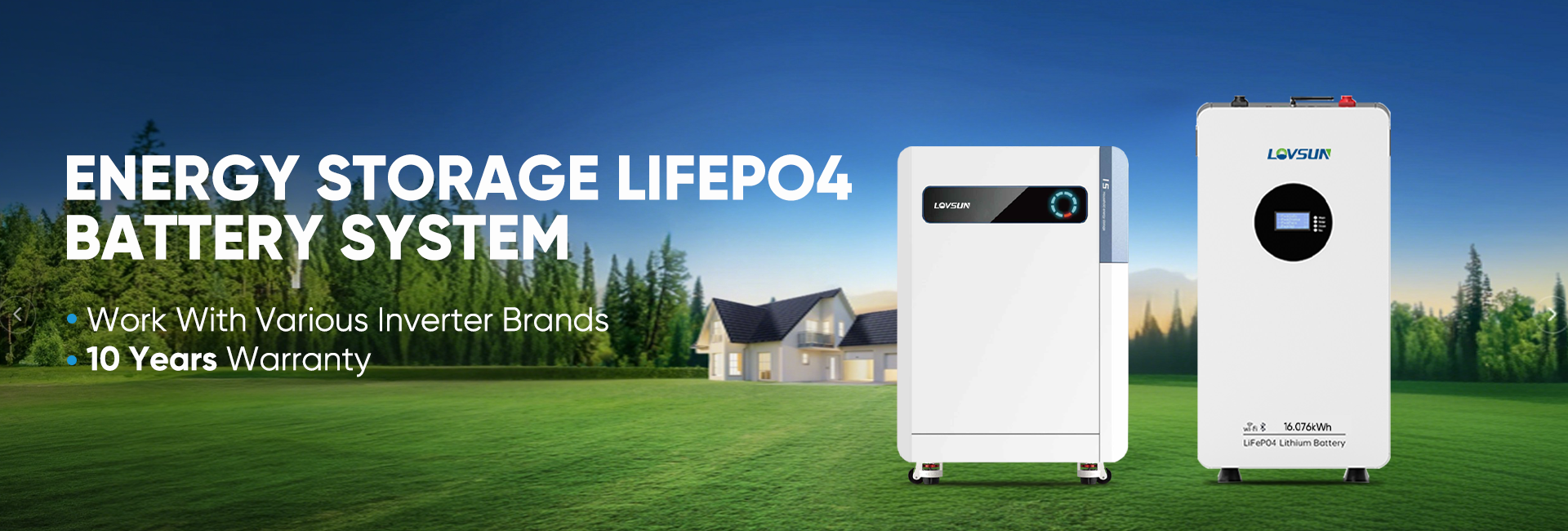
LiFePO4 home battery system — wall-mount and floor-stand 16 kWh residential energy storage with 10-year warranty.
View on supplier site →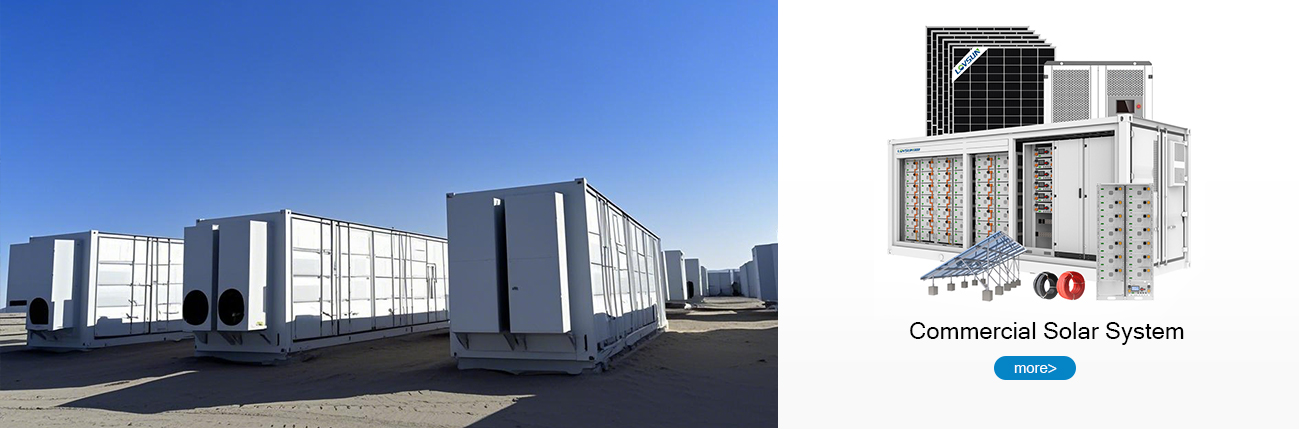
Container ESS battery storage + commercial solar system — utility-scale and commercial-grade energy storage.
View on supplier site →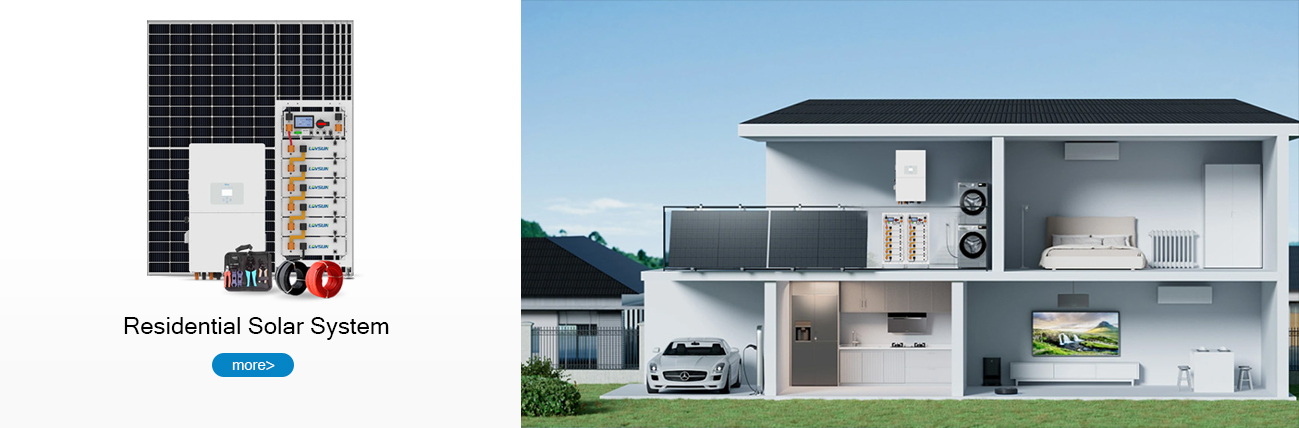
Commercial energy storage system — large-scale battery banks for commercial and industrial backup applications.
View on supplier site →Battery system categories
| System type | Typical capacity | Common applications | FOB China typical price (per kWh) |
|---|---|---|---|
| Residential wall-mount | 5-15 kWh | Solar self-consumption, backup power, off-grid | USD 145-280 per kWh |
| Residential floor-stand | 10-25 kWh | Whole-house backup, large solar systems | USD 130-260 per kWh |
| Stackable residential modular | 5-30 kWh (in 5 kWh modules) | Scalable home systems with future expansion | USD 155-285 per kWh |
| Commercial battery rack | 50-200 kWh | Small commercial backup, peak shaving | USD 110-200 per kWh |
| Container ESS (small) | 100-500 kWh | Mid-size commercial, microgrid | USD 85-160 per kWh |
| Container ESS (utility) | 500 kWh - 4 MWh | Utility-scale, grid services, large commercial | USD 70-130 per kWh |
| Mobile battery (powered cart) | 20-100 kWh | Remote sites, EV charging support, events | USD 200-380 per kWh |
Component-level specifications
| Specification | Typical residential | Typical commercial / utility |
|---|---|---|
| Cell chemistry | LiFePO4 (LFP) | LiFePO4 (LFP) |
| Cell type | Prismatic 280Ah / 314Ah typical | Prismatic 280Ah / 314Ah / 600Ah |
| Nominal voltage | 48V or 51.2V system | 1500V DC system (commercial); 1500V or 1000V DC |
| Cycle life (DoD 90%) | 6,000-10,000 cycles | 6,000-12,000 cycles |
| Calendar life | 15-20+ years | 15-20+ years |
| BMS (Battery Management) | Smart BMS with Bluetooth/WiFi monitoring | Industrial BMS with EMS integration |
| Inverter compatibility | Most major brands (Solis, Solax, Growatt, etc.) | Custom integration with PCS |
| Warranty | 10 years standard, 15 years premium | 10-15 years |
| Operating temperature | -10°C to +45°C typical | -30°C to +50°C with thermal management |
| Communication protocols | RS485, CAN, WiFi, Bluetooth | Modbus TCP/RTU, CAN, IEC 61850 (utility) |
| Certification | UL 1973, UN 38.3, IEC 62619, IEC 62133 | UL 9540, UL 9540A, IEC 62619, NFPA 855 |
Application use cases
| Use case | Typical system size | Economic driver |
|---|---|---|
| Solar self-consumption | 5-15 kWh residential | Reduce grid electricity import; payback 4-8 years with solar tariff |
| Time-of-use arbitrage | 10-30 kWh residential | Buy electricity at off-peak rates, use during peak; payback 5-9 years |
| Backup power (residential) | 10-30 kWh residential | Power outage protection; lifestyle/safety value beyond pure economics |
| Off-grid residential | 15-50 kWh residential | Replaces grid connection in remote locations; enables solar-only living |
| Commercial peak shaving | 100-500 kWh | Reduce peak demand charges; payback 4-7 years |
| Commercial backup (UPS extended) | 200-2,000 kWh | Critical operations continuity; replaces diesel backup |
| Utility-scale storage | 500 kWh - 100 MWh | Grid services (frequency response, capacity, ancillary); 6-10 year payback |
| Microgrid (commercial / community) | 500 kWh - 5 MWh | Energy independence, resilience, demand management |
| EV charging support | 100-1,000 kWh | Buffer rapid EV charging from grid limitations |
Why LiFePO4 dominates current market
Five years ago lithium NMC (nickel-manganese-cobalt) chemistry dominated battery storage; today LiFePO4 has become the standard. Drivers: (1) SAFETY — NMC has thermal runaway risk; LFP is significantly safer with no oxygen release in failure modes; (2) CYCLE LIFE — LFP achieves 6,000-10,000 cycles vs 1,500-3,000 for NMC at same depth-of-discharge; (3) COST — LFP cell pricing has dropped to USD 70-110/kWh while remaining cheaper than NMC; (4) SUSTAINABILITY — no cobalt (LFP uses iron, phosphate, lithium); (5) LONG-DURATION SUITABILITY — LFP is ideal for stationary storage applications (cycle life matters more than energy density). NMC remains preferred for: vehicle propulsion (energy density advantage), aerospace, ultra-portable. For stationary energy storage (residential, commercial, utility), LFP is the clear leader. Reputable manufacturers like LovSun Energy build exclusively LiFePO4 systems.
Solar+storage integration
| System architecture | Configuration | Best for |
|---|---|---|
| AC-coupled storage | Battery + battery inverter; works with existing solar inverter | Adding storage to existing solar systems |
| DC-coupled storage | Hybrid inverter handles solar + battery from same DC bus | New installations; better efficiency for solar charging |
| String hybrid | Multiple solar strings into single hybrid inverter with battery | Mid-size residential and small commercial |
| Multi-mode hybrid | Hybrid inverter with grid, generator, and battery integration | Off-grid and resilient grid-tied applications |
| Modular utility configuration | Battery rack + bidirectional PCS + grid-tied inverter | Utility-scale and commercial-scale |
Pricing brackets — wholesale
| Order tier | Total quantity | Discount | Container utilization | Lead time |
|---|---|---|---|---|
| Sample / pilot project | 1-5 units (residential) | List price; air freight optional | LCL or air | 20-40 days |
| Small distributor / installer | 20-100 units residential | 5-12% | 20' container (~50-80 residential units) | 30-50 days |
| Mid distributor / regional | 100-500 units | 12-22% | 40' container or multiple 20' | 45-75 days |
| Large distributor / national | 1,000+ residential or commercial scale | 20-30% framework | Multiple 40' containers monthly | 60-100 days |
| Project / utility scale | Containers (MWh-scale) | Custom project pricing | Direct vessel charter | 90-180 days |
Compliance and certification
| Standard | Applies to | Markets where required |
|---|---|---|
| UL 1973 | Battery cells / modules / systems | USA, Canada |
| UL 9540 | Energy storage system safety | USA, Canada |
| UL 9540A | Thermal runaway test for ESS | USA |
| UN 38.3 | Lithium battery transport | Global air/sea freight |
| IEC 62619 | Industrial lithium battery safety | Most international markets |
| IEC 62133 | Portable lithium battery safety | Most international markets |
| IEC 61960 | Battery performance testing | EU and international |
| NFPA 855 | ESS installation safety | USA fire codes |
| CE marking | EU market access | EU |
| FCC Part 15 | Electromagnetic compatibility | USA |
| RCM | Regulatory compliance mark | Australia / New Zealand |
| BIS | Bureau of Indian Standards | India |
| BABT / SABS | Approval for specific markets | UK, South Africa |
Certification matters more than ever post-2024 fire incidents
Following high-profile battery fire incidents in 2023-2024 (commercial battery storage facility fires, residential battery fires), regulators have tightened certification and installation requirements significantly. UL 9540A thermal runaway propagation testing has become effectively mandatory for any commercial-scale ESS installation in many US jurisdictions. NFPA 855 installation requirements (separation distances, fire suppression, ventilation) are now strictly enforced. PROCUREMENT IMPLICATIONS: (1) Verify current UL 9540 / UL 9540A certificates from accredited test labs; (2) Verify installation compatibility with destination jurisdiction code (which UL 9540A test pass condition required varies); (3) For residential, verify UL 1973 certification of cells/modules and UL 9540 of complete system; (4) Verify warranty terms are backed by financially-stable supplier (warranty meaningless if supplier goes bankrupt). Reputable suppliers like LovSun Energy maintain current certifications and provide complete documentation packages for major export markets.
Order workflow — battery storage procurement
- Application analysis — define required capacity (kWh), power rating (kW), application type (residential/commercial/utility), grid-tied or off-grid, expected daily cycling, ambient conditions
- System architecture decision — choose AC-coupled vs DC-coupled storage; verify inverter compatibility for AC-coupled systems
- Certification verification — verify supplier provides current UL 1973 / UL 9540 / UN 38.3 / IEC 62619 certifications matching destination jurisdiction
- Sample order — typically 1-5 units; verify physical build quality, BMS function, communication protocols, monitoring app functionality
- Pilot installation — install on representative site for 30-90 days; document any issues with installation, commissioning, or operation
- First commercial order — typically 20-100 units for distribution business launch; ensure adequate inventory for 2-3 month sales cycle
- Quality acceptance — incoming inspection per AQL plan; verify shipping documentation matches purchase order; document any cosmetic damage or functional issues
- Series replenishment — quarterly or monthly orders aligned with sales velocity; for distributors, framework agreement with predictable lead times