The afro-textured hair systems market is one of the fastest-growing but most underserved segments in men's hair replacement worldwide. Customers with naturally tightly-coiled, kinky-curl, or afro-textured hair have specific needs that mainstream hair-system catalogues often fail to address: hair texture matching is more critical, installation technique differs, and the product visibility on dark-skin scalps is more demanding. African, Caribbean, African-American, Black British, and other Black diaspora communities represent a growing customer base for hair-loss solutions; salons and specialty retailers serving these communities benefit significantly from sourcing from manufacturers with genuine afro-texture expertise rather than retrofitting straight-hair products.
This guide is the companion piece to our general men's hair system wholesale guide, focused specifically on afro-textured and ethnic-hair products. Hairnotion produces afro and textured hair systems alongside their straight-hair line, with hair texture options spanning from light wave through tight afro coil — serving salons in markets from London to Lagos to Atlanta to Kingston.
Product range — actual catalogue images
The product images below are hosted on the manufacturer's official website (hairnotion.com) and link directly to the manufacturer's catalogue. Click any image to view the full specification page in a new tab.
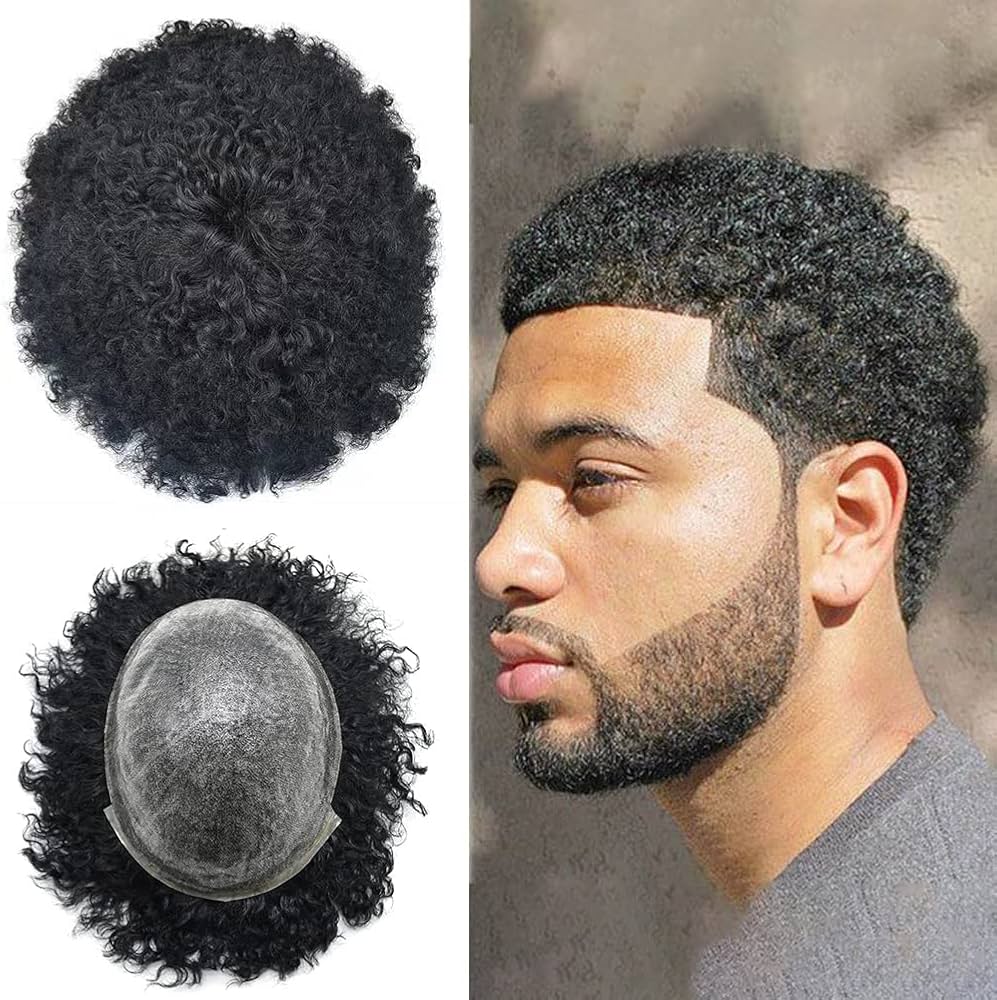
Afro-curl hair system on French lace base — for natural integration with African textured hair.
View on supplier site →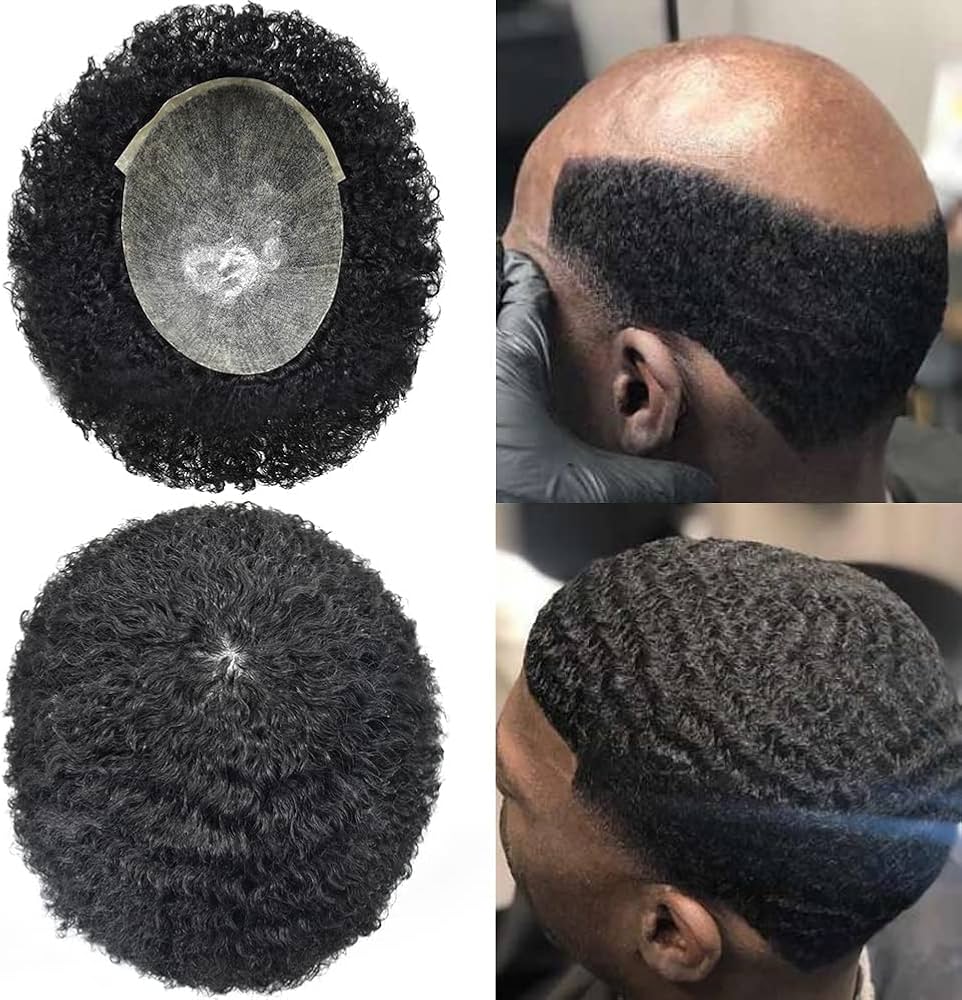
Afro-curl hair systems with installation reference photos — full lace and partial lace bases.
View on supplier site →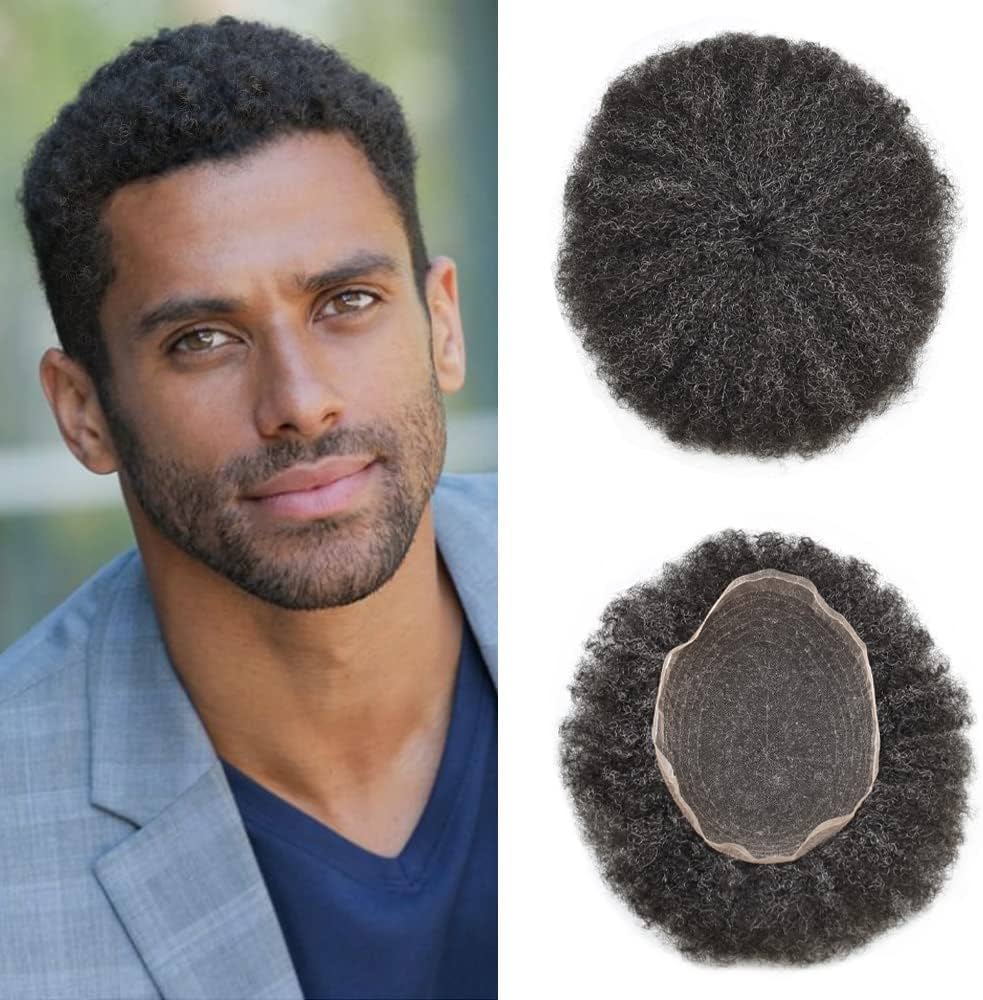
Premium afro hair system — full lace base for invisible hairline, suitable for daily wear.
View on supplier site →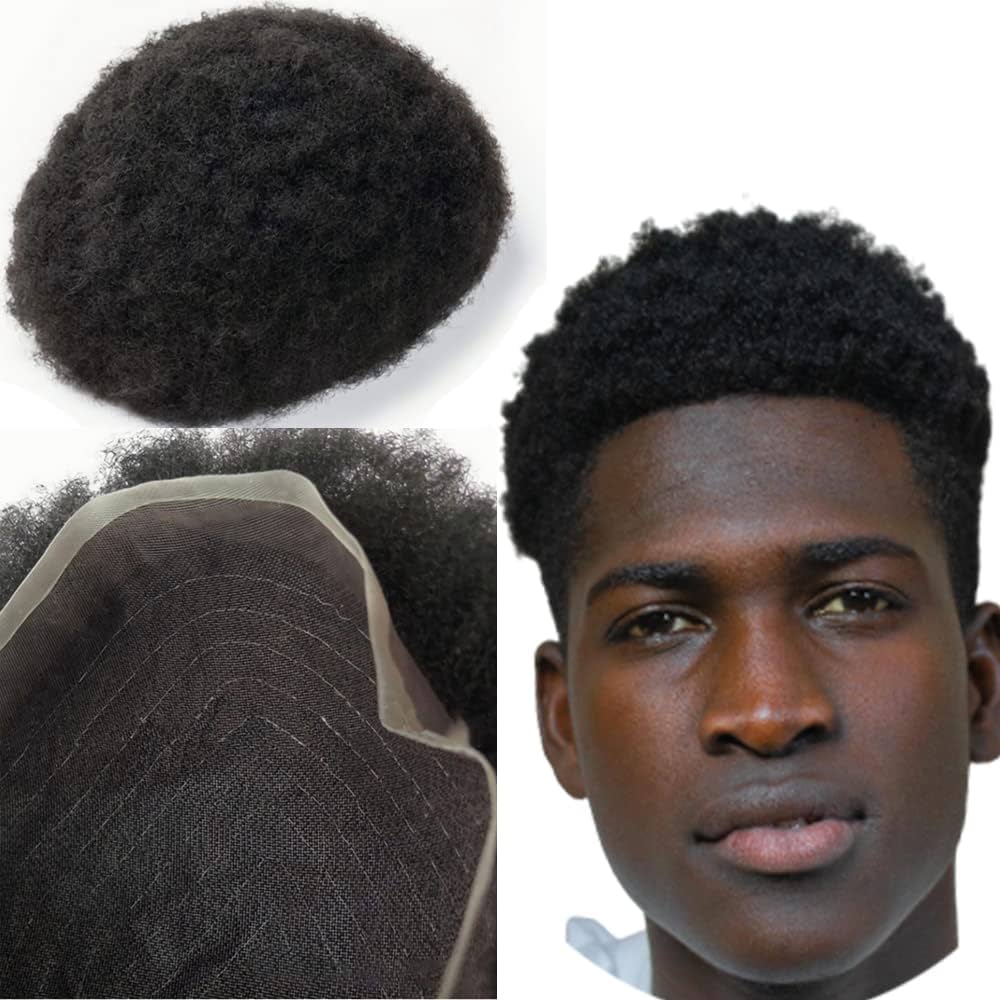
Tightly-coiled afro hair system — multiple base options, daily-wear or special occasion.
View on supplier site →Texture matching — what makes afro hair systems different
The fundamental challenge in afro hair systems is matching the texture grade of the wearer's natural hair. The hair-industry uses standardized texture-matching codes derived from natural Black hair classification:
| Texture grade | Description | Customer base | Hair-system specification |
|---|---|---|---|
| 3A — soft curl | Loose corkscrew curl, 1.5-2 cm diameter | Mixed-heritage, lighter African genealogy | Body-wave hair, no special processing |
| 3B — defined curl | Spiral curl, 1-1.5 cm diameter | Caribbean and Latin Black communities | Curl-set or naturally-curly Indian Remy hair |
| 3C — tight spiral | Tight corkscrew, 0.5-1 cm diameter | African-American, Caribbean | Specialty textured Indian Remy or processed Chinese hair |
| 4A — soft coil | Loose afro coil, "S" pattern, defined when wet | African and African-American | Specialty texture, processed hair with permanent curl |
| 4B — Z-coil | Sharp angles in coil pattern, less curl definition | African and African-American | Specialty Z-pattern processed hair |
| 4C — tight afro | Tightest coil, no defined pattern visible | African (West/East African primarily) | Premium afro processing, multi-step texturizing |
Why generic "wavy" or "curly" hair systems fail for afro customers
Generic curly hair-system products at non-specialist factories use wave-set or perm processing on Indian Remy or Chinese hair to create curl. The result is texturally distinct from naturally afro-textured hair — the curl pattern appears too soft, too uniform, too "salon-curled" rather than naturally coiled. Customers can immediately see the difference, especially in side-by-side hairlines where the system meets natural hair.
True afro hair systems use specialty processing methods (Z-coil pattern setting, multi-step texturizing, single-knot V-loop on tight curl) developed specifically for afro texture. The cost premium is real (typically 25-45% above equivalent straight-hair system) but the customer satisfaction premium is much larger. For salons serving Black customers, ordering generic "curly" products instead of true afro texture is the #1 cause of customer dissatisfaction and product returns.
Base type considerations for afro hair systems
The optimal base material for afro hair systems differs from straight-hair recommendations because the wearer's scalp has different visibility considerations:
| Base type | Suitability for afro | FOB China unit | Notes |
|---|---|---|---|
| Skin (poly) ultra-thin | Limited — visible against dark scalp | USD 38-65 | Skin tone polyurethane available but limited match for darker skin |
| French lace (transparent) | Good — most natural for darker skin | USD 55-95 | Transparent lace allows scalp tone to show through |
| Swiss lace (more transparent) | Excellent — best invisibility on dark scalp | USD 75-130 | Premium tier; more delicate, shorter service life |
| HD (high-definition) lace | Excellent — invisible at any skin tone | USD 95-180 | Specialty material; most expensive but most invisible |
| Mono top with lace front | Good — durable + invisible hairline | USD 75-130 | Best balance for daily-wear customer base |
| Full lace | Excellent for special occasions; less durable | USD 95-180 | Best for events, photography; daily wear shortens life |
Pricing brackets for afro / textured hair systems
| Quality tier | Hair grade | Texture spec | Base type | FOB China per unit |
|---|---|---|---|---|
| Premium | European hair, Z-pattern processed | 4A-4C grade | HD lace + mono crown | USD 250-450 |
| High-mid | Indian Remy with afro texturizing | 3C-4B grade | French lace + mono crown | USD 110-180 |
| Standard wholesale | Indian Remy with curl-setting | 3A-3C grade | French lace | USD 65-110 |
| Budget | Chinese hair with perm processing | 3A-3B grade | Skin or basic lace | USD 35-65 |
Color matching for darker skin tones
Color matching for African and African-Caribbean customers requires more nuanced color-spec management than typical straight-hair products. Standard wholesale color codes don't always serve this market well:
| Color code | Description | Customer base | Frequency in afro market |
|---|---|---|---|
| 1 | Pure black, no red highlights | Most common for younger Black customers | 30-45% |
| 1B | Off-black, slight red tone | Most universal "black" in African market | 25-35% |
| 2 | Darkest brown | Mature customer base, naturally fading | 10-15% |
| 4 | Medium brown | Mixed-heritage customers | 5-10% |
| 1B/4 (with highlights) | Black base with brown highlights | Style-conscious younger market | 5-15% |
| 1B/30 (with highlights) | Black base with auburn highlights | Trendy Caribbean/African-American market | 3-10% |
| 1B/Salt-and-pepper (#1B/Grey) | Black base with grey integration | Mature Black customers (45+) | 10-20% — fastest-growing segment |
| Grey solid | Pure grey/silver | Late-mature customers (60+) | 3-8% |
Why salt-and-pepper / grey integration matters in this market
Mature Black customers (45+) historically had limited natural hair-system options for grey integration — most factories offered minimal grey color choices. This left salt-and-pepper customers buying solid-color systems and aging into mismatched looks, or quitting hair systems entirely. Specialty manufacturers like Hairnotion who maintain comprehensive grey-integration color cards (typically 5-10 different grey % options at each base color) capture significant repeat business from mature customers — who also represent the highest annual purchase frequency (4-6 systems per year vs 2-3 for younger customers).
For salon wholesale, stocking 15-20% grey-integration variants in your inventory is the right balance for most markets serving the 35+ demographic.
Installation considerations specific to afro market
Hair-system installation for Black customers often differs from mainstream salon technique, and successful retailers understand the distinctions:
- Adhesive selection — high-perspiration tropical/equatorial markets need premium-tier adhesives (typically silicone-based or hybrid acrylic-silicone). Latex-only adhesives commonly fail in heat and humidity, causing system slippage
- Hair shaving prep — for installation success, the natural hair underneath the system must be very short (#1-3 clipper) or fully shaved. This is more standard practice in Black men's hair-care than in mainstream salon work, but specialty technique training is still helpful
- Tape vs liquid adhesive — many Black customers prefer tape-based attachment for daily wear (easier removal, less skin irritation) vs liquid adhesive (better for permanent multi-week wear). Stock both attachment systems
- Maintenance schedule — afro hair systems on lace bases require more frequent professional maintenance (every 3-5 weeks) vs straight-hair skin systems (every 5-8 weeks). Maintenance services typically priced at USD 80-180 per appointment
- Side-of-head edge integration — for customers with hair only on the sides/back, the system's side-edge integration is especially visible. Specify thinned-edge transitions and consider side-by-side texture matching
Wholesale market analysis by region
| Market | Customer profile | Volume opportunity | Specific considerations |
|---|---|---|---|
| USA — African-American | Black men 30-65, urban | Largest single market — 5,000-15,000 units / week US-wide | Premium pricing acceptable; salon-channel dominant |
| UK — Black British | Caribbean + African heritage, urban centers | Significant market, London-concentrated | Mid-tier preferred; quality consciousness high |
| Caribbean — Jamaica, Trinidad, etc. | Tourist + local market | Mid-volume, year-round | Heat/humidity-resistant adhesive critical; tourist pricing premium |
| Sub-Saharan Africa — Lagos, Accra, Nairobi etc. | Urban professional class | Fastest-growing market | Mid-budget tier; container loading economics for re-distribution |
| South Africa | Mixed African + Coloured + Black communities | Mid-volume mature market | Range of textures needed (3A-4C); imports often via local distributor |
| Latin America — Brazil, Cuba, Dominican Republic | Afro-Latin diaspora | Growing market | Spanish/Portuguese support; mix of textures (3A-4B common) |
| Middle East — UAE, Qatar, Saudi | African expatriate workers | Niche but high-margin | Imported via specialty salon channels; premium pricing |
Order workflow — afro hair-system distributor
- Customer demographic analysis — survey local market for texture-grade distribution (3A through 4C), color spread, age demographic, daily-wear vs occasional-wear customer ratio
- SKU mix planning — typical first wholesale order: 30% 4A-4B specialty afro / 25% 3C tight curl / 20% 3B defined curl / 15% color variants (greys, highlights) / 10% specialty (oversized, custom hairline patterns)
- Sample order — 5-15 pcs across the priority SKUs, professional courier shipping, evaluation by salon model with actual customer base
- Color-card verification — confirm color codes match local customer expectations using physical color ring sent by manufacturer
- First wholesale order — 100-300 pcs mixed across 15-25 SKUs based on sample evaluation
- Adhesive + supplies bundle — order tropical-grade adhesive (USD 8-22 per tube), tape strips (USD 3-8 per pack), maintenance kit components from same supplier or specialty supplier
- Series replenishment — bi-weekly to monthly replenishment based on actual sell-through; build relationships with 2-3 salon channels in target market for distribution